Author Archives: drericsilverman

Quick picks: interesting abstract games in brief

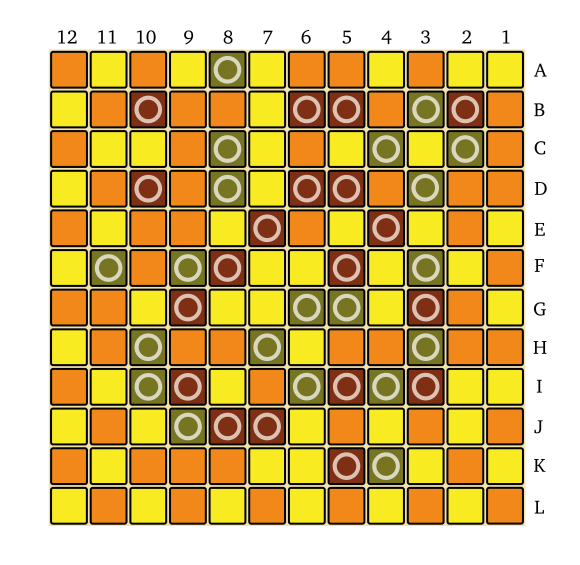
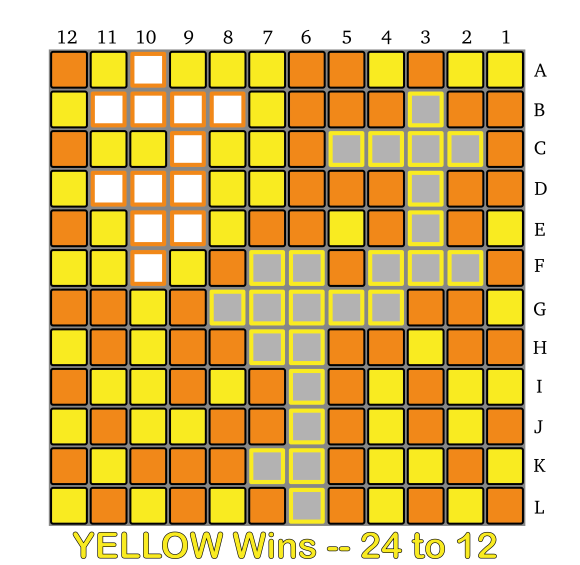
As some of you will be aware, as a way of keeping myself occupied during the pandemic I’ve learned how to use Adobe Illustrator to design stuff.  A particularly enjoyable, if slightly odd, area of design I’ve gotten into is designing game boards for abstract strategy board games.  I’ve had a good time getting to know the software and experimenting with many different designs, and now that nice neoprene game mats can be custom-printed for affordable prices, I’ve actually gone ahead and had some of my designs printed out as well.  Hopefully, in some theoretical future where the pandemic is over, I can use these boards to introduce friends and colleagues to some of my favourite games.

I’ve made a lot of boards over the last year, so rather than wait until I can find the time and energy to write detailed blog posts on all of the games that go with them, I thought I’d share a few abstract strategy gems with you with just a few sentences about why they’re interesting.  Each brief review includes links to full-size images of the boards I’ve made for each game, which you can print if you wish.  Some of these games will get covered in detail in the future; for now, hopefully these short descriptions will entice some of you to give these games a try.

As a side note, I can output these designs in a huge number of formats — PDF, PNG, JPG, SVG, whatever — so if any of these strike your fancy but you need a different format, just let me know in the comments and I’ll upload it for you.

Catchup
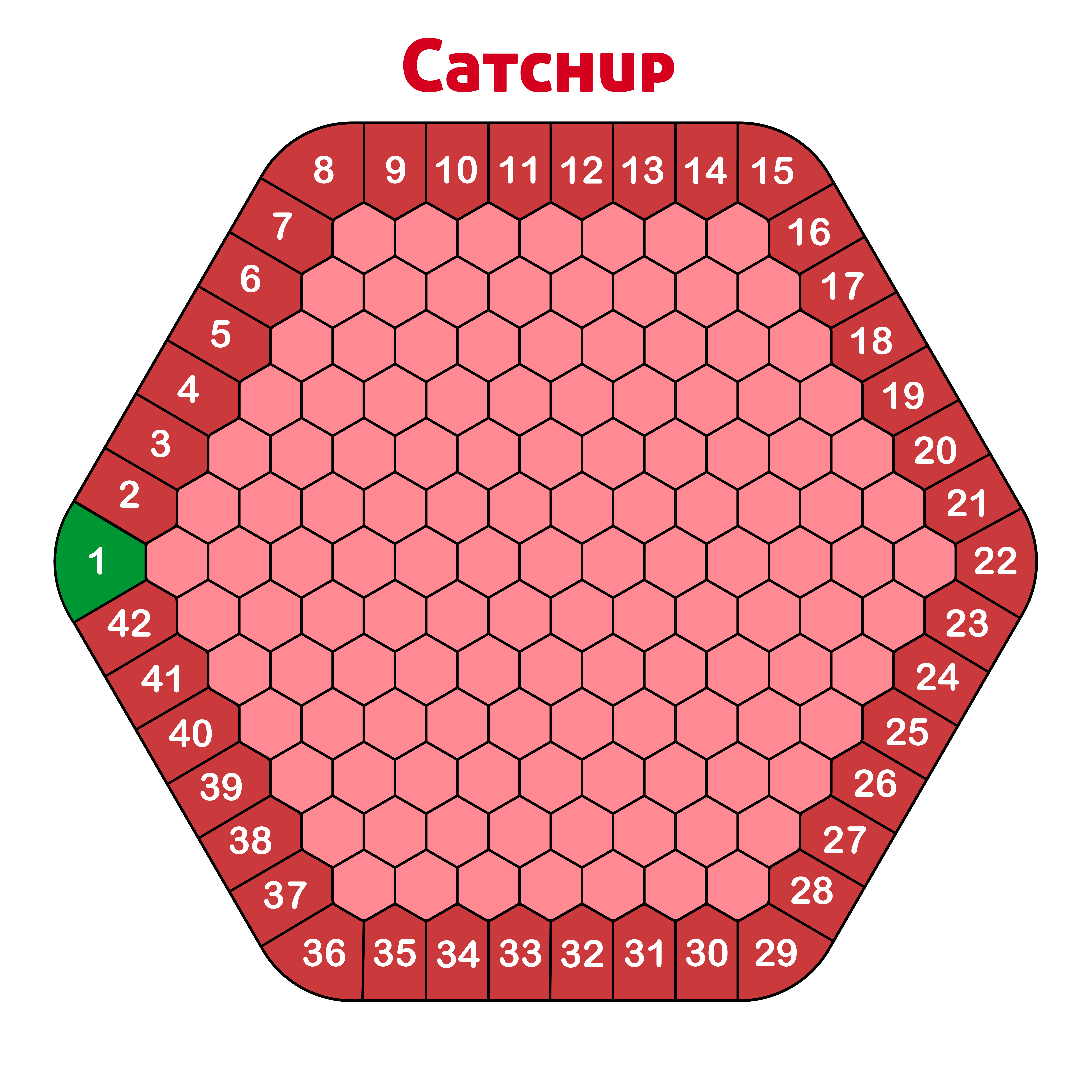
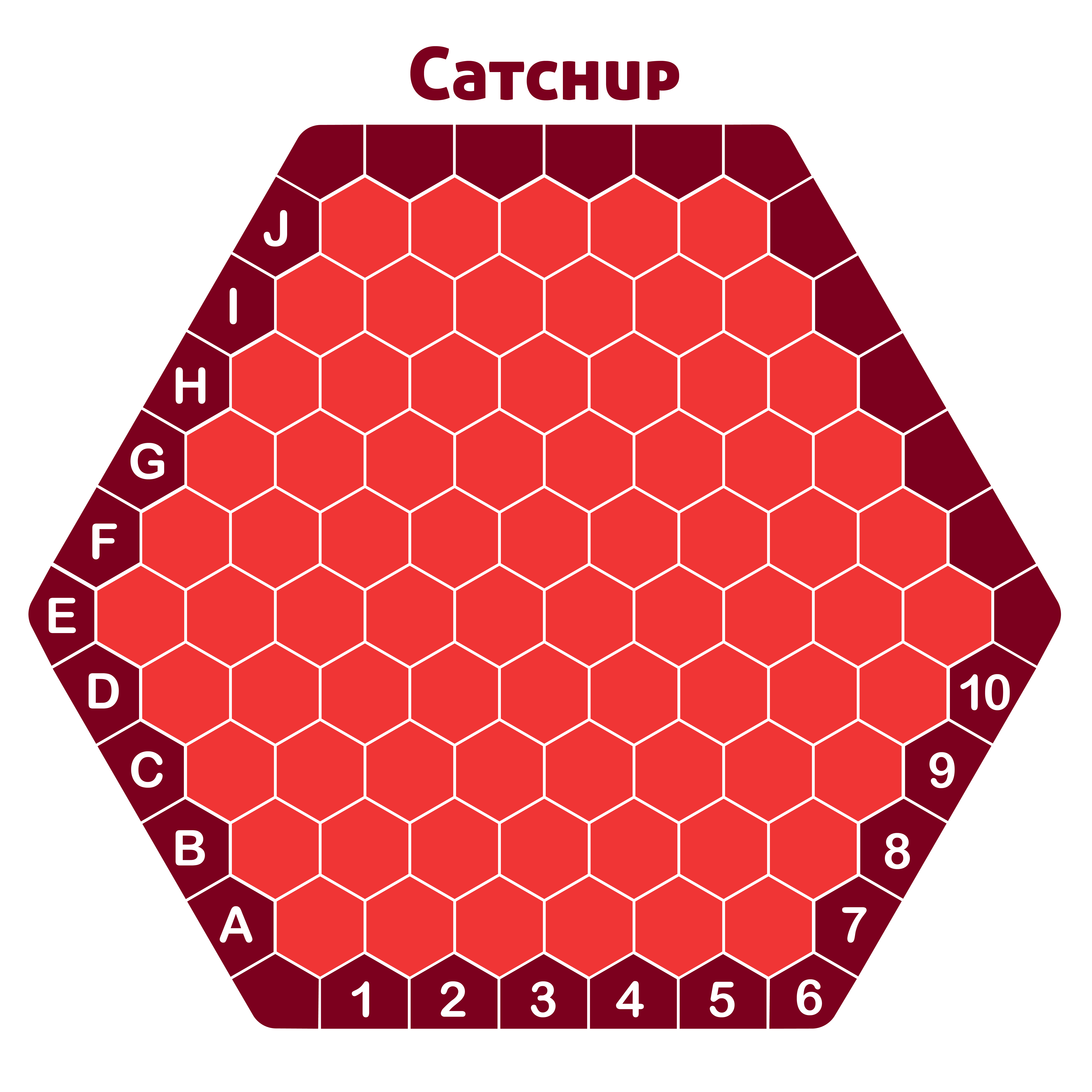
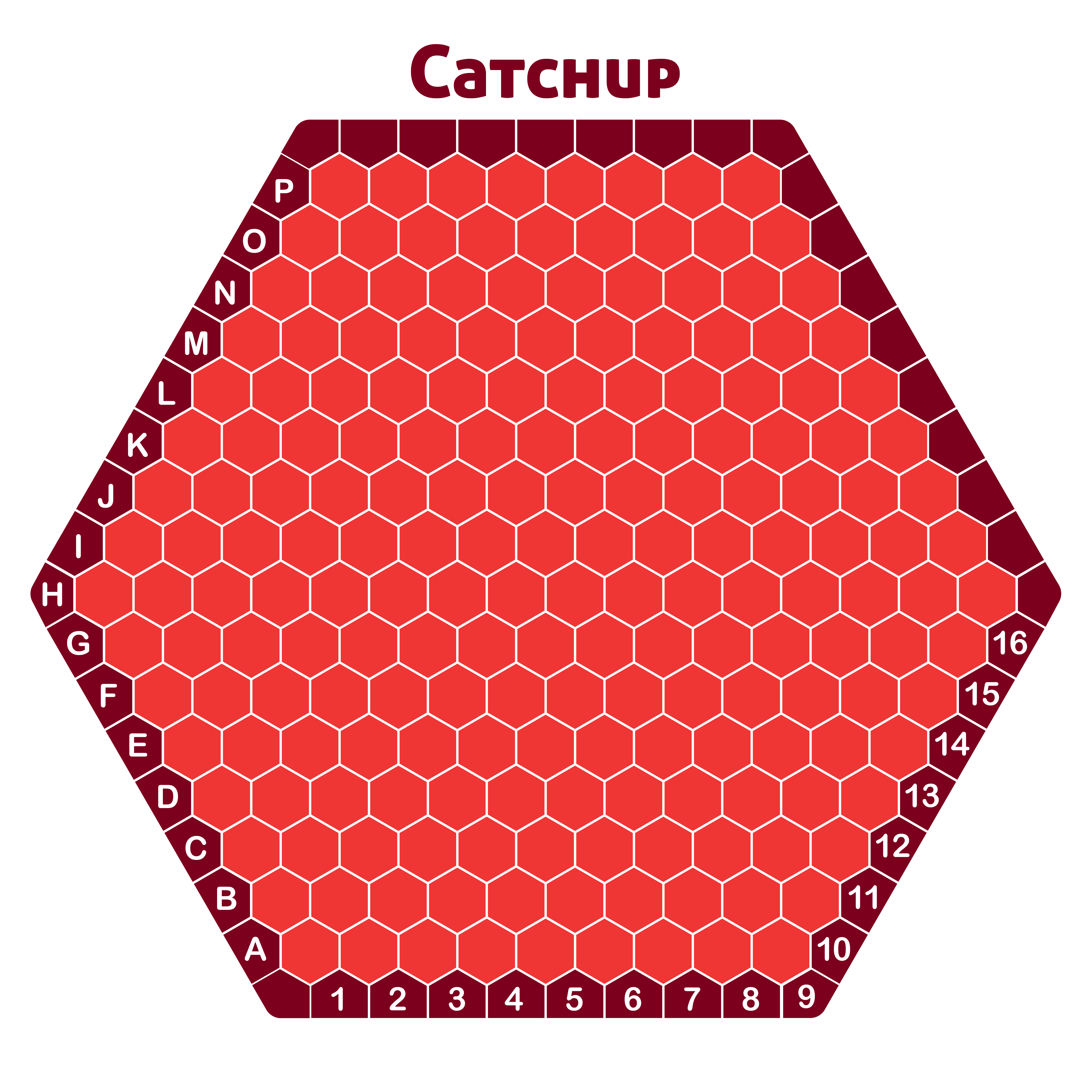
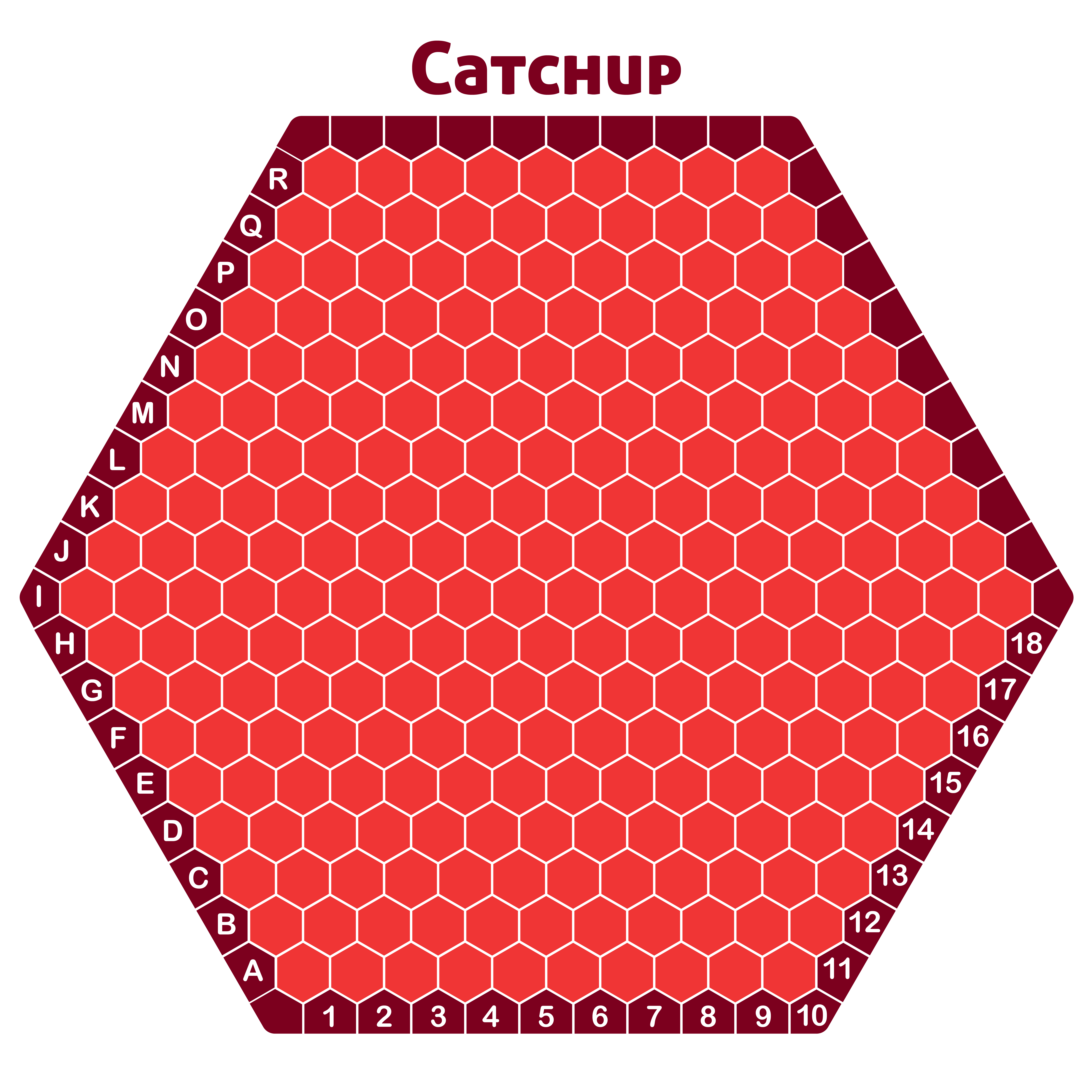
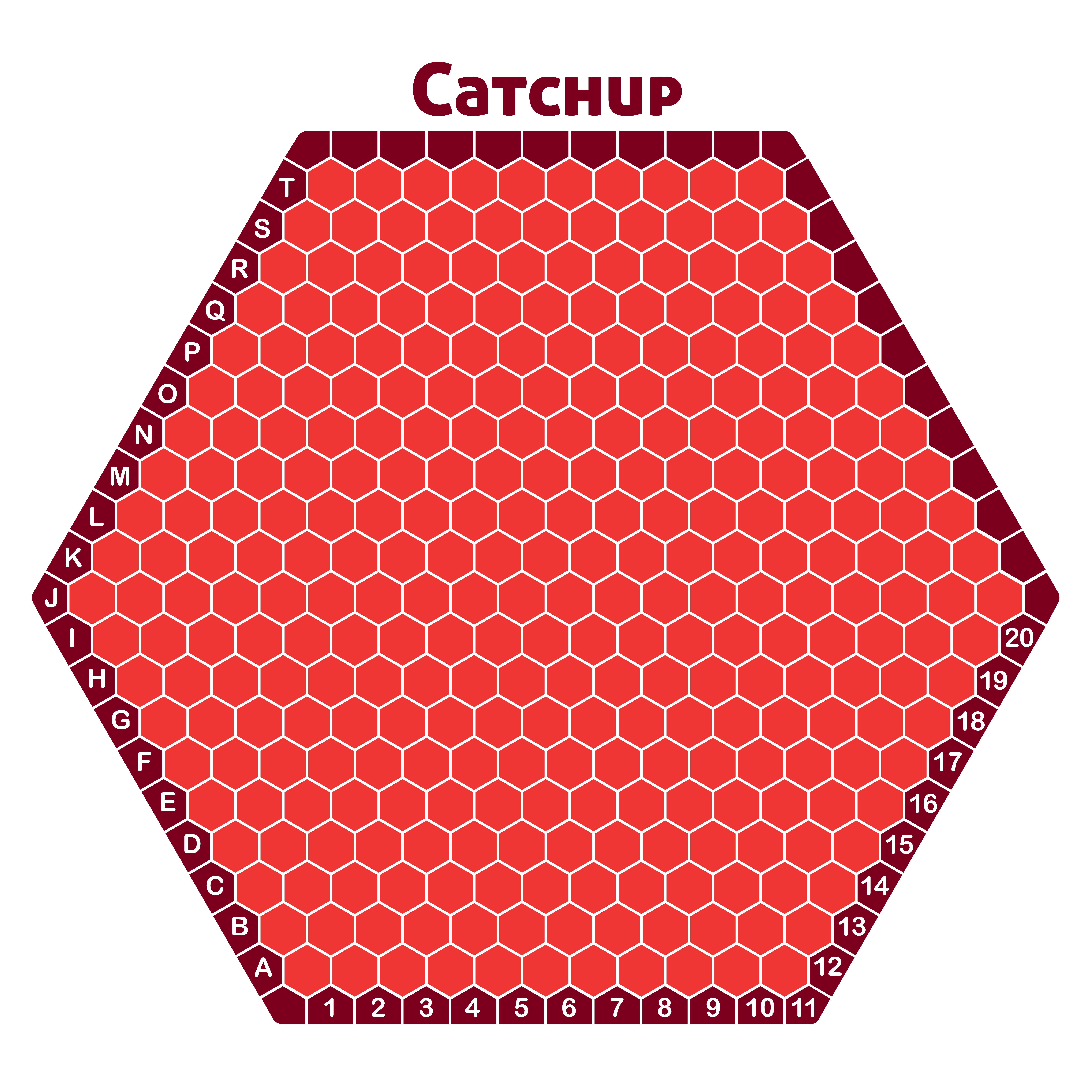
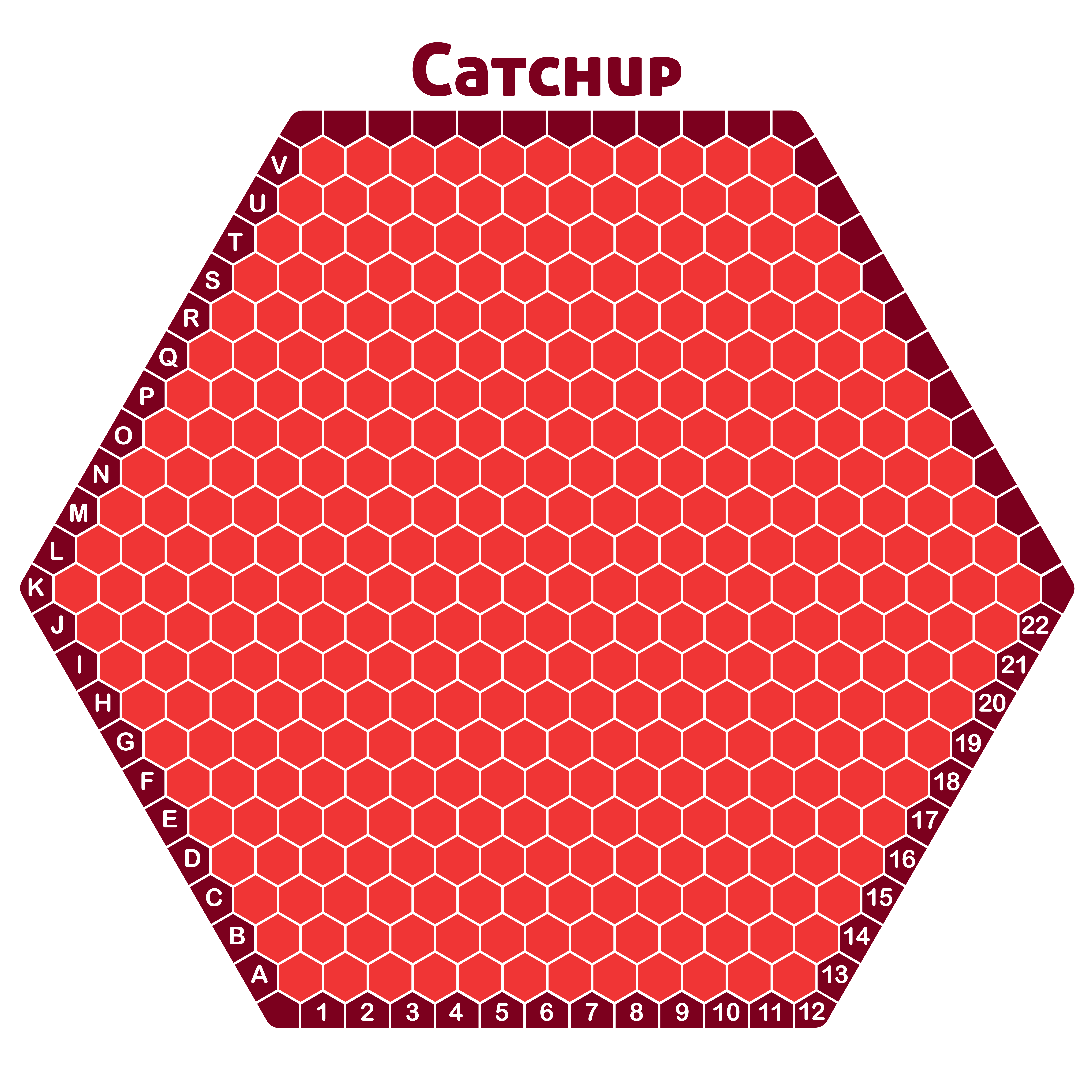
Catchup is a wonderful game by Nick Bentley that I’ve mentioned briefly before, because the scoring system inspired my choice of scoring system for Permute.  This is a game I’ll definitely cover in the future, as it’s incredibly easy to learn, yet within moments of starting to play you’ll realise the core strategic dilemmas at the heart of the game.  Catchup is a really dynamic and exciting game, and personally I think Catchup is Nick’s best design by far.

Why it’s great: Catchup’s unique feel stems from its unusual movement protocol: each turn, you place two stones anywhere on the board, unless your opponent equalled or exceeded your score after their last move, and then you can place three stones.  The winner is the player who forms the largest group of connected stones at the end of the game, so the result is a tense back-and-forth where you absolutely must connect your stones to win, but each time your biggest group becomes equal to or larger than your opponent’s, they get a much more powerful move with which to fight back.

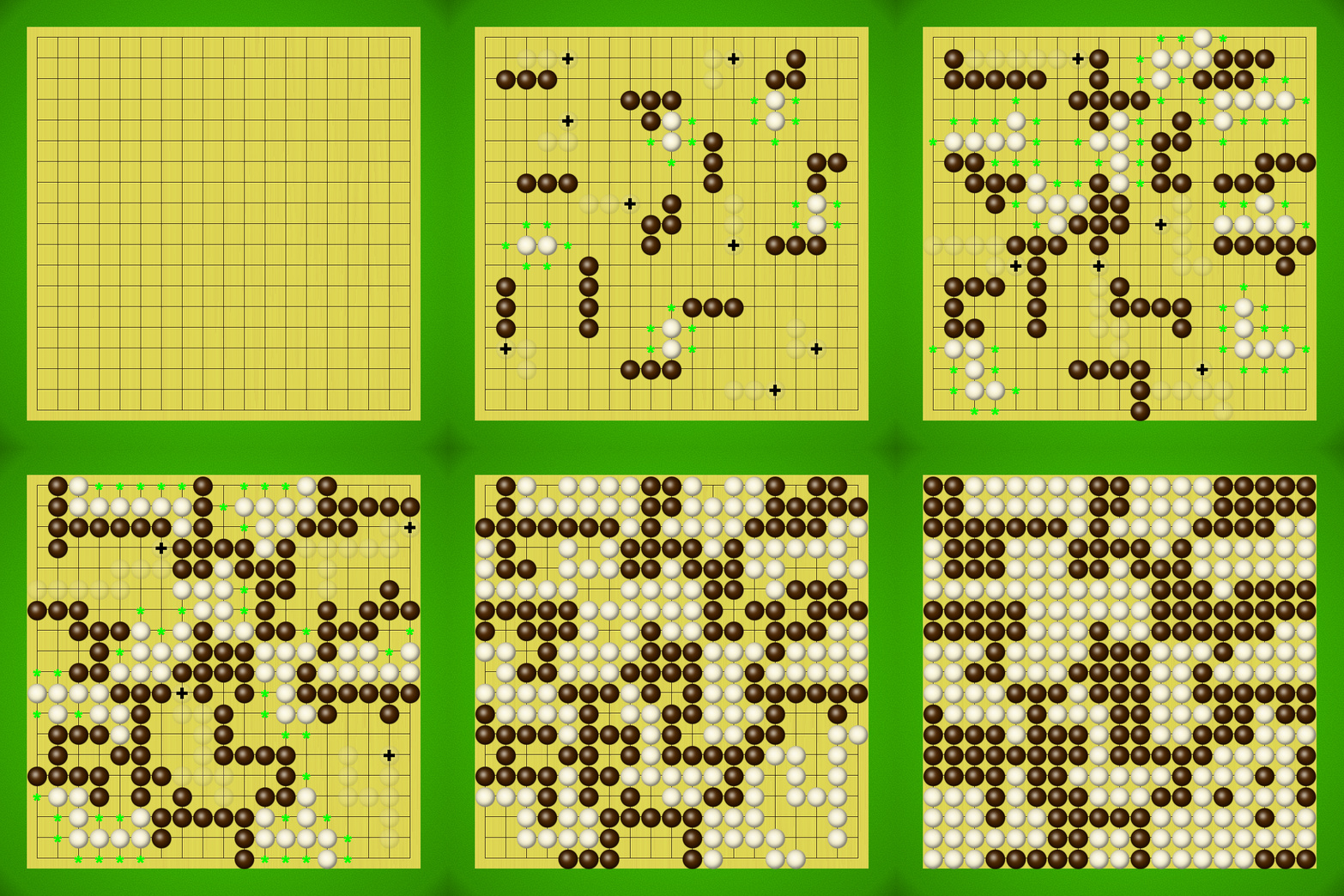
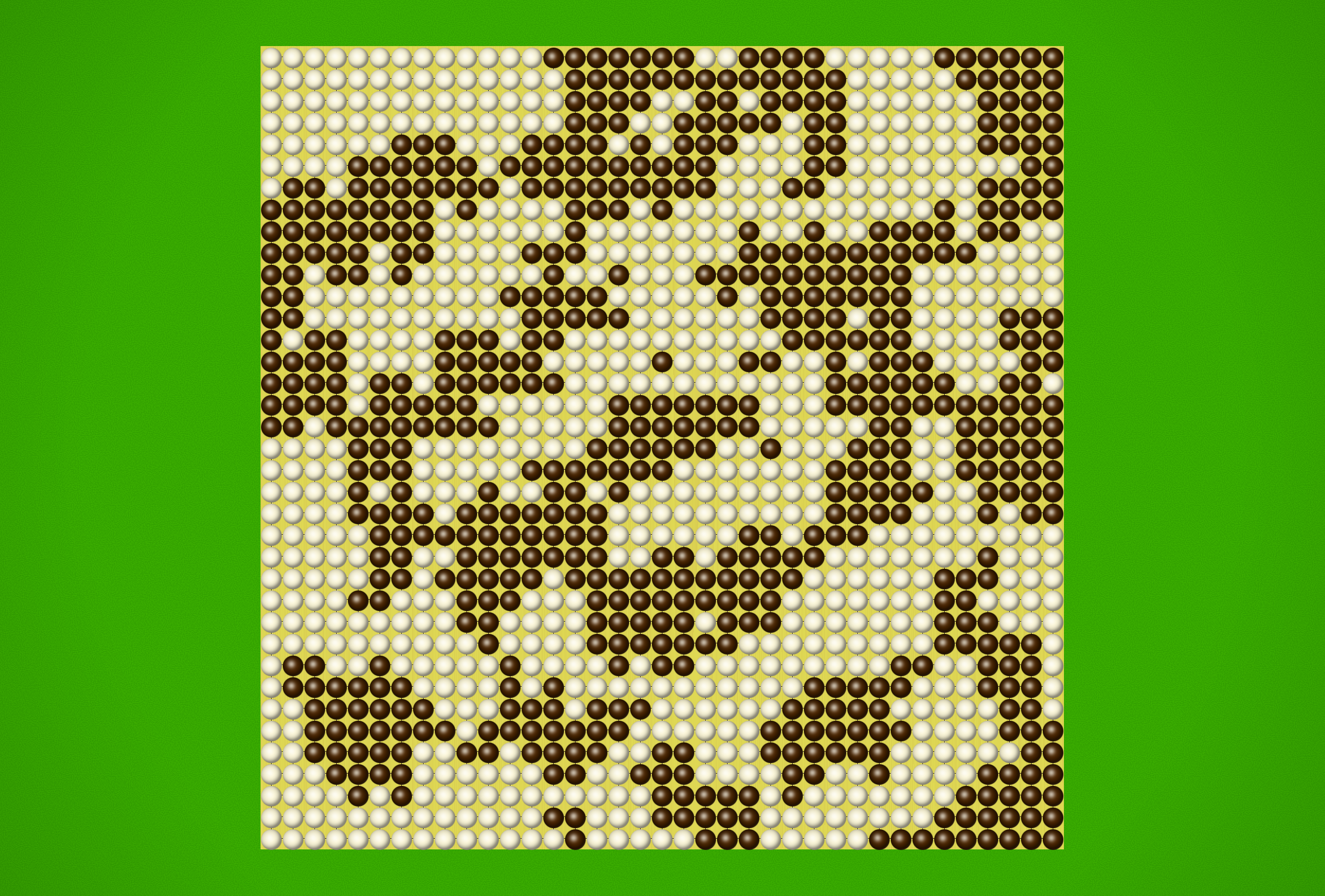
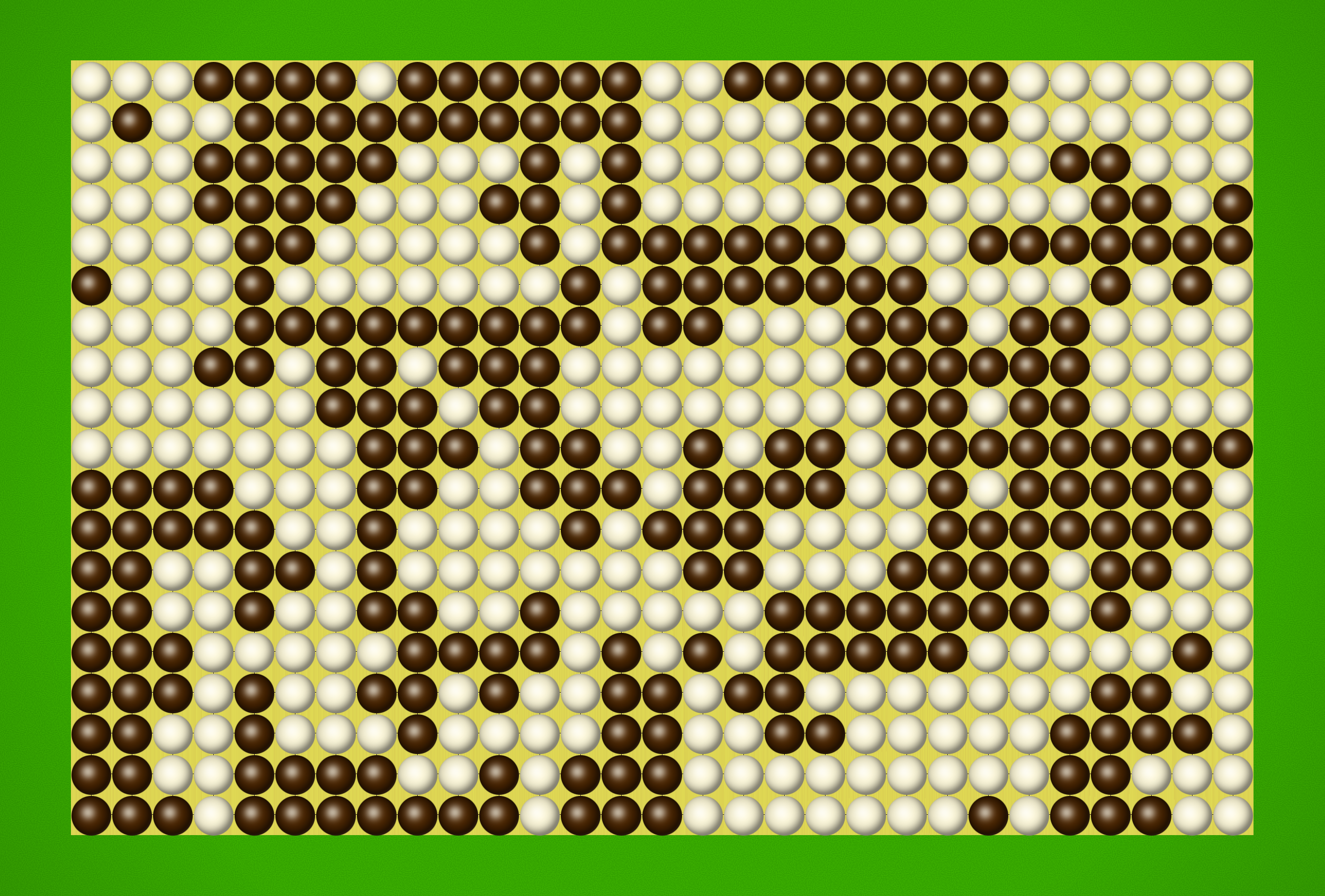
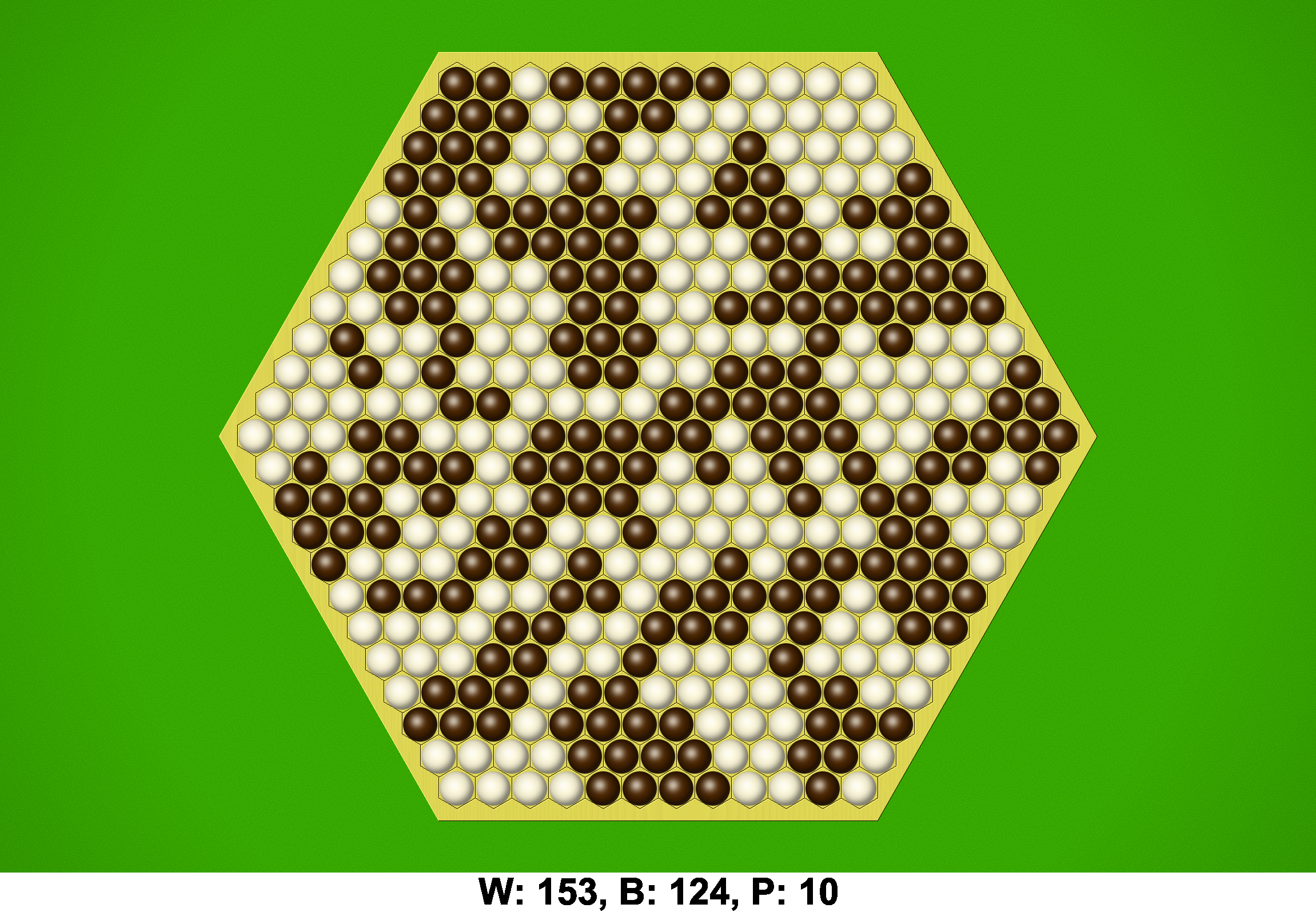
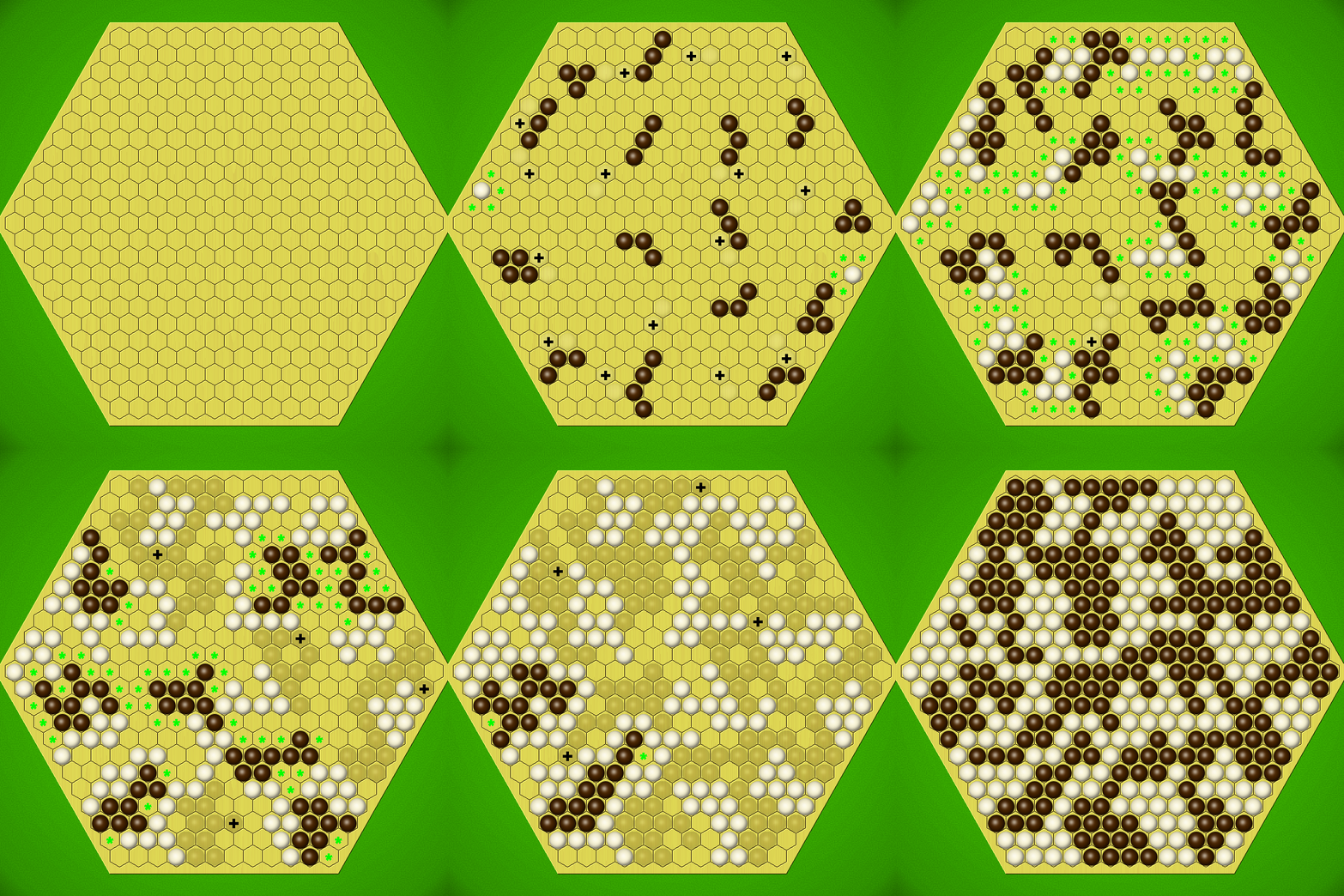
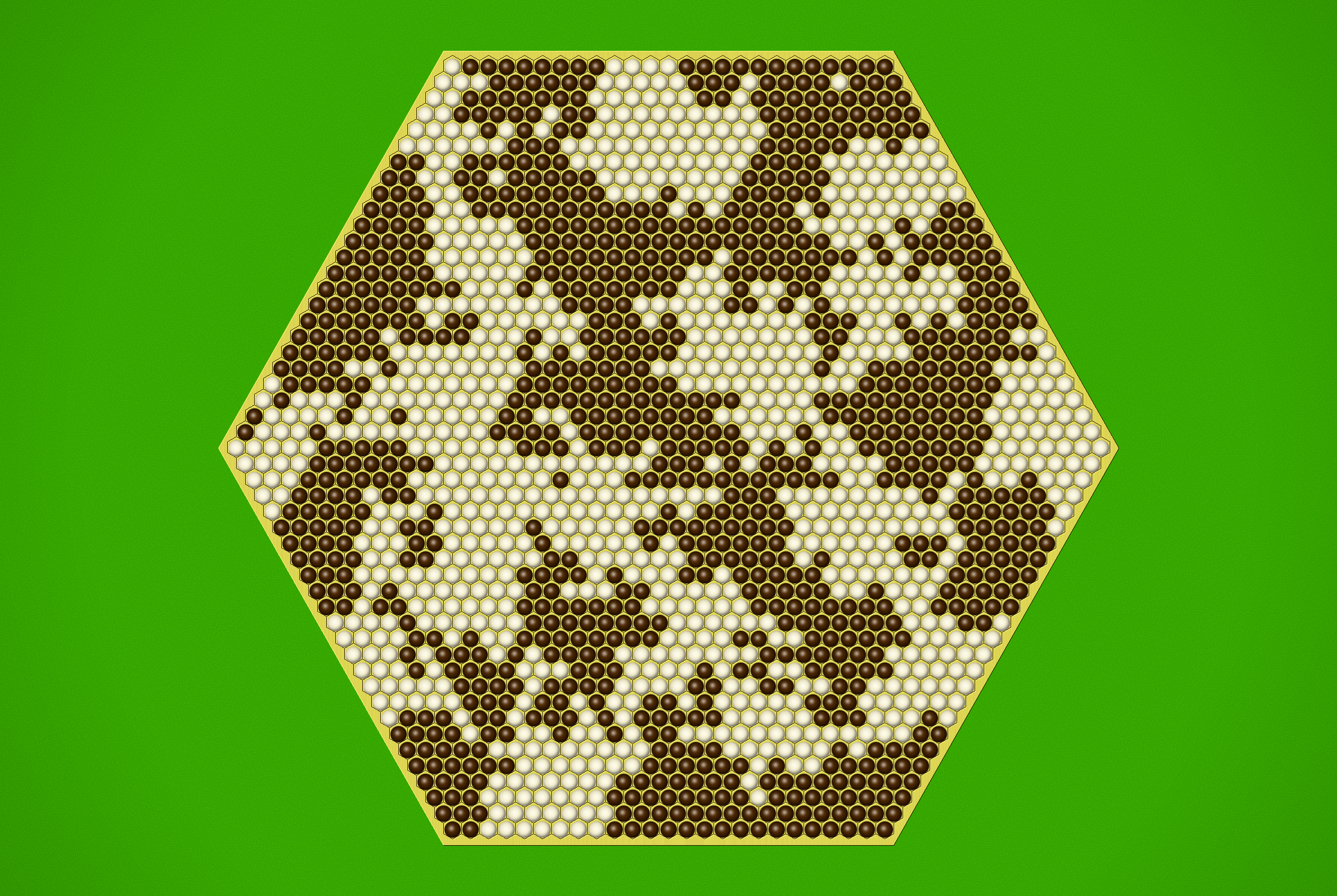
About the boards: The board on the top left above is a standard hexhex board, seven hexes on a side, with a scoring track where players can place a stone on the number representing the size of their current largest group.  The other five are variant boards with uneven sides, which an experienced Catchup player has suggested may generate more interesting play.

Chess: Supersized
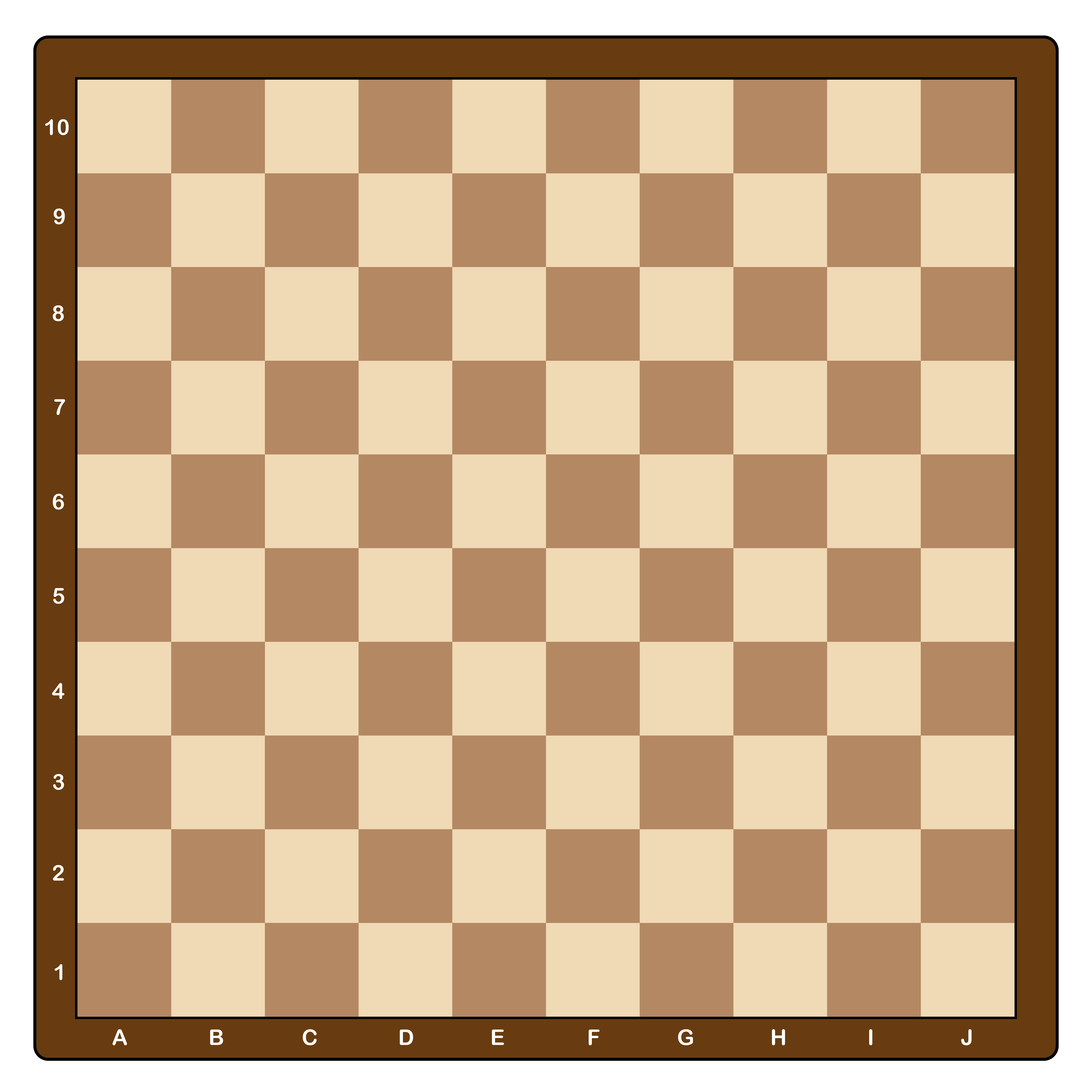
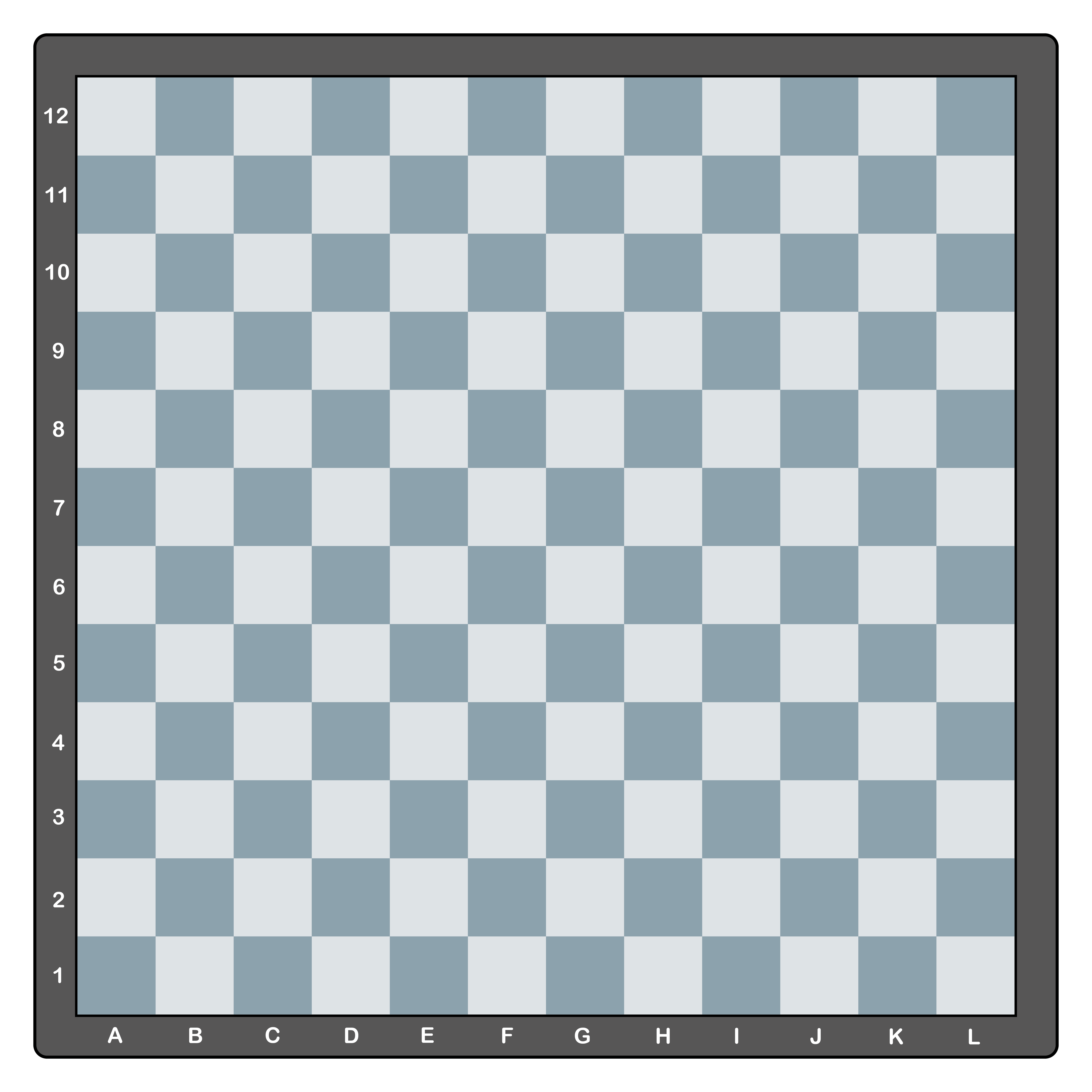
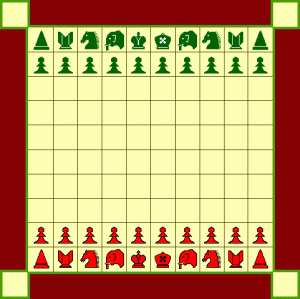
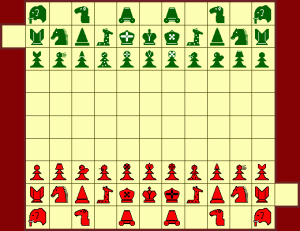
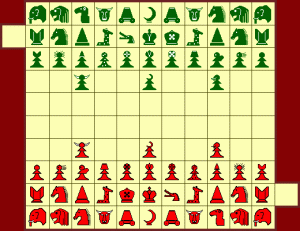
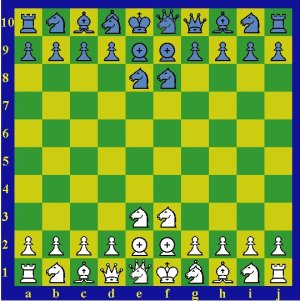
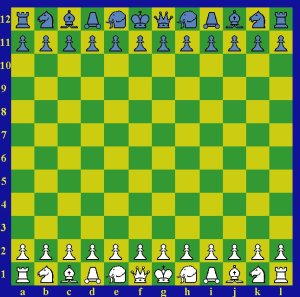
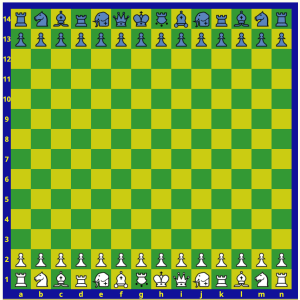
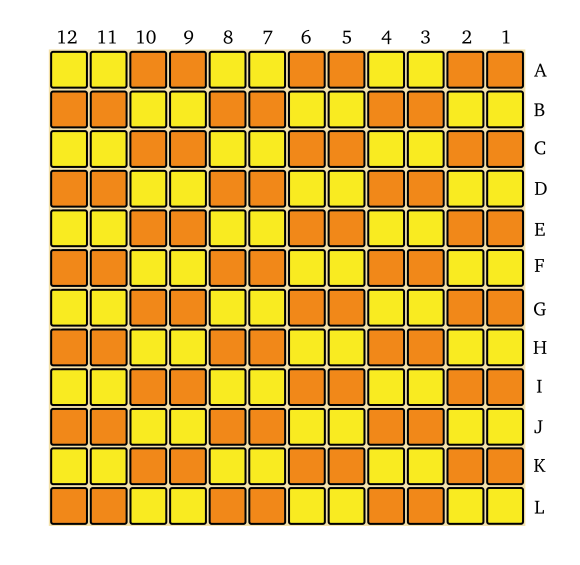
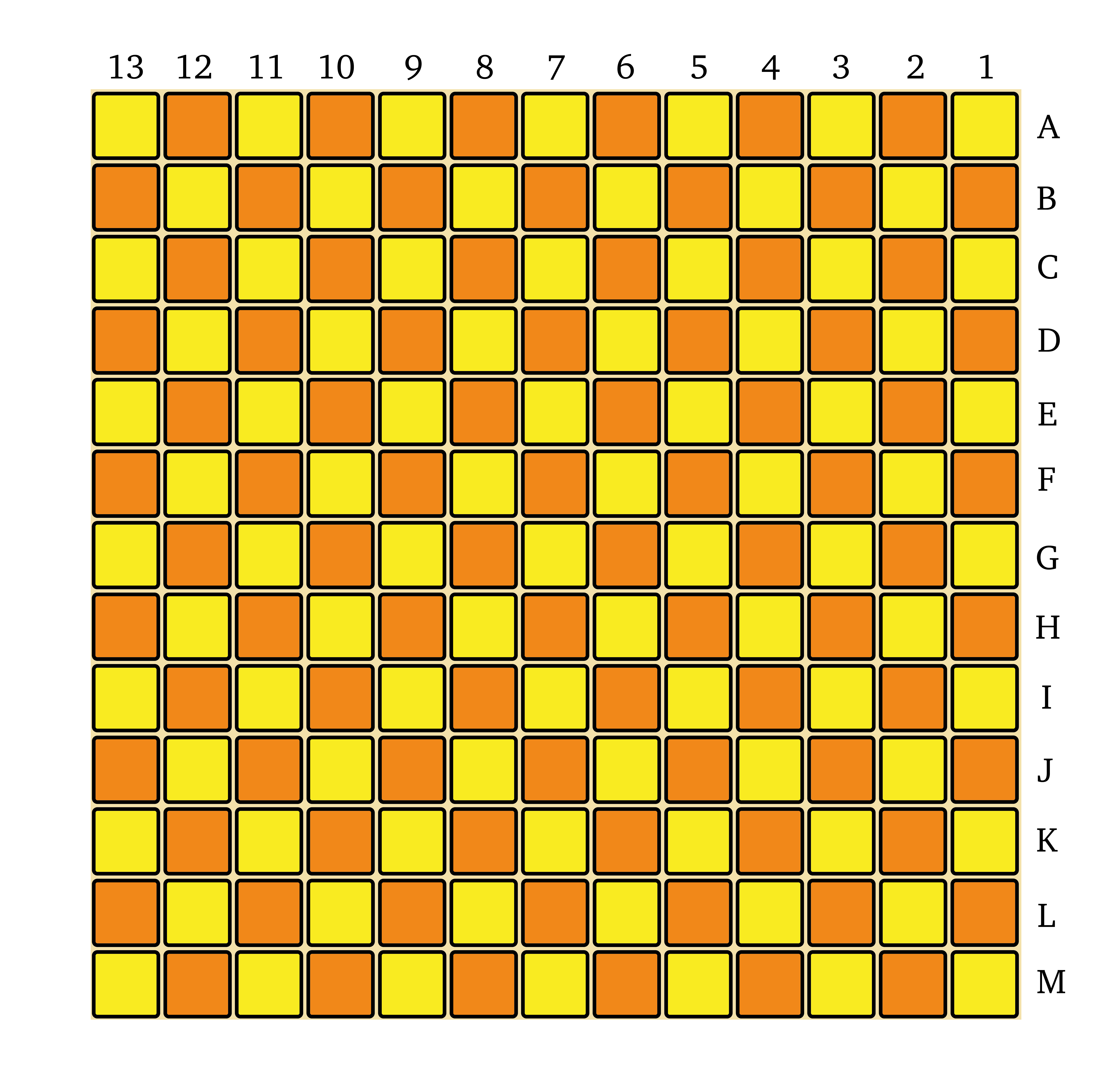
These are simply enlarged chessboards — 10×10 squares and 12×12 — that I plan to print on mats and use to play large variants of Chess.  Many Chess fans over the years have attempted to transport the magic of the Royal Game to larger boards, and thankfully a number of them succeeded in creating some very enjoyable variants that feel like Chess, but still have a unique personality.  I’m planning to write an article in the future that will cover a bunch of large Chess variants and give you some detailed recommendations; for now, here’s a few worth checking out on both board sizes, should you fancy giving them a go.

Some recommended 10×10 Chess variants: Caissa Brittania (checkmate the Queen instead of the King!), Decimaka (hybrid of Chess and Maka Dai Dai Shogi), Elven Chess (hybrid of Chess and Chu Shogi), Grand Chess (Christian Freeling’s most famous Chess variant), Grand Shatranj (ancient Persian Chess brought to 10×10), Omega Chess (commercial variant with Wizards and Champions), Opulent Chess (Grand Chess but more my style — higher piece density, less wild tactically), Shako (Chess with Cannons and Elephants).

Some recommended 12×12 Chess variants: Chu Shogi (the best 12×12 Chess-type game, period), Gross Chess (mix of Grand Chess, Omega and Asian variants, very playable), Metamachy (fast-paced Pawns and crazy historical pieces give it a unique and fun feel), Zanzibar-XL (dense and diverse piece selection with a variable setup).

Exo-Hex and Iris
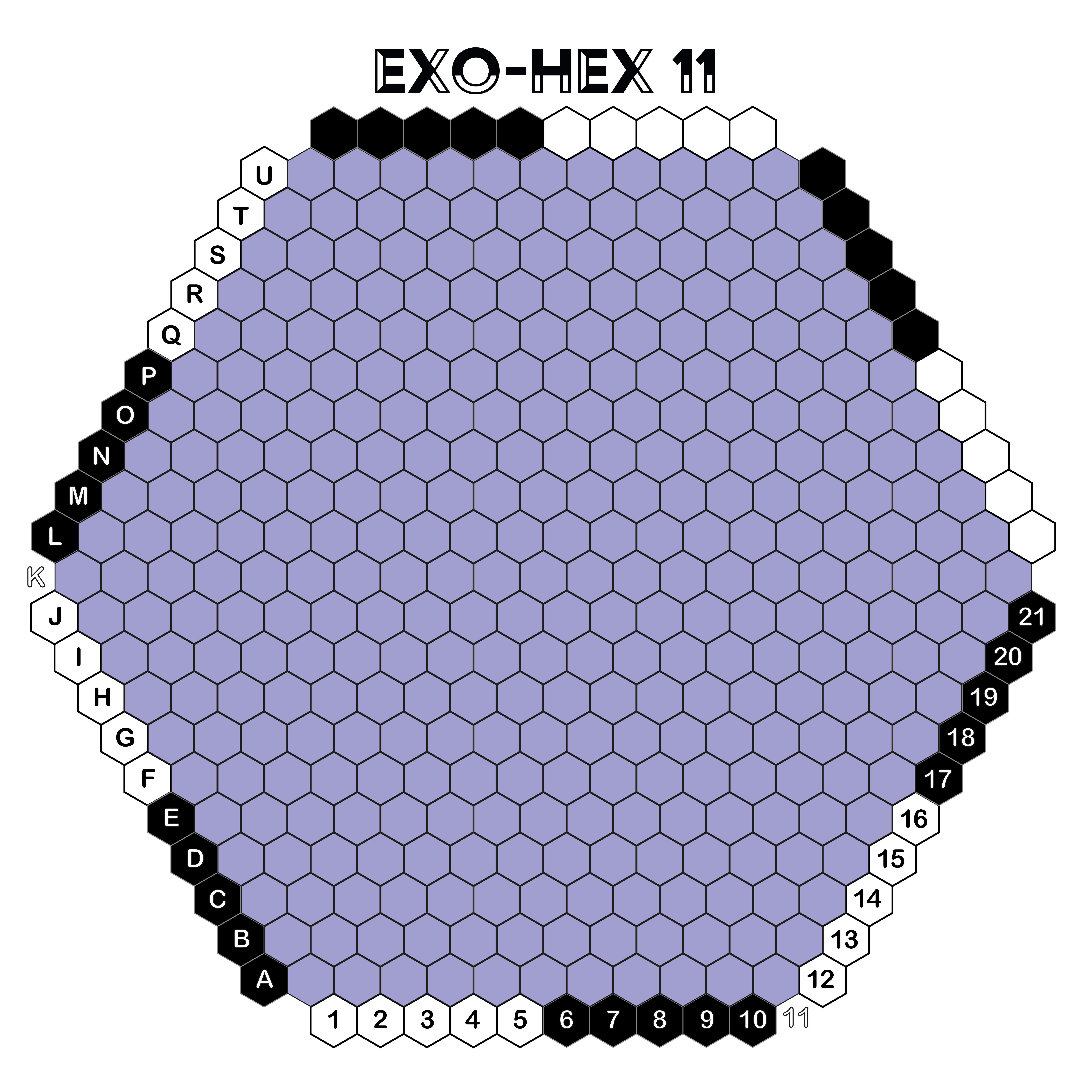
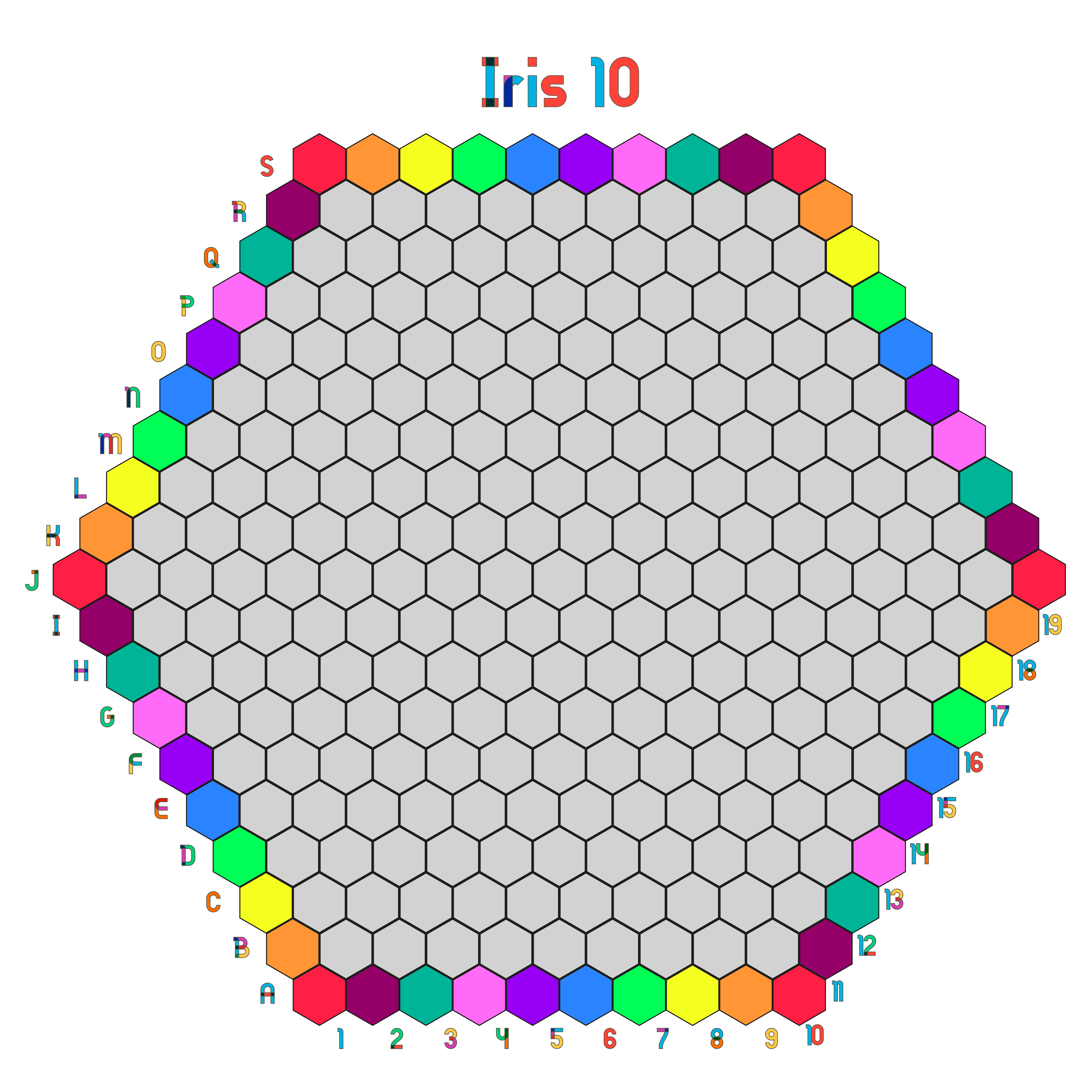
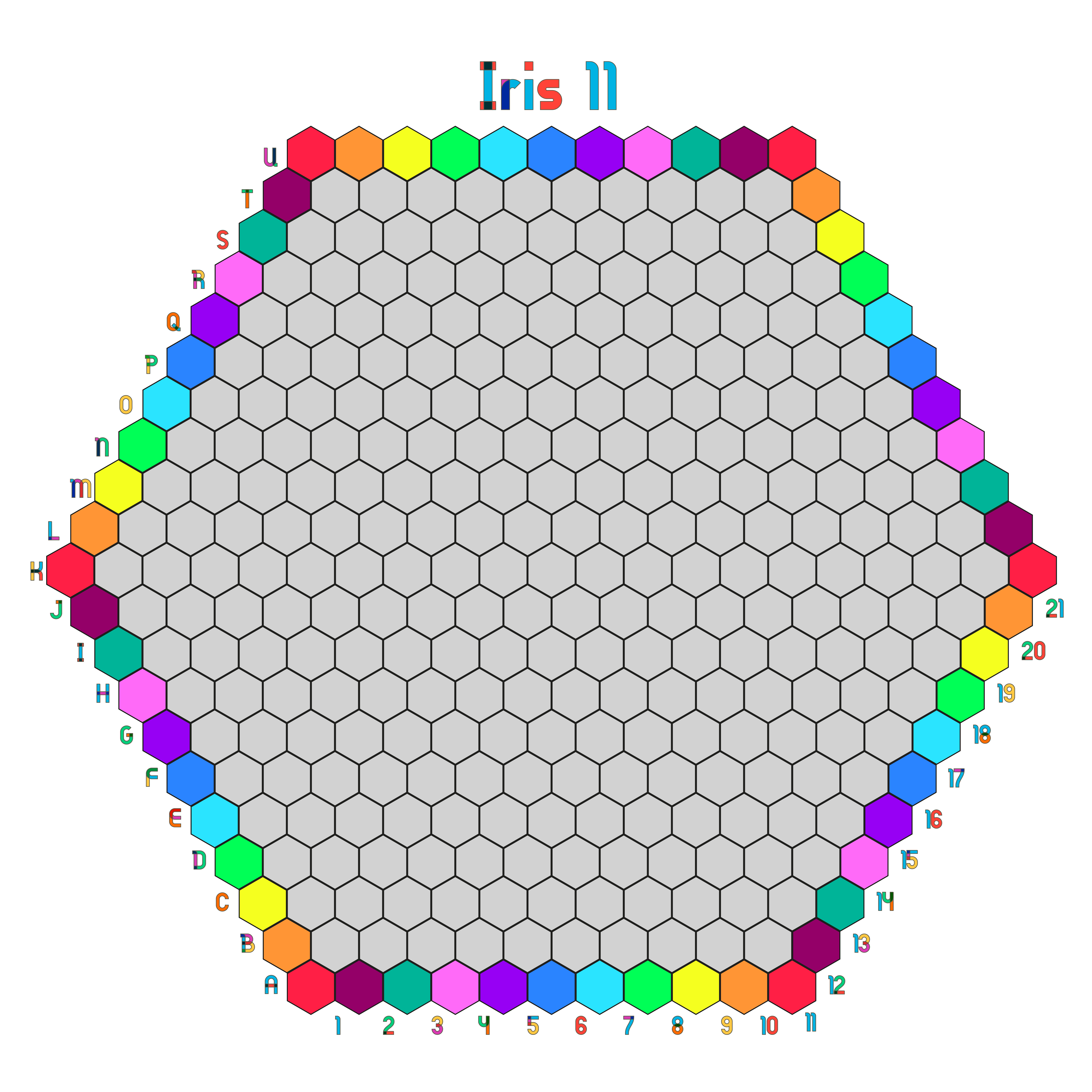
I briefly covered both these games before, but since then I’ve made some enlarged boards for myself, so I thought I’d share these here and urge you again to give them a shot.  Both these games are from Craig Duncan, and they are unique connection games that are centred on scoring points rather than being the first to make a single connection.  Both are rich and highly strategic, and well worth your time.

Why they’re great: Exo-Hex is essentially a distillation of Side Stitch into a simpler form, playable with a standard hexhex board with some extra stones around the edges.  The more straightforward rules and minimalistic look are great for beginners who may not yet be ready to graduate to Side Stitch and its endless variety of possible playing surfaces.  Exo-Hex is also much easier to construct with components you may already have around, so it’s more straightforward to pick up and play.

Iris, meanwhile, is part of the surprisingly small family of connection games with two-move turns.  Simple restrictions on placement — you may either place two stones on same-coloured spaces on the edge of the board that are directly opposite each other, or two stones in the centre on non-adjacent spaces — means that the game moves quickly and has a huge number of possible moves per turn (a large branching factor), yet structures you will know from Hex and other one-move games still work.  I’ve played Iris a lot against Ai Ai and I highly recommend it for any fan of connection games.

Lotus and Medusa
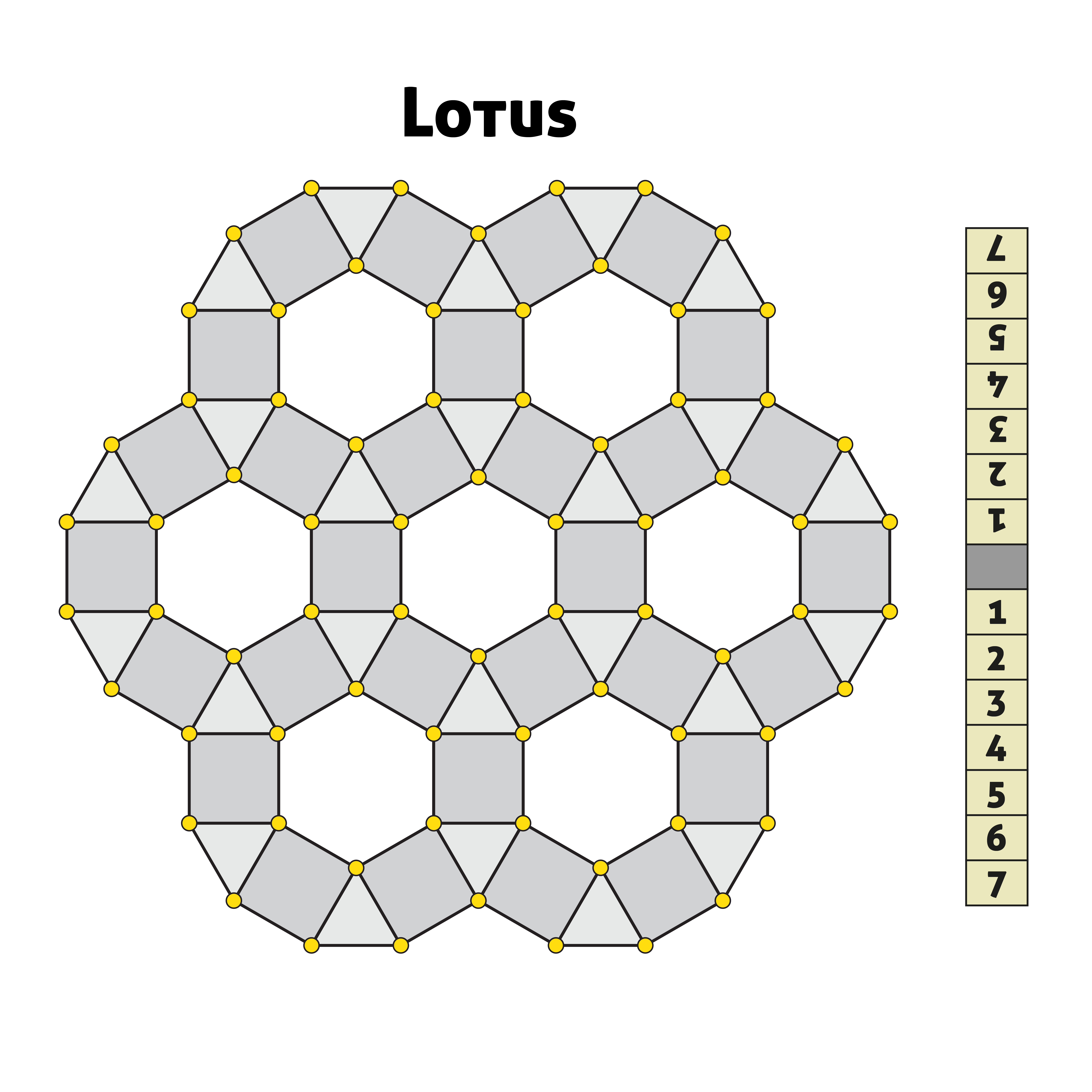
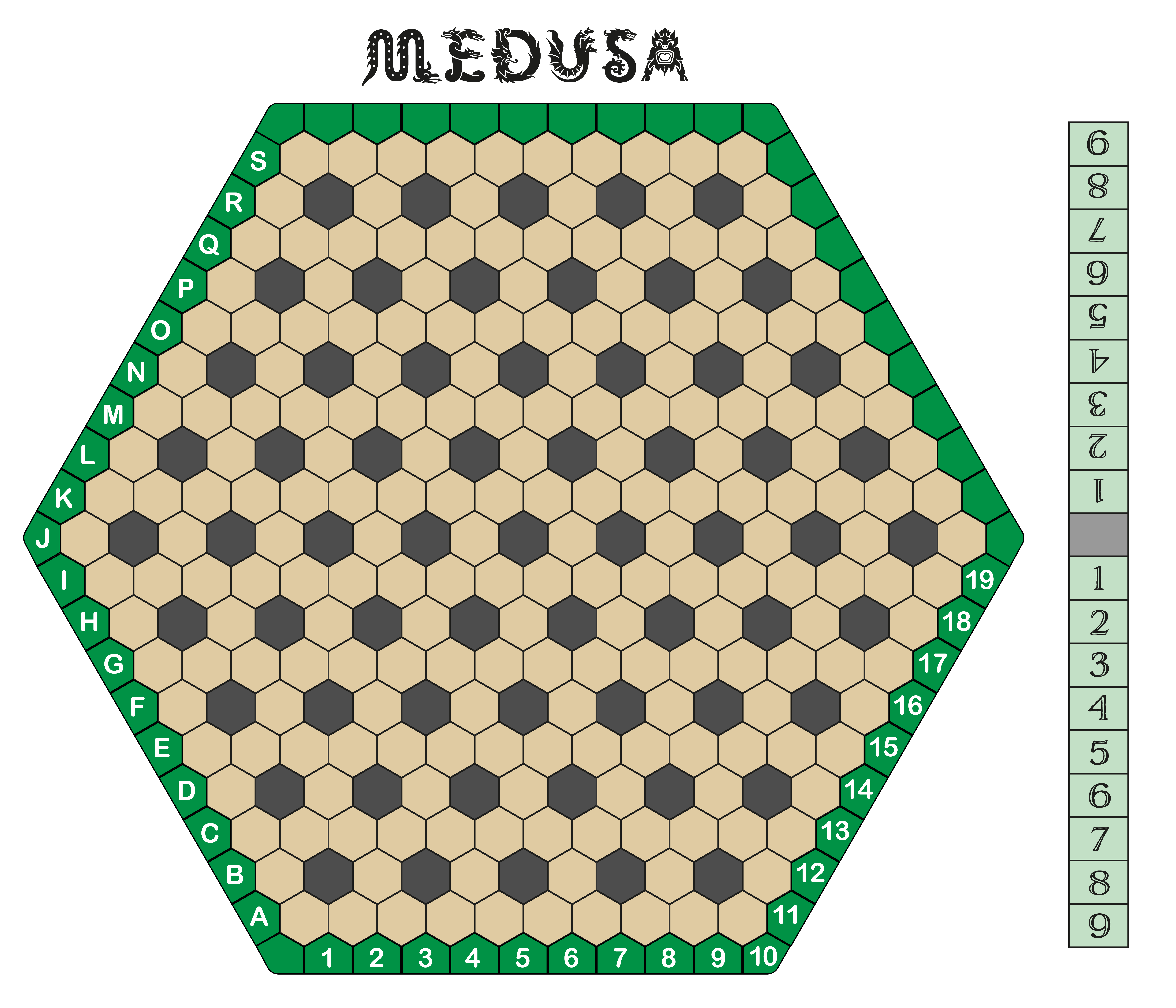
Lotus and Medusa are two under-appreciated territory games by Christian Freeling that are closely related — in fact Christian calls Lotus the ‘support act’ for Medusa.  Both centre around the use of a mechanic from a game called Rosette.  Over the years, numerous designers have tried to transport the game of Go to the hexagonal grid, only to find that the reduced connectivity of each point (from 4 adjacencies to 3) made it too hard for players to build stable groups of stones.  Rosette addressed this by allowing groups of stones containing a rosette — a formation that occupies all six points of a single hexagon — to be immune from capture permanently.  Lotus and Medusa adopt this clever tweak, while adding some fascinating additional touches.

Why they’re great:  Lotus takes the cool-looking board from the rather disappointing game of Kensington, and turns it into the basis for a compelling territorial contest.  Capture doesn’t just eliminate enemy stones, it flips them to your side, like in Othello, and occupying all six points of a hexagon keeps your groups alive forever, as in Rosette.  Medusa takes this further by removing hexagons from the playable area of the board to further reduce its connectivity, and allowing players to either place or move a group of stones already on the board.  Medusa also has the ‘Othellonian’ capture and rosettes of Lotus.  Both games have the satisfying tension of a good Go-like game, but with very different play styles; Lotus is quick and deadly, while Medusa is a longer epic that allows groups to flow sinuously across the board.  Both deserve more attention than they’ve received.

Nutty Shogi (and friends)

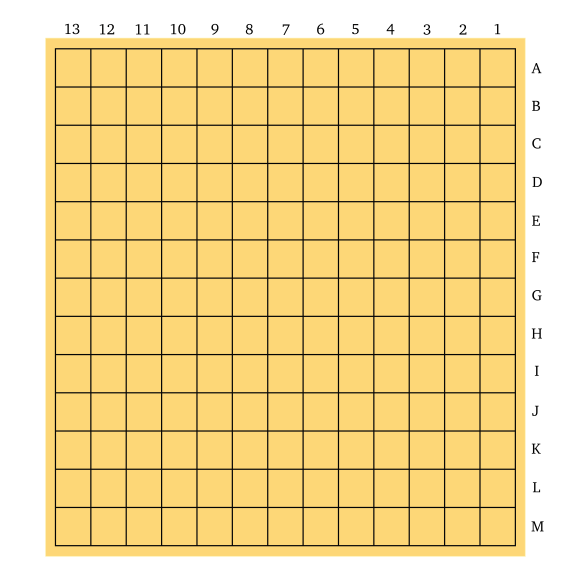
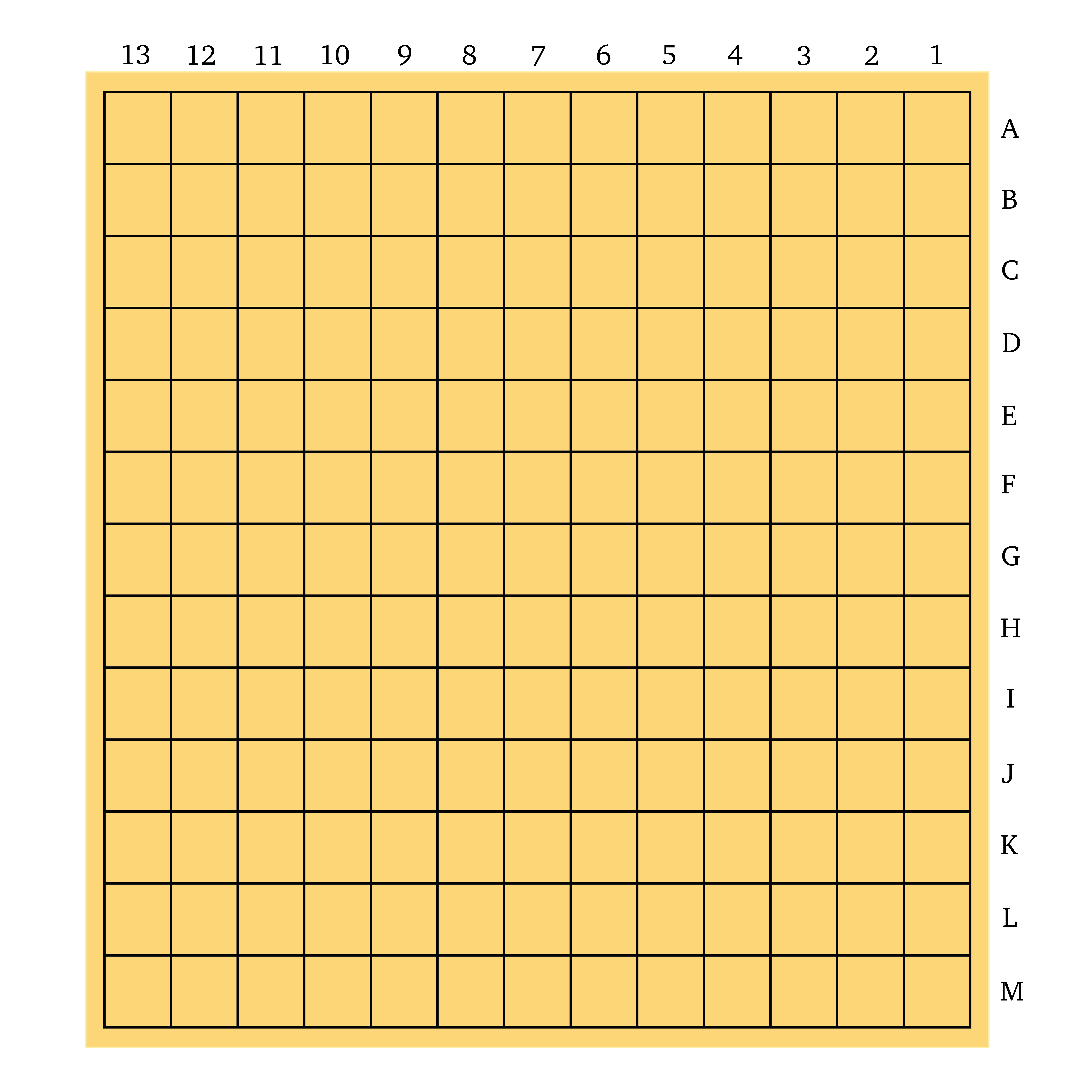
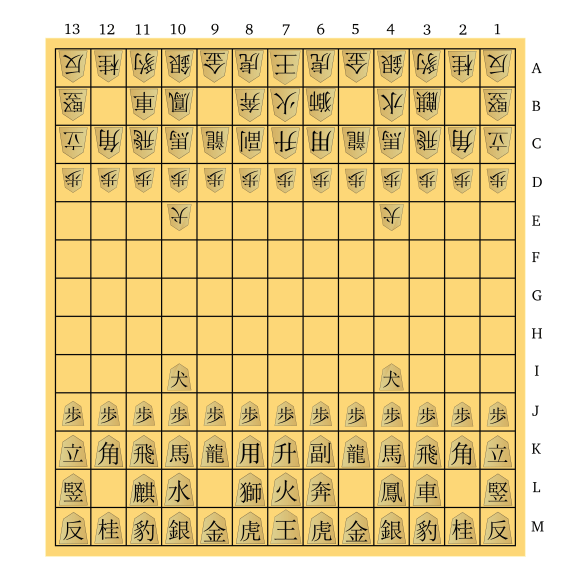
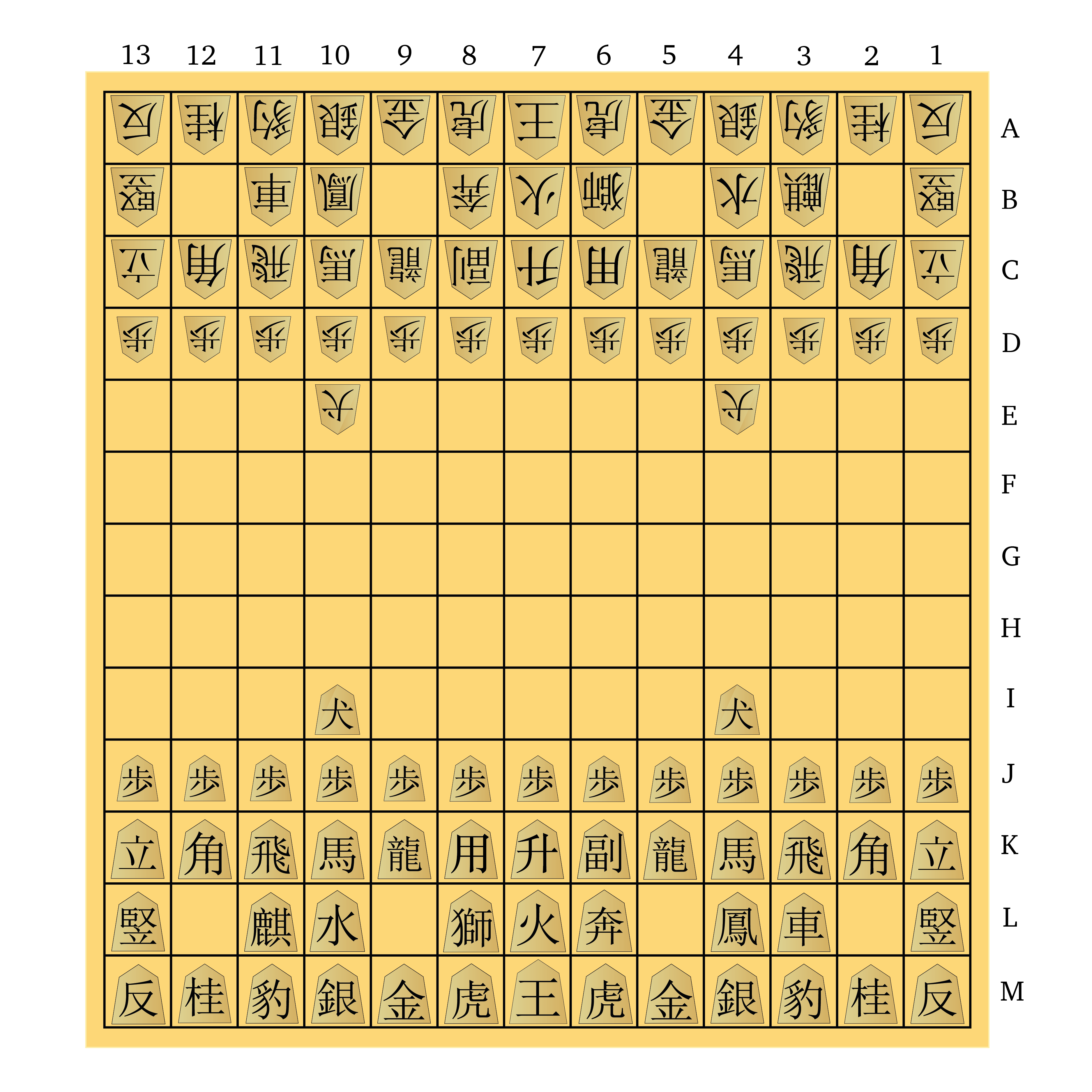
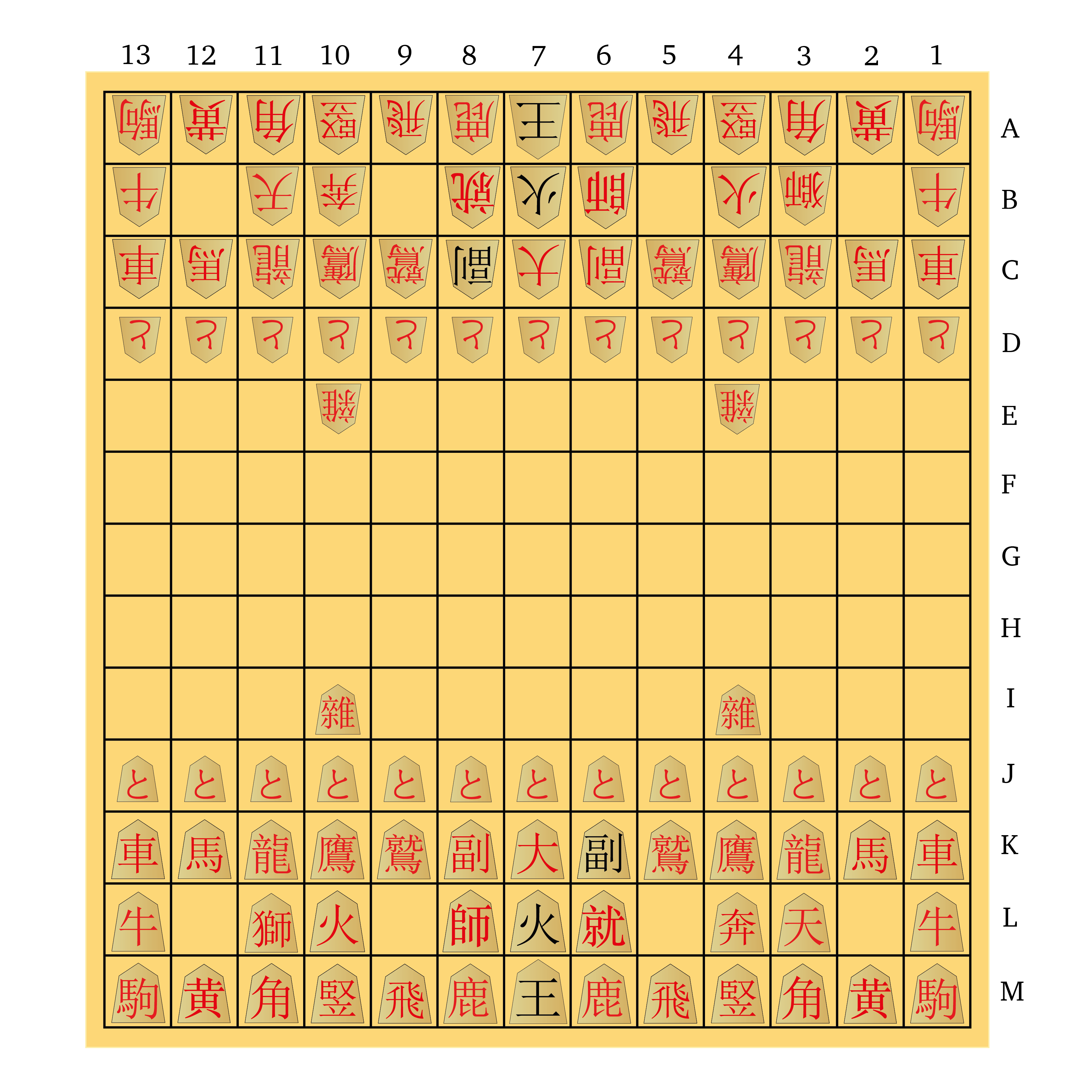
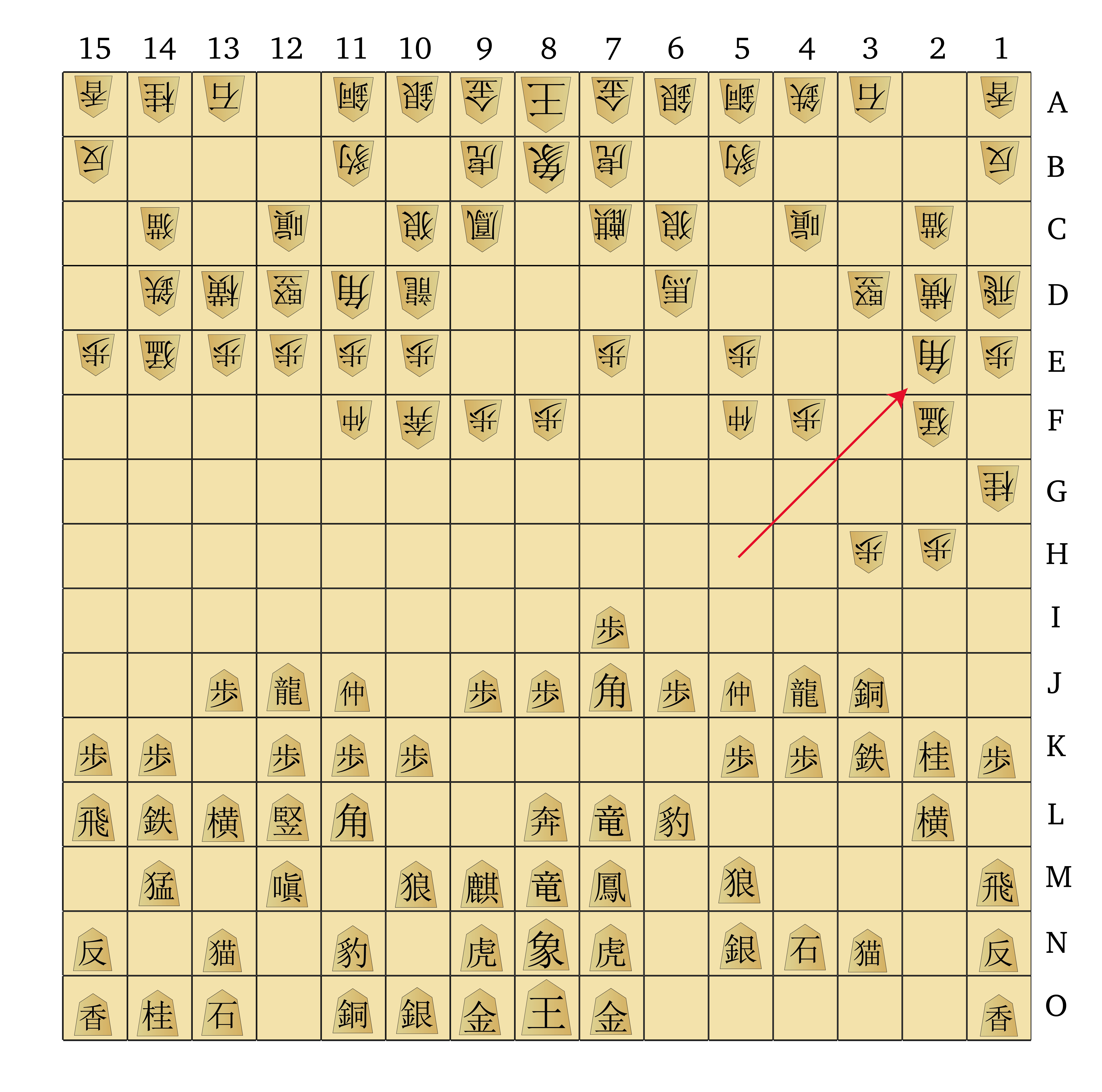
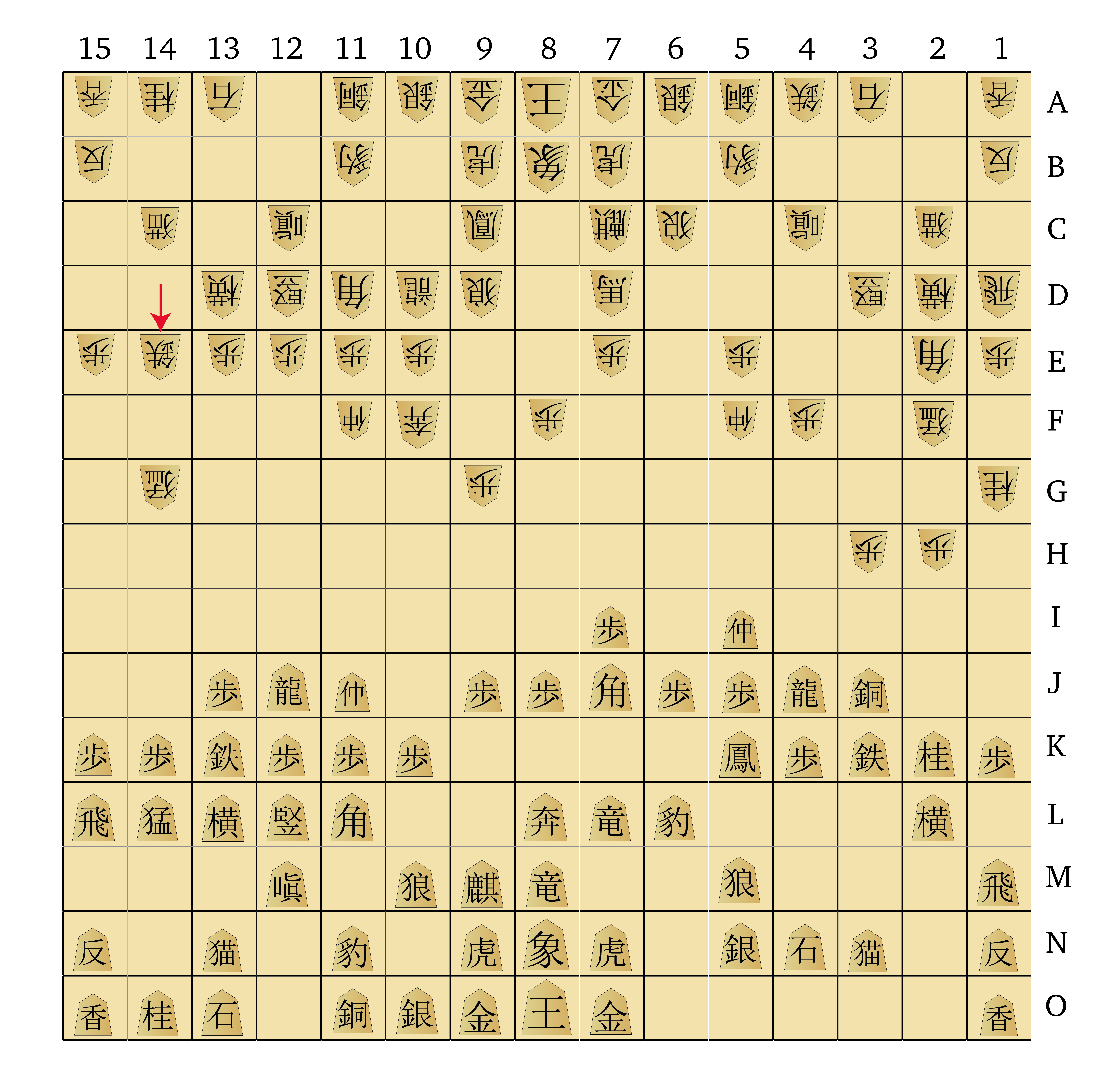
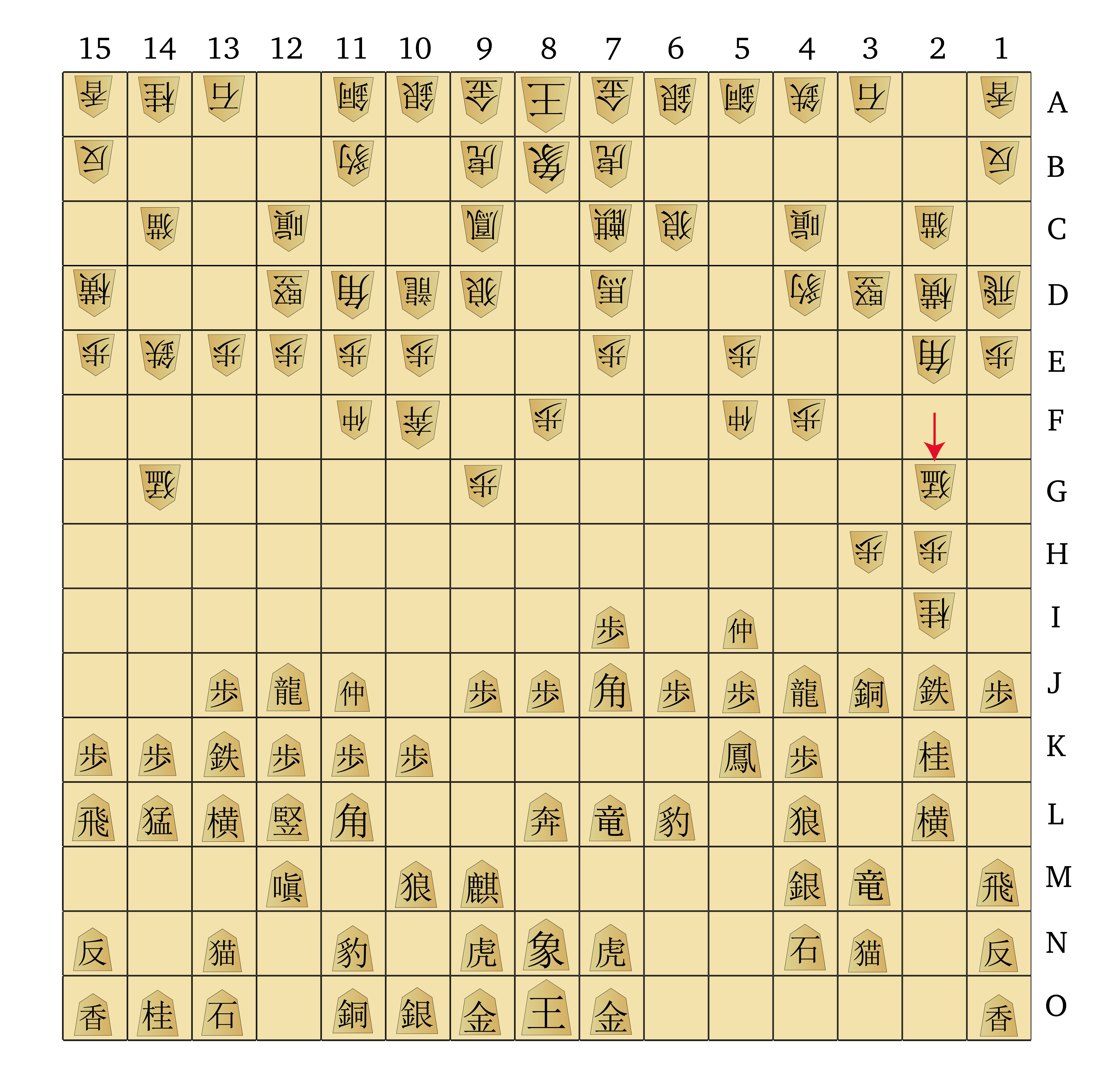
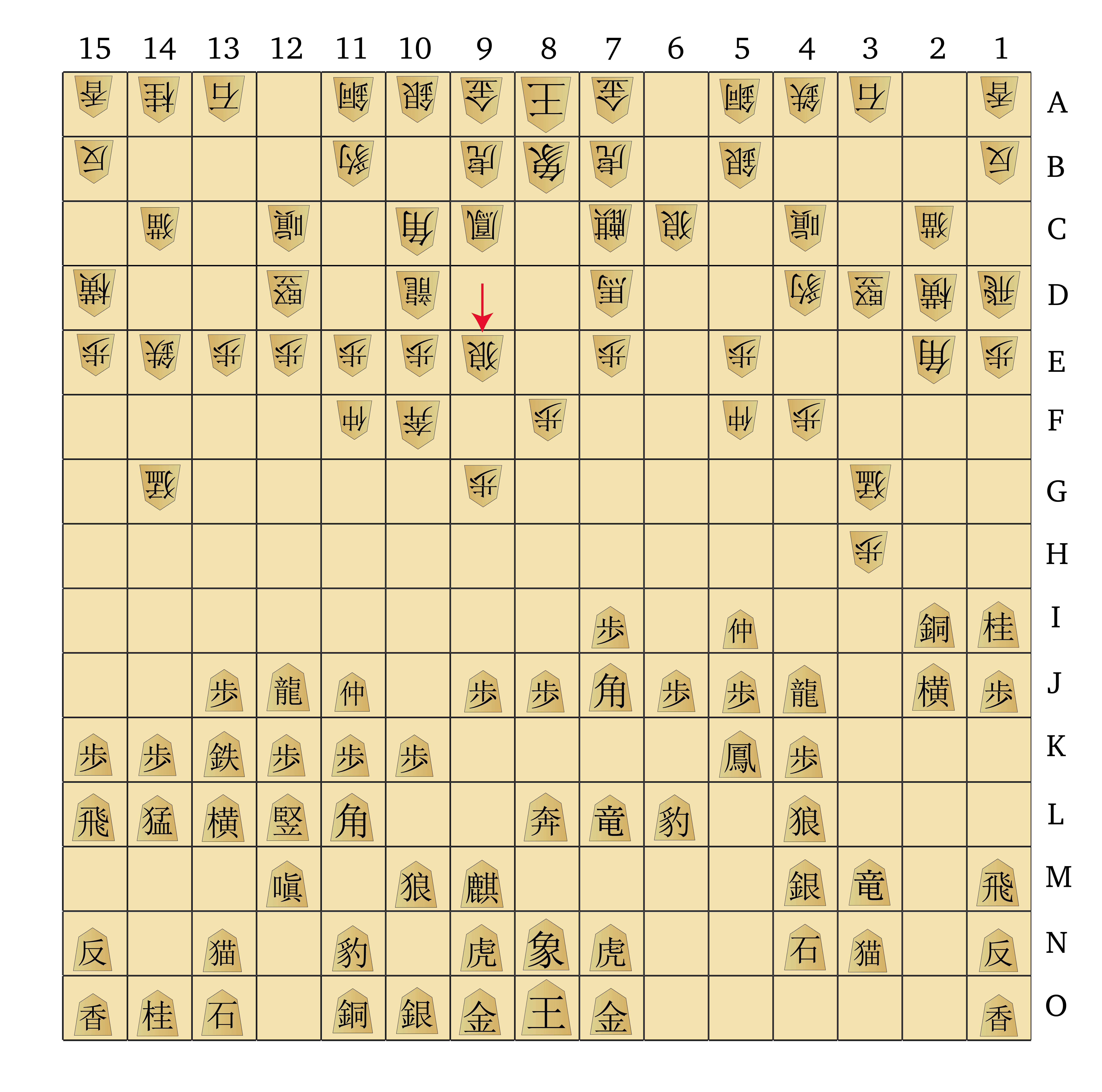
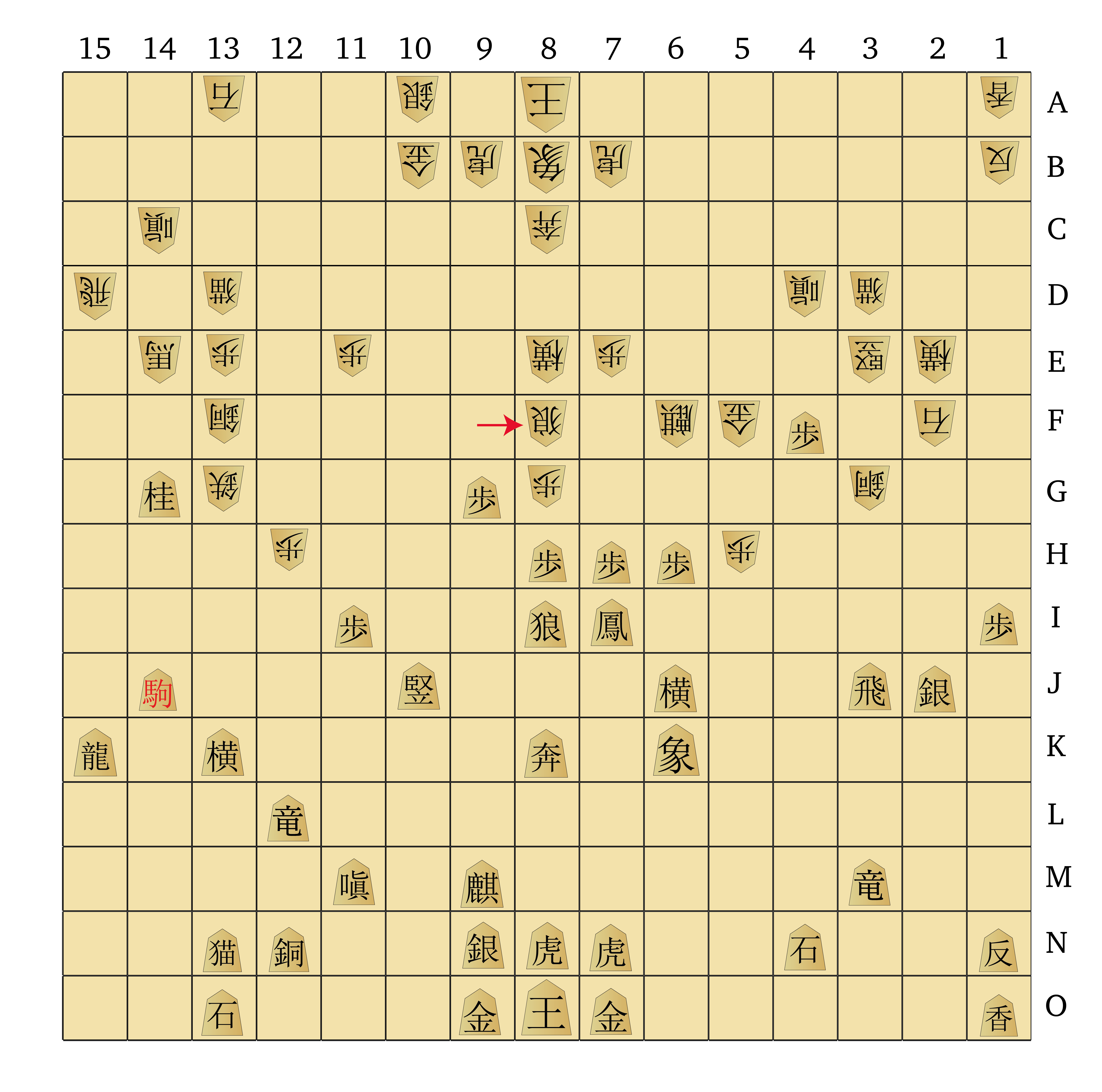
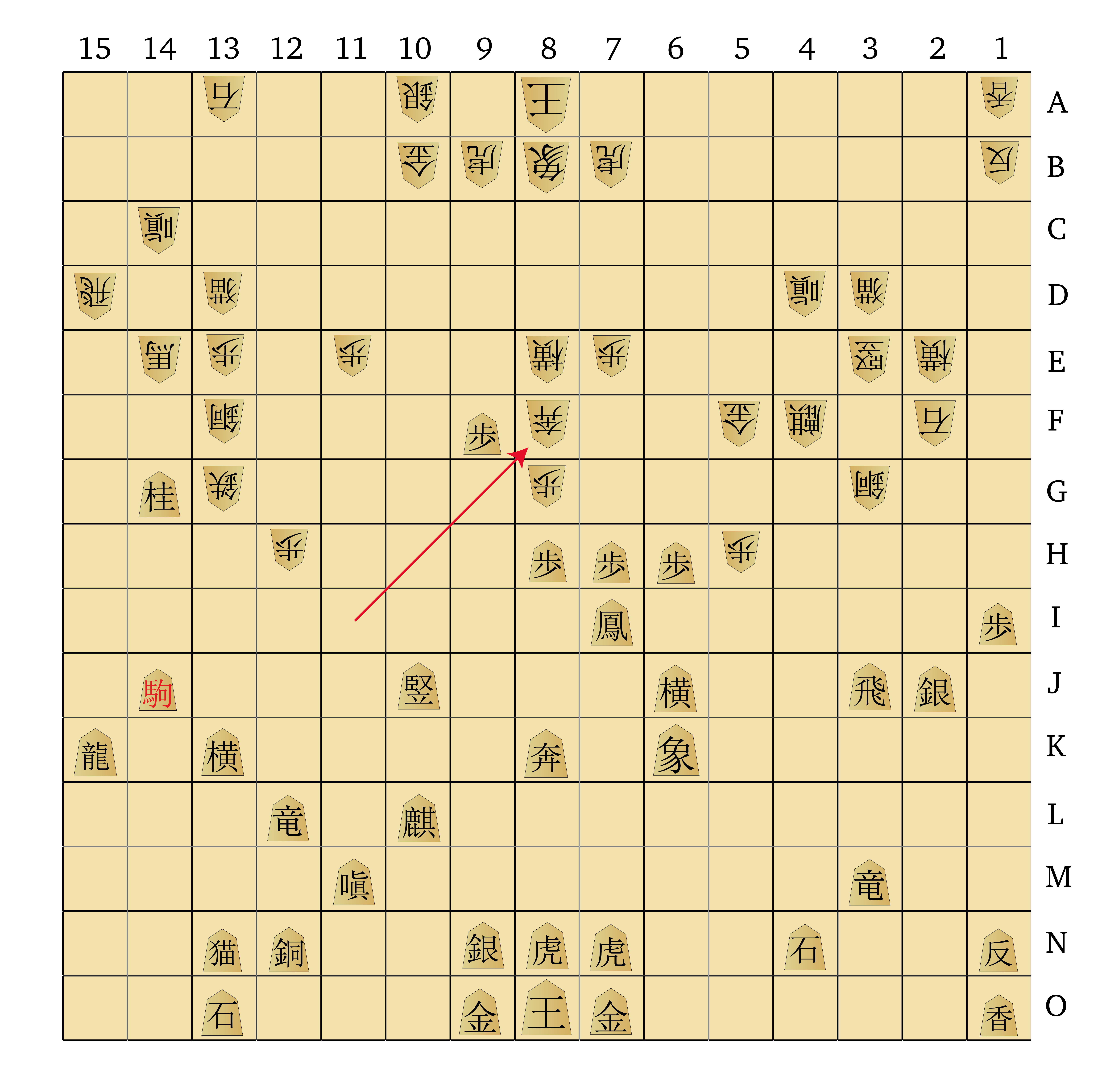
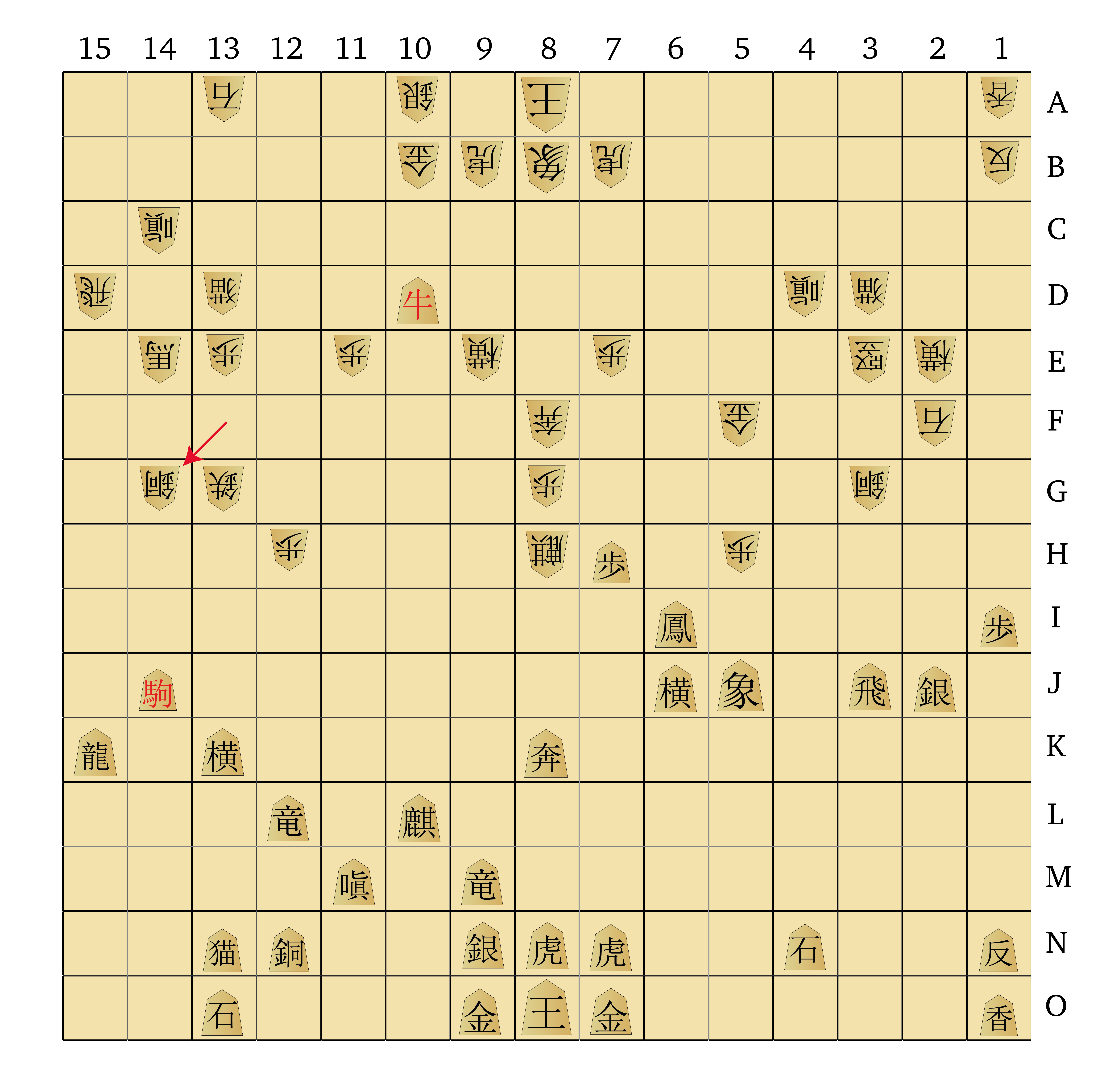
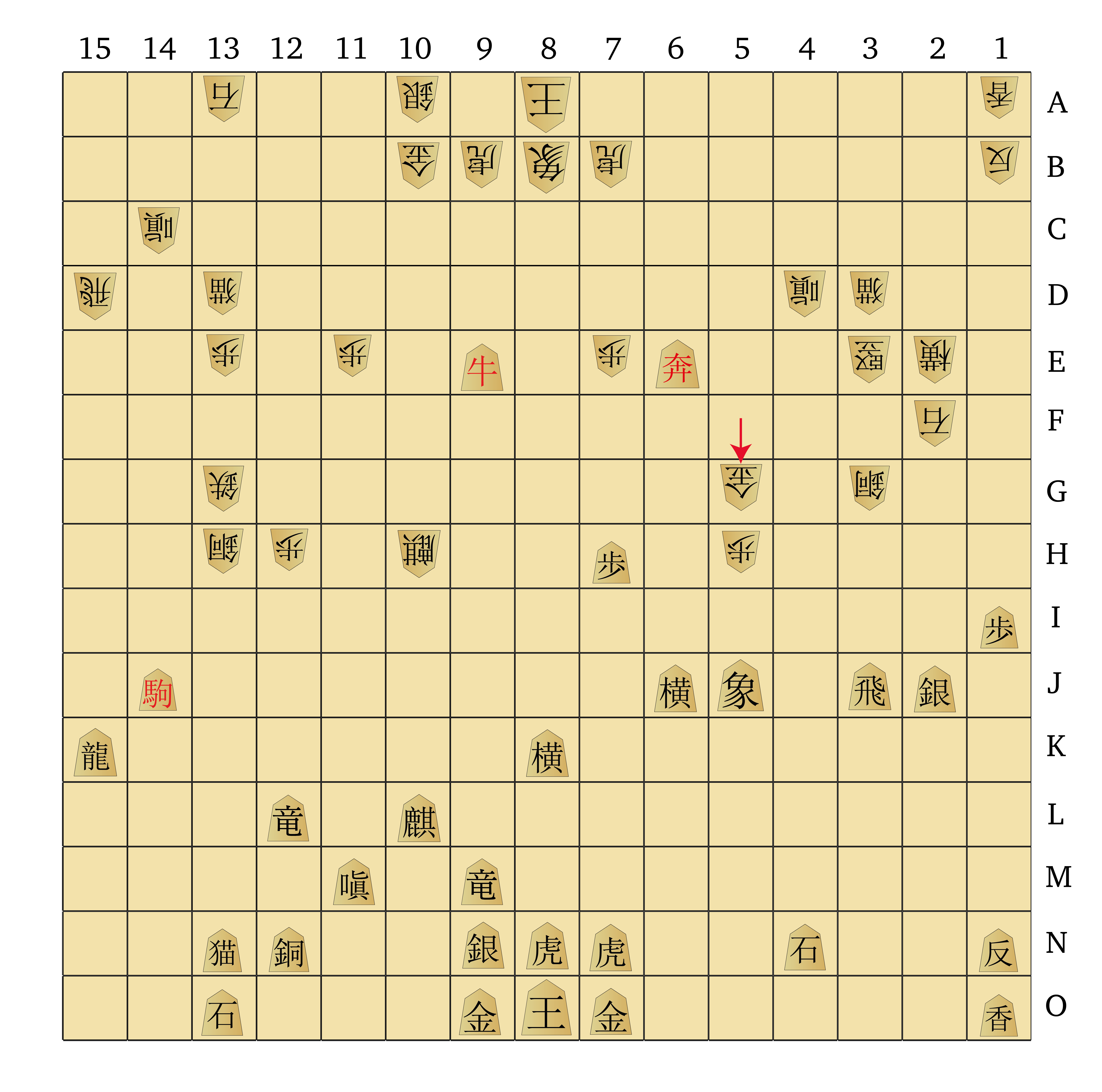
Nutty Shogi is here as a representative of the class of 13×13 Shogi variants.  The only historic 13×13 Shogi variant is Heian Dai Shogi, which is a very early form of Dai Shogi that is unfortunately not very enjoyable to play.  However, some modern Shogi variant fans have created some 13×13 variants that are worth your time, and given that 13×13 Shogi boards are not available anywhere, I decided to create one to print on a mat.

Why 13×13 Shogi is great: Nutty Shogi, designed by HG Muller, is a reduced version of Tenjiku Shogi, a 16×16 historic Shogi variant famous for its outrageously powerful pieces and extremely fast-paced and destructive play.  Nutty Shogi condenses Tenjiku’s armies of 78 pieces per player, with 36 types of pieces, down to 50 pieces of 25 types — still much more than Chess or Shogi, but quite manageable.  The selection of pieces is basically a Tenjiku Greatest Hits album, so the game retains the feel of Tenjiku in a more compact size.  HG Muller also created two other worthwhile 13×13 variants:  Cashew Shogi, a reduced form of Dai Dai Shogi; and Macademia Shogi, a reduced form of Maka Dai Dai Shogi.  While you’re at it, do check out Mitsugumi Shogi, a condensed form of Suzumu Shogi, which is a modern variant of Tenjiku Shogi (still with me here?).  All of these games pack a lot of action into that 13×13 area, so despite the large boards and starting arrays they are far from slow.

Odd-Y and Pex

Here we have two fascinating variants of the seminal connection games Hex and the Game of Y.  Odd-Y extends the core concept of Y to boards with more than three sides, while Pex transports Hex to a grid of irregular pentagons.

Why they’re great: Odd-Y circumvents one of the shortcomings of Y, in my opinion, which is that the triangular Y board gives different areas of the board very different values, which means some parts of the playing area go largely unused.  Odd-Y extends the goal of forming a Y — connecting three sides of the board — to boards of more sides, creating a more expansive feel.  The new winning condition is a bit complicated to explain on larger boards, but Odd-Y with five sides — 5-Y — is beautifully simple: connect any three sides to win, so long as all three sides are not adjacent.  This can then be translated to a six-sided hexagonal board by colouring the edges with five colours in a pattern like you see above (Craig Duncan came up with this idea).   5-Y feels very freeing — there are more winning connections available than in Y, creating more strategic complexity, and the entire board surface feels useful.

Pex was invented by connection game maestro David J Bush, world champion of TwixT and co-author of my post on that game.  He transformed Hex by placing it on the irregular pentagonal grid you see above, keeping all the rules the same (not that there are many rules in Hex).  The new grid forces significant changes in tactics, as cells now have different adjacencies, so standard Hex techniques won’t work.  Pex is a challenging and interesting variant, definitely intriguing for experienced Hex players, but also simple enough for newcomers to pick up and enjoy within minutes.

Snodd (and Xodd/Yodd)

Snodd is a variant of a pair of games by Luis Bolaños Mures called Xodd and Yodd.  Xodd/Yodd are mind-bending games in which players are assigned a colour, yet may play stones of both colours; Xodd is played on a square grid, while Yodd is played on a hexagonal grid.  On your turn, you may place two stones on the board, each of which may be either colour, and at the end of the game the player with the smallest number of groups on the board in their colour wins the game.  There’s a catch, however: at the end of any player’s turn, the total number of groups of stones on the board must be odd!  This single restriction is what makes the game so challenging and unique.  When you start to play you’ll soon realise how this parity restriction allows you to catch your opponent out in all sorts of clever ways.

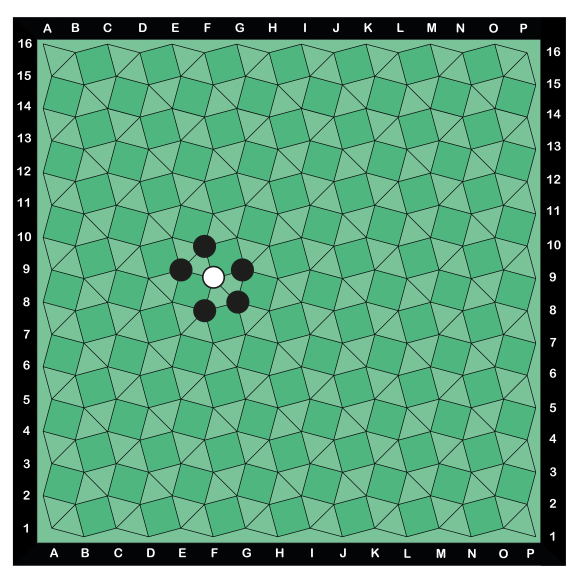
Why Snodd might be great:  Snodd is my attempt to bridge the gap between Xodd and Yodd.  Xodd is played on a square grid, where each square has four adjacencies (diagonal adjacencies don’t count), resulting in a tight, tactical game where groups are often split apart.  Yodd is played on a hexagonal grid, where cells have six adjacencies, meaning groups stay connected more easily and the game feels more deliberate and strategic.

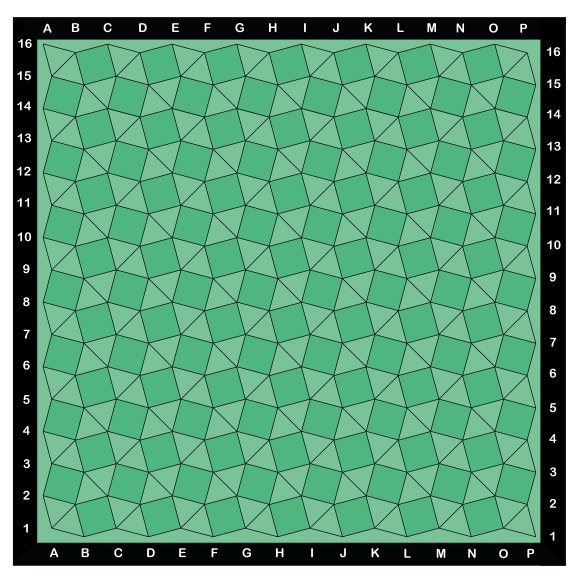
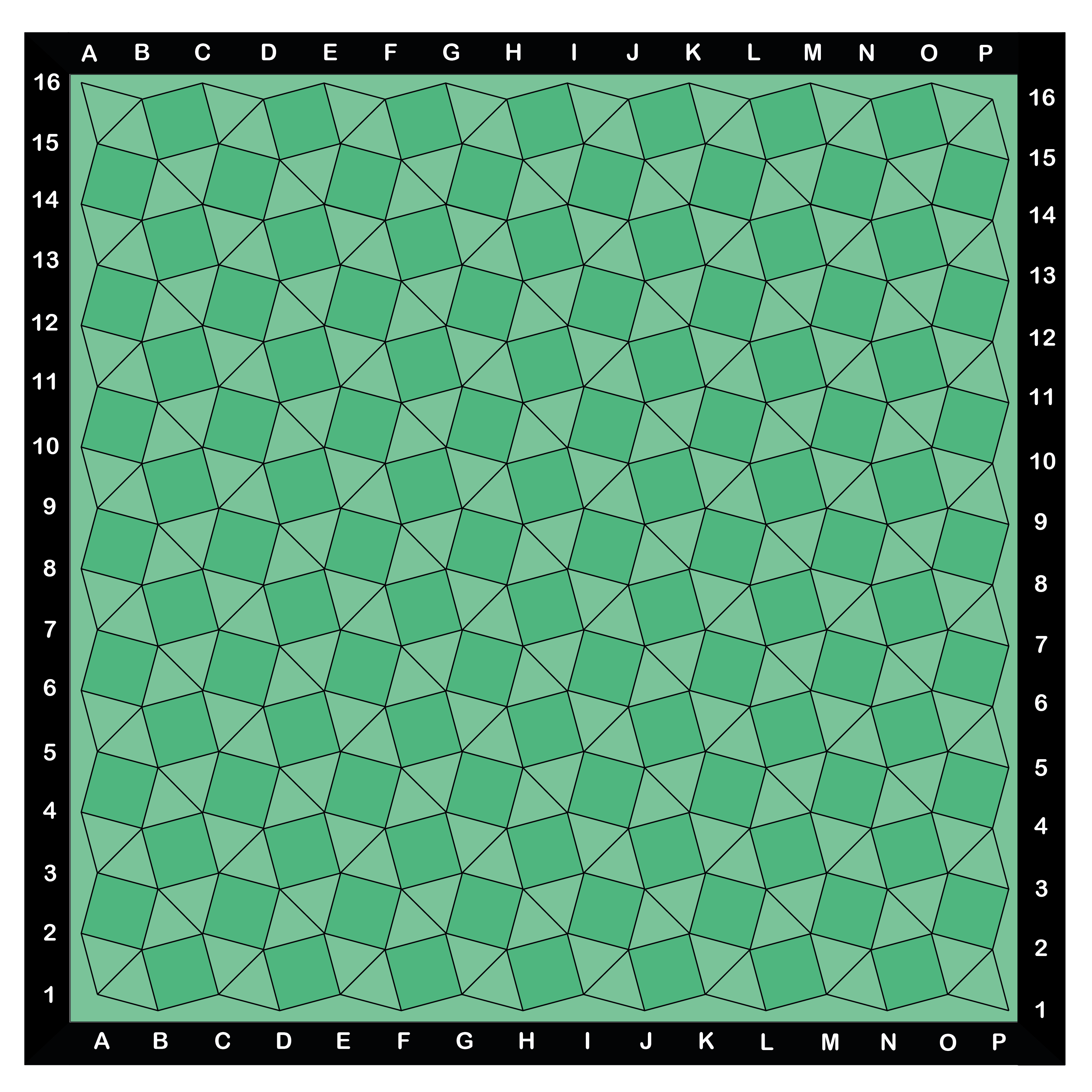
In Snodd I took the exact same rules and ported them to a snub-square tiling.  When you play on the points of this pattern, each point has five adjacencies, placing it right between Xodd and Yodd’s geometries.  In theory, this should make a version of the game with a nice balance between tactical fights and global strategies.  Test games against myself have been promising, but more investigation is needed.  Give it a try and let me know how you find it!

*Star and Superstar
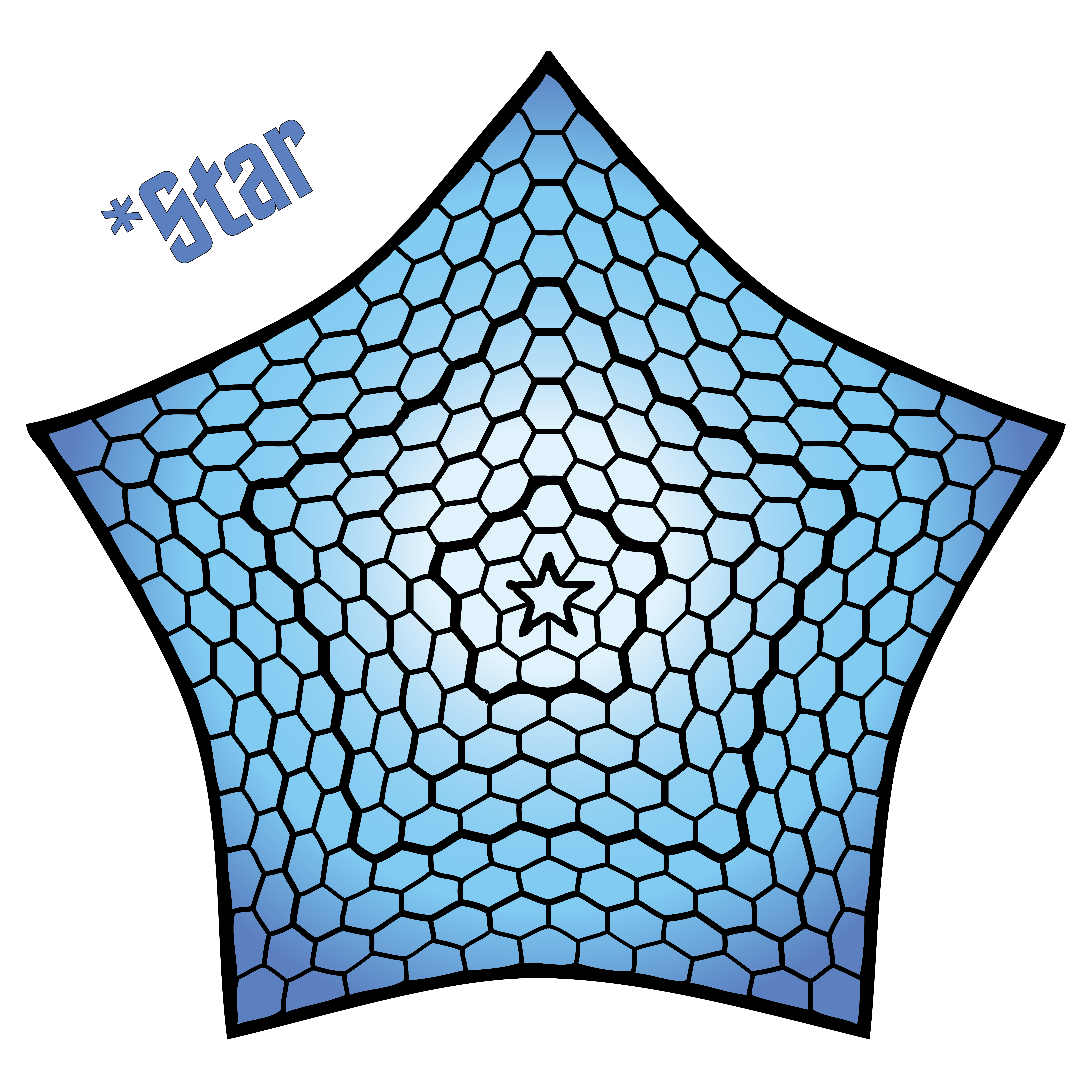
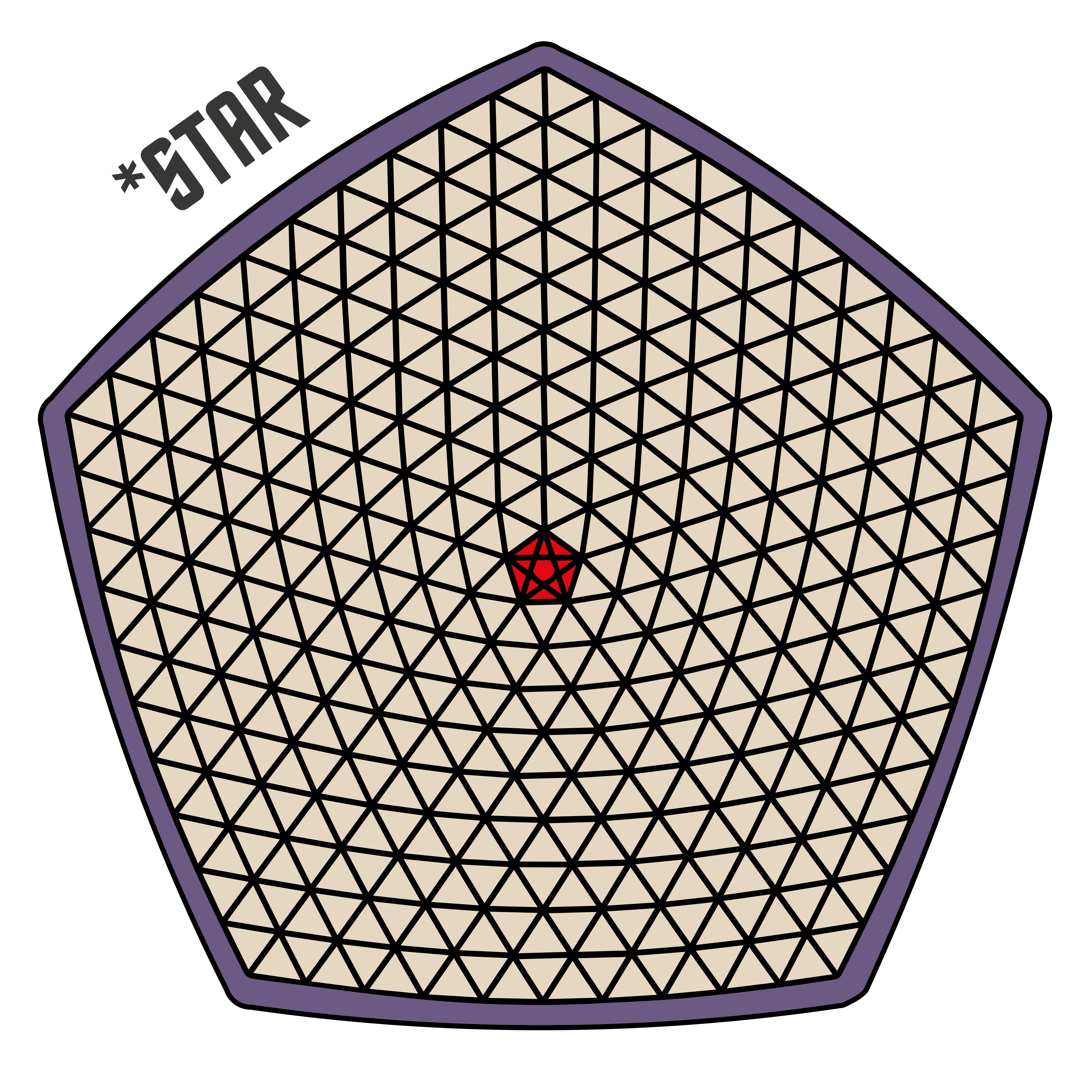
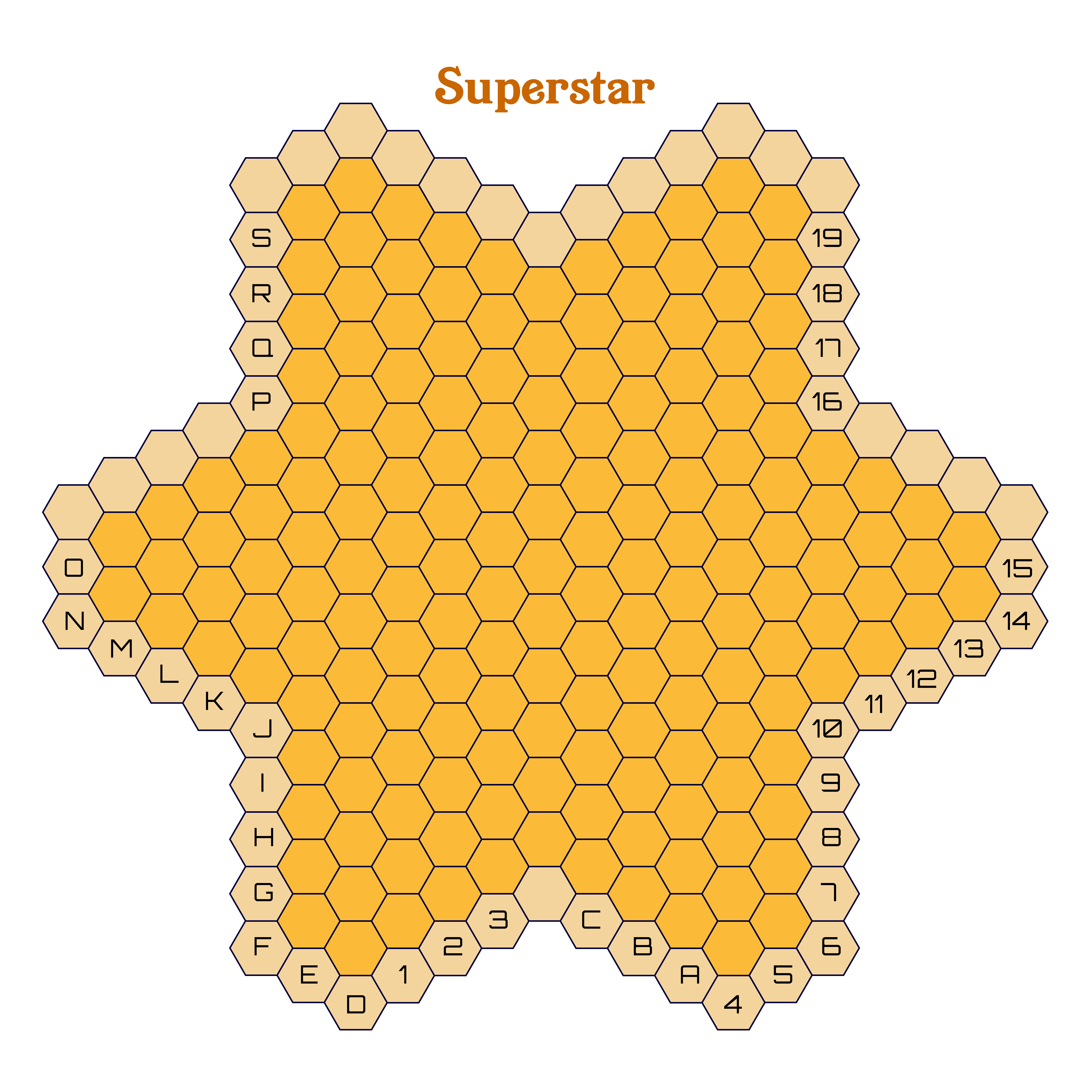
*Star is another game I’ve covered before, but at the time I was a bit confused about the rules and had yet to try it.  Boards are also hard to obtain, as they can only be ordered from America, and shipping from America now is ludicrously expensive, so I made two variations of the *Star board to print myself.  Superstar is a predecessor of Starweb, a fantastic connection game from Christian Freeling; Christian says Superstar is no good now and fully superseded by Starweb, but he thinks lots of things are no good, so I wouldn’t take that to heart.

Why they’re great:  *Star is the final iteration of Craige Schensted/Ea Ea’s set of connection games built around the goal of claiming edges and corner cells, then connecting groups of those cells together.  *Star is a bit hard to understand at first, but once you get going, you’ll find a dynamic game of territory and connection, where both players writhe hectically around each other trying to weave their scoring groups together.  The resulting play is complex and challenging, and games of *Star often exhibit subtle and sophisticated strategies.  The *Star board also supports two excellent variants: Double Star, where players may place two stones per turn instead of one; and Star-Y, a pure connection game where players must connect three sides which are not all adjacent (just like 5-Y above).

Superstar’s relationship to Starweb is about more than the shape of the board — there’s a clear lineage here, where Christian was moving from Star/*Star toward what would eventually become Starweb.  Despite Christian’s misgivings, I enjoy this game — it has a remarkable diversity, in that multiple types of formations are available for point-scoring: stars (a group touching at least 3 edge cells); superstars (groups connecting 3 or more sides, worth many points); and loops (worth more points for enclosing more cells, and many more points for enclosing enemy stones within).  The feel in play is like a heady mix of Star and Havannah, where each player has incredible flexibility and must keep their wits about them to spot the myriad ways their opponent may be seeking to score.  The mix of connection and surrounding elements gives it a bit of a territorial feel as well.  For me it is a worthy entry in the Freeling canon, distinct enough from both Starweb and Havannah to have its own identity.

About the boards:  The two *Star boards above are equivalent — on the blue one you will play your stones in the cells, and on the other you will play on the intersections.  I made both since different players may find one or the other easier to parse visually, so I wanted to have both options available.  The Superstar board is very similar to the Starweb board, with the notable difference that the light-shaded cells are not playable, but instead are there to indicate the point values of cells adjacent to them.  The game would definitely be extendable to larger boards, but uncharacteristically I haven’t yet made one; I plan to write a full post on this game at some point (along with some other connect-key-cells games), so I will be sure to make a bigger board when that day comes.

Tamerlane Chess
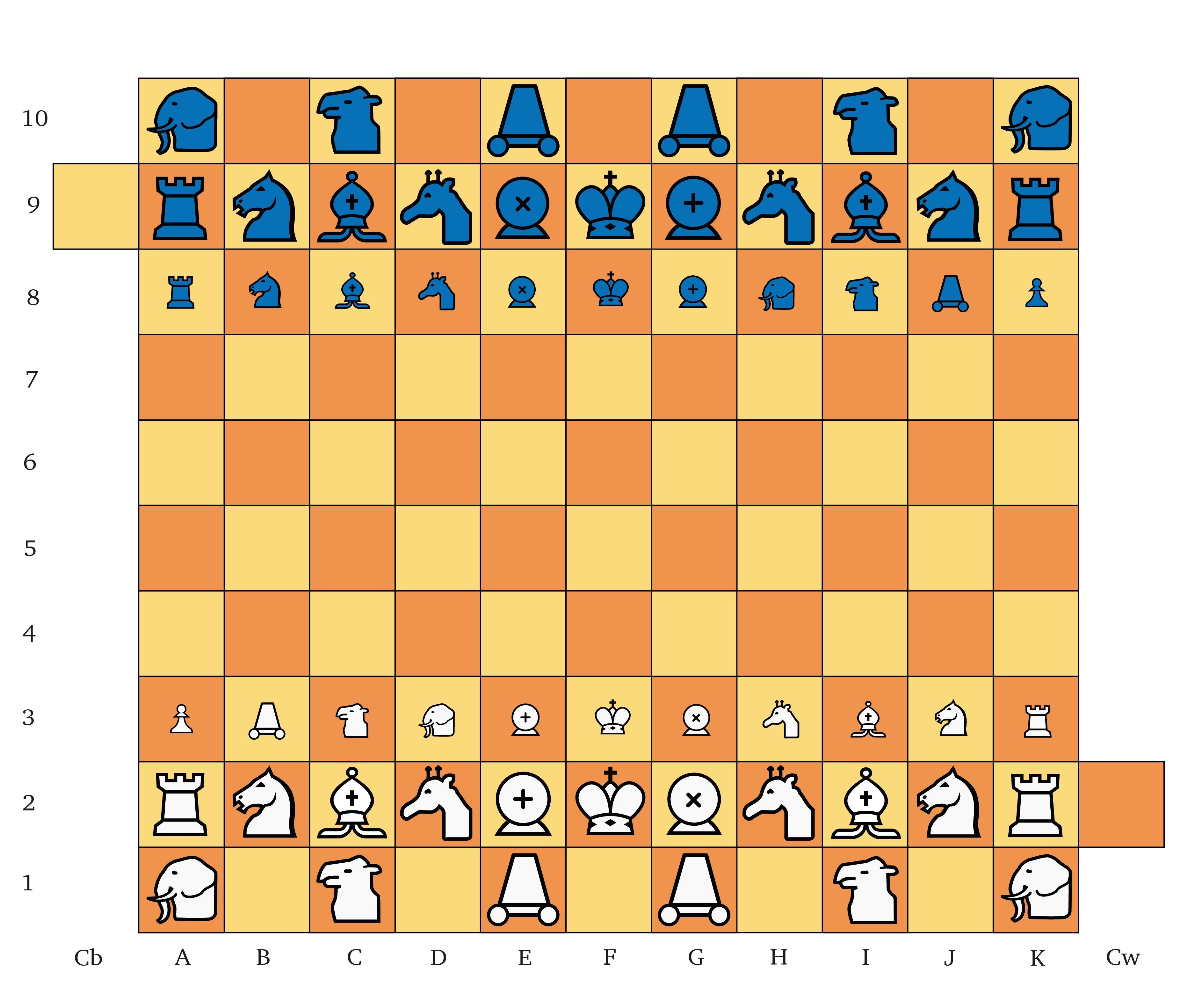
Tamerlane-start-pos-01

Tamerlane Chess is a historic Chess variant from the 14th century; the game was allegedly invented by the Persian ruler Timur Lenk, but that may well be a myth.  Tamerlane is a large-board variant of Shatranj, the Persian form of Chess and direct ancestor to the Royal Game we know today.  This game takes the core of Shatranj and adds a bunch of unusual elements to the game, giving it a confusing and beguiling personality.

Why it’s great:  Tamerlane’s board immediately stands out — not only is it large and oblong, forming a 10×11 grid, but there are two extra squares sticking off the sides.  These squares are called citadels, and they serve a special purpose: if your King can reach the citadel on your opponent’s side of the board, you can secure a draw.  These little boltholes of safety are just one of the quirks of Tamerlane:

  • Several unusual pieces are added to the base Shatranj army, including two pieces that leap like the Knight but in different patterns (the Camel and the Giraffe)
  • The Pawns — shown above as tiny versions of the other pieces — promote differently depending on what column they start from, and the ‘Pawn of Pawns’ (on A3 and K8) can promote three times to become an extra King
  • The Pawn of Kings promotes to a Prince, which also must be mated to win the game, so each player may have up to three Kings on the board

The result of all this craziness is a remarkably exciting game, with varied tactics thanks to the diverse pieces and unusual endgame strategies resulting from the promotion rules and citadels.  Shatranj pieces are generally shorter-range than modern-day Chess pieces, and Tamerlane extends Shatranj with more leapers rather than long-range sliding pieces, so the feel is very different from Chess.  Tamerlane may be 600 years old, but it feels modern and creative.  I enjoy it a great deal, so I plan to do an article on this game once I finish writing about Courier Chess.

Trike and Tumbleweed
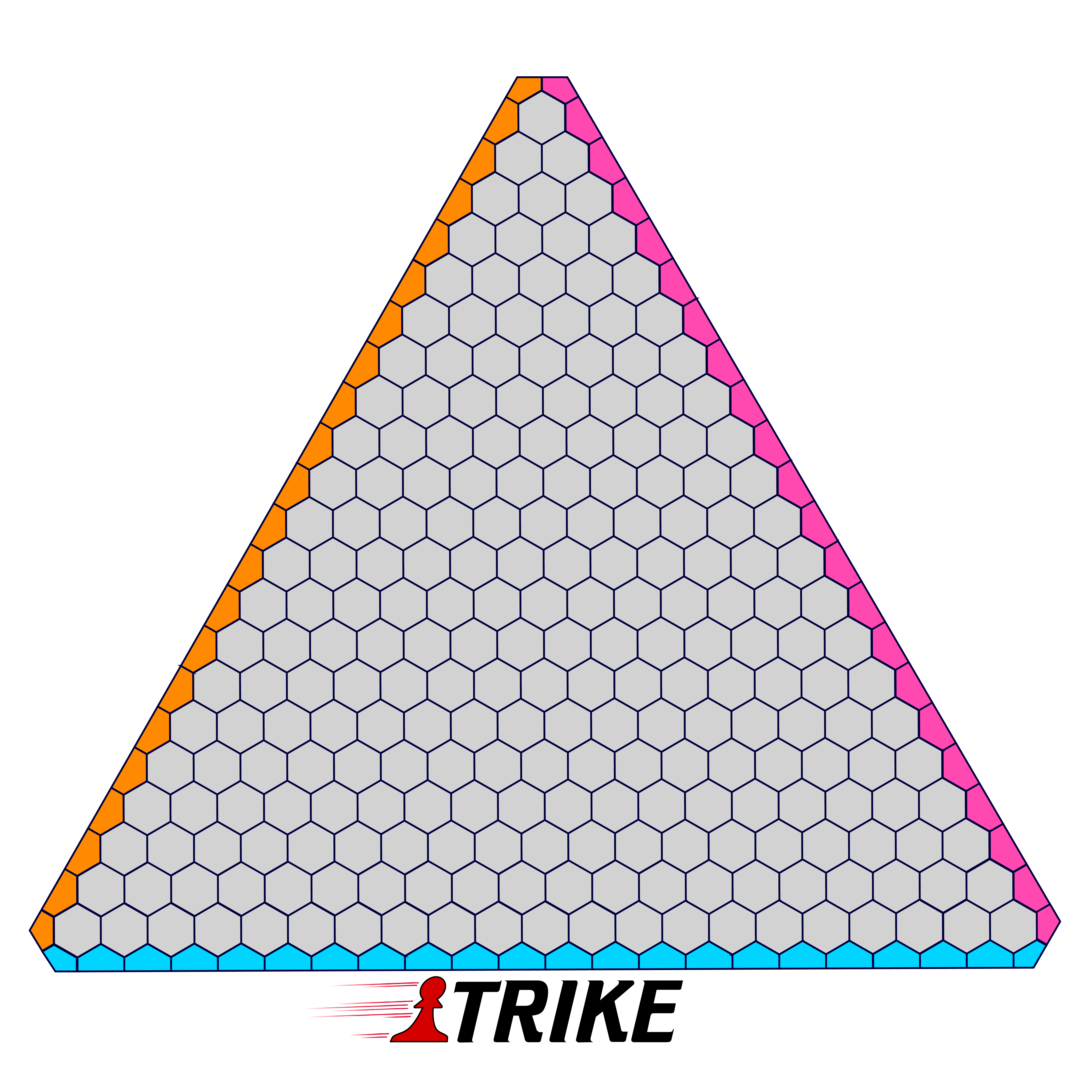
Unlike much of the rest of this list, these two games are extremely new — both Trike (designed by Alek Erickson) and Tumbleweed (designed by Mike Zapawa) were invented in 2020, and in fact are currently slugging it out to take the win in the yearly Best Combinatorial Game competition at BoardGameGeek.  Both are very modern designs — they have extremely minimal rules, and are built to do one thing and do it well.

Why they’re great:  Trike is an intriguing game in which players place pieces in their colour by moving a neutral pawn piece, then placing their stone underneath it.  As the board fills up, the pawn has less freedom of movement, until eventually it can’t go anywhere; at that point, the player with the most stones of their colour adjacent to the neutral pawn wins the game.  Trike is very tactically sharp and full of twists and turns, so despite its simplicity the play is complex and exciting.  This game reminds me somewhat of Tintas, a brilliant game of moving a neutral pawn to claim a majority of pieces of seven colours.  Trike has a quite different feel though and is inherently more flexible and scalable.

Tumbleweed is a game of territory based on a line-of-sight mechanic — on each turn you may place a stack of pieces of your colour in one cell on the board, with the height of that stack determined by the number of your pieces within unobstructed line-of-sight of that cell.  You may capture and remove an enemy stack in that cell if your stack would be larger, or you can reinforce your own stack in the same way.  At the end of the game, the player who holds the majority of the board wins.  Tumbleweed is gaining a lot of attention since its creation, because the simple line-of-sight stack placement idea immediately creates interesting tactical situations and strategic dilemmas.  Apparently the community of players is settling on hexhex-8 boards, but I prefer to play on the original hexhex-11 board.  Playing in real life is a bit challenging, mainly because you need a huge number of counters to potentially stack them six deep on numerous cells, but playing online or via Ai Ai is straightforward and very enjoyable.  My board above plays on the intersections rather than in the cells, which just intuitively makes more sense to me given the line-of-sight mechanic.

Volo
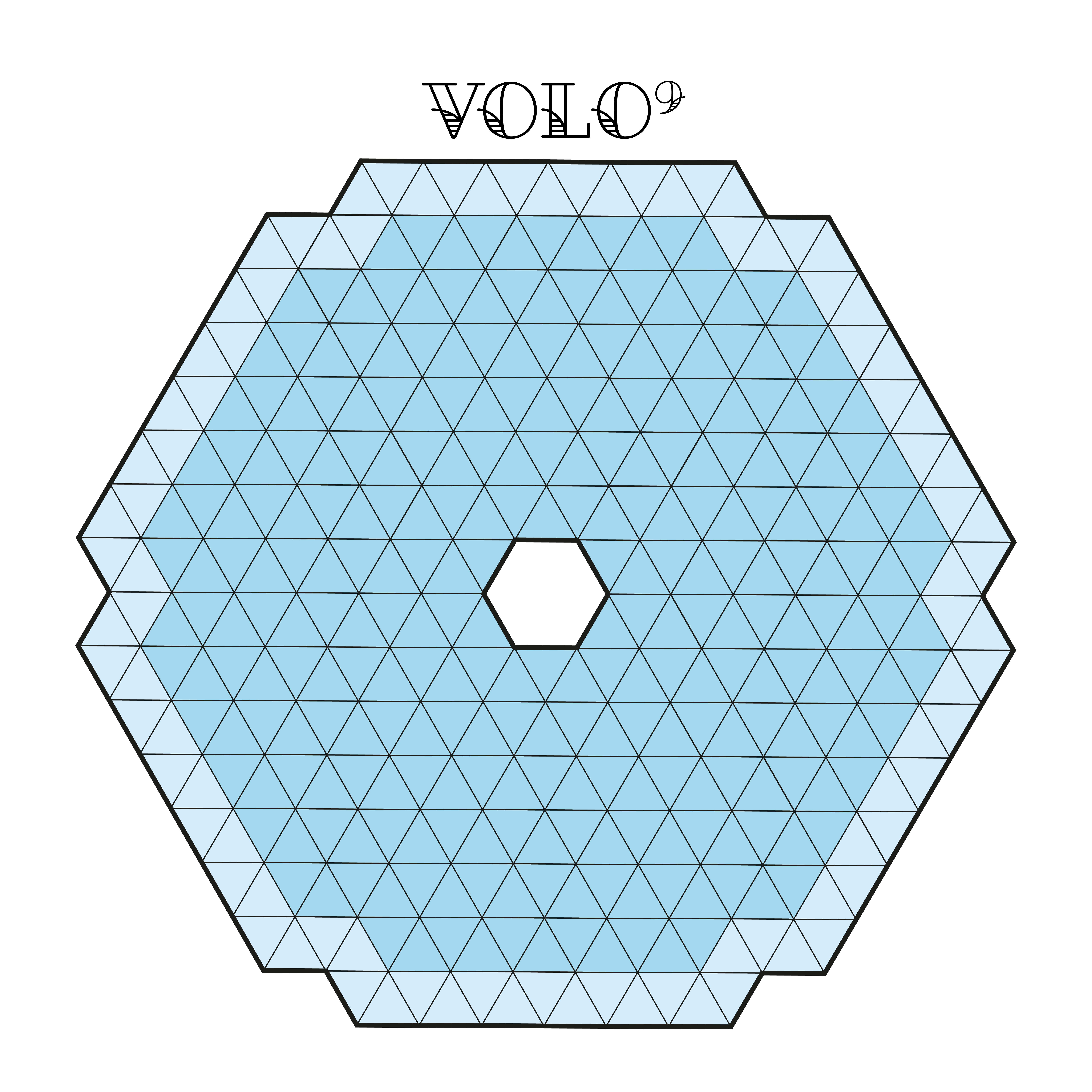
Volo is an innovative game of unification by Dieter Stein.  The game was inspired by the flocking of birds, as illustrated in the famous Boids paper by Craig Reynolds (read more about the game and its influences in this paper).  The Boids simulation was also seriously influential on me when I was young and first discovered the scientific field called Artificial Life, so I feel a certain kinship with this game.  Volo’s rules are fairly simple, but the mechanics are evocative of the theme: the board starts empty, and as you gradually place birds you will need to fly whole flocks of them around the board at once in an attempt to join them together into one giant flock.  Being able to move an entire line of pieces at once is fairly unusual in abstract games, so it feels quite satisfying.  The first player to create one unified flock including all their birds is the winner.

Why it’s great:  Volo is a creative game, and its inspiration comes through beautifully in its clever rules.  You will feel like you’re navigating your flocks through treacherous skies, trying to bring your birds together to safety.  Volo is also a fine example of the unification genre, which is surprisingly small; the most famous examples are probably Lines of Action, which is a brilliant game with an oddball movement mechanic, and Ayu, a compelling game playable on a Go board where every move is an approach move.  The unification genre is small but mighty, and Volo may just be my favourite of the lot; the ability to move lots of pieces in a single turn gives it a sense of freedom and allows for some highly creative moves.

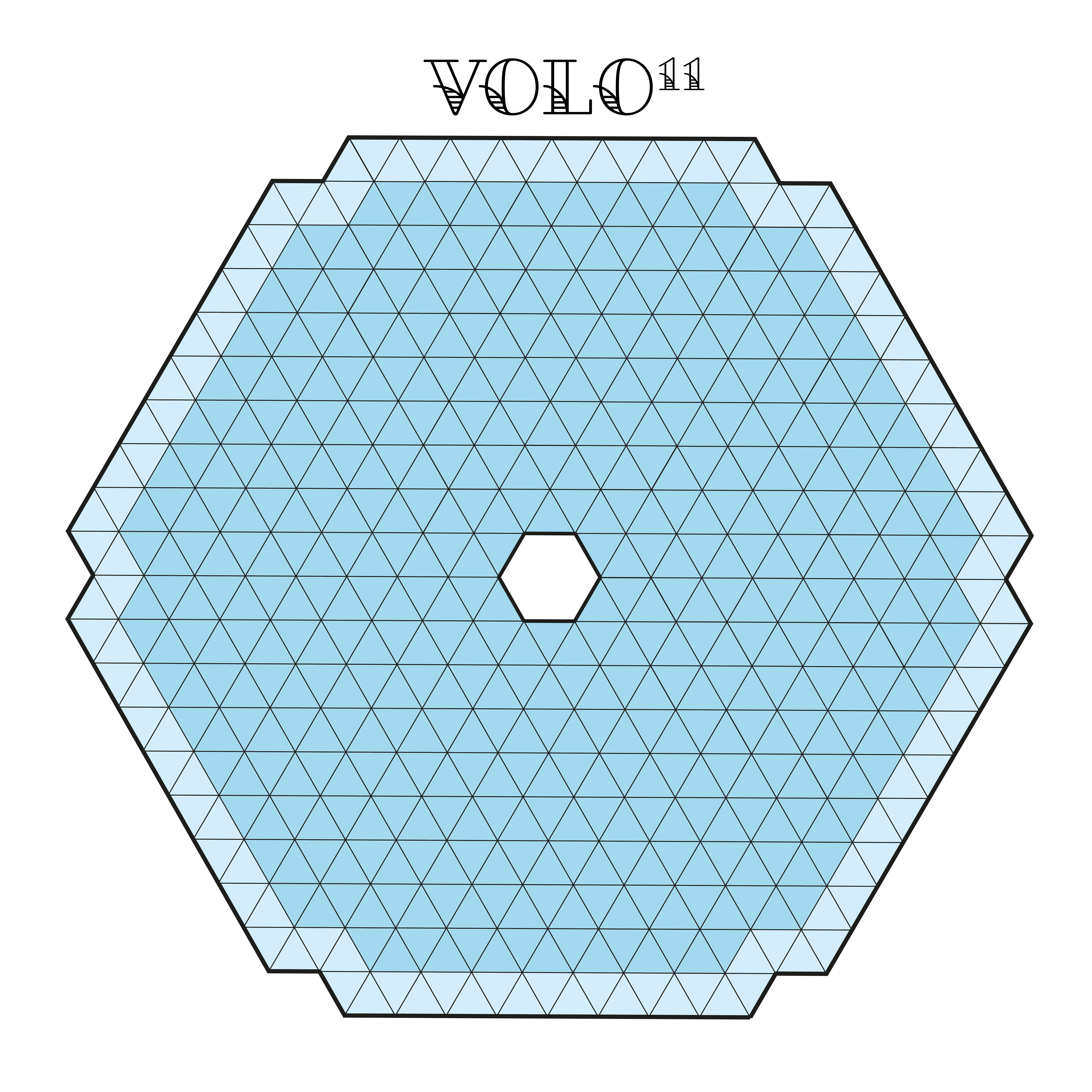
About the boards:  The standard Volo board is a hexhex-7 board with corners and the center point removed.  In the spirit of experimentation I’ve been playing with larger boards, so you can see above I’ve constructed  hexhex-9 and hexhex-11 boards for more epic Volo games.  On all the Volo boards you place your birds on the intersections, rather than within the triangular spaces.

YvY
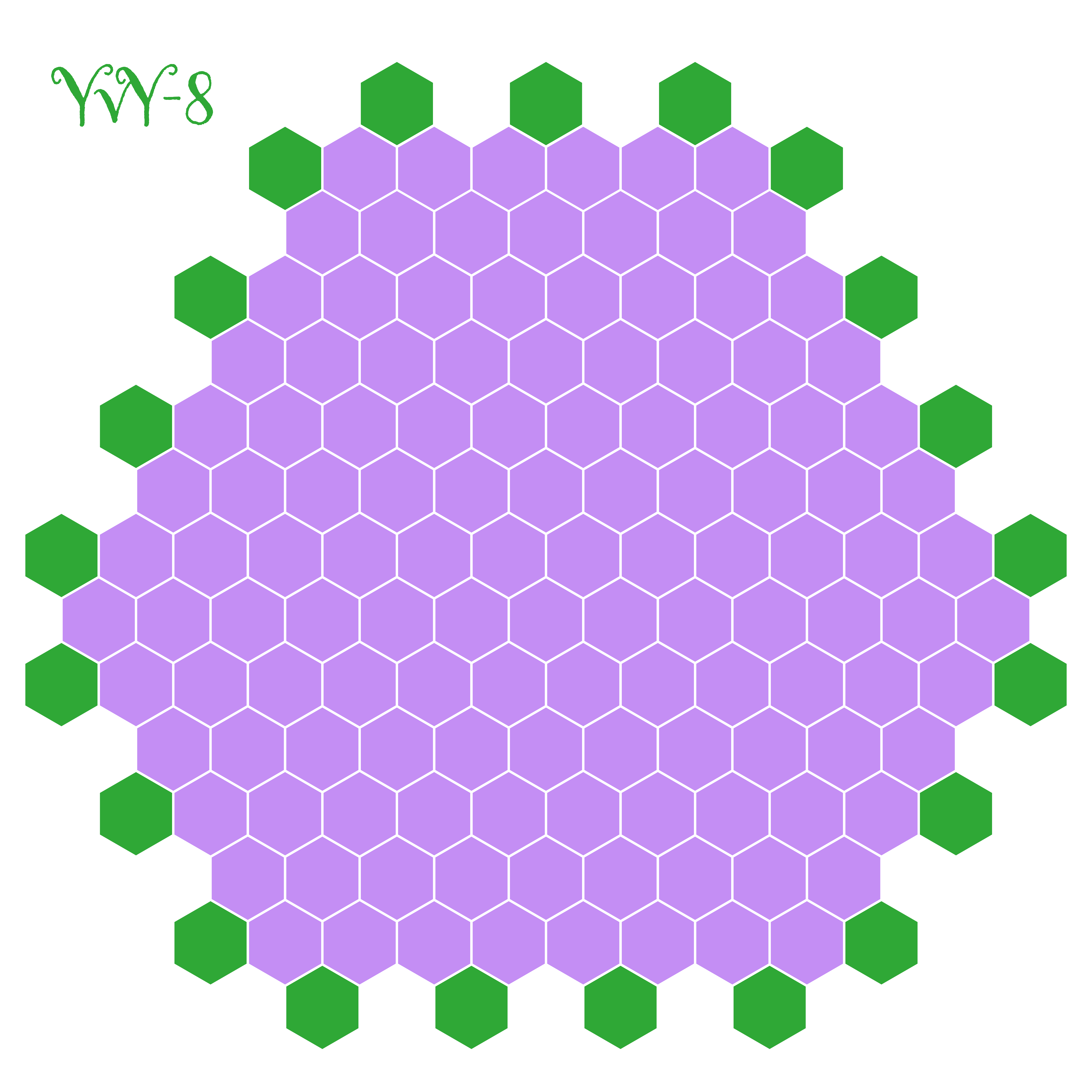
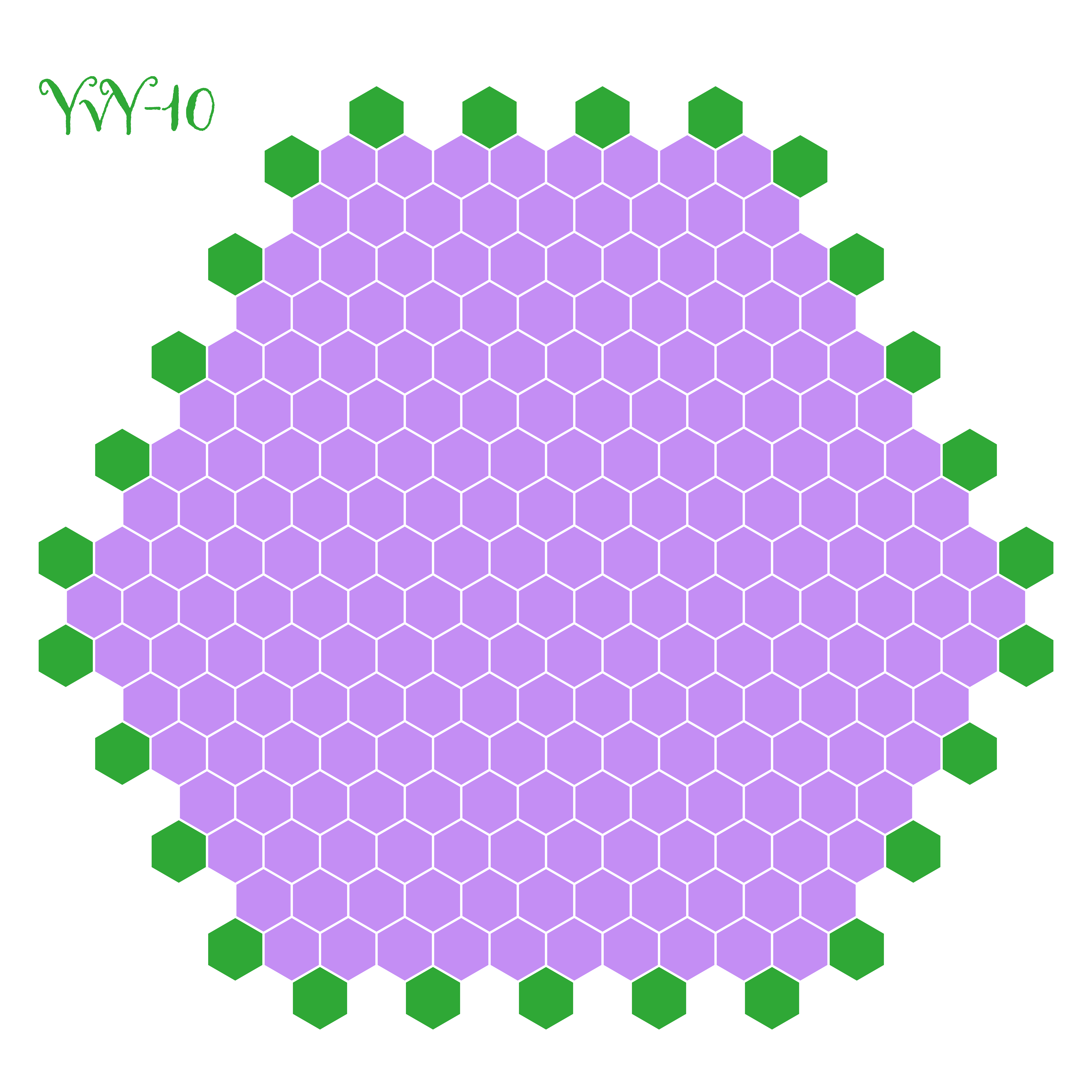

YvY is another forgotten connect-the-key-cells game from Christian Freeling, developed as a vision of a simplified Superstar, then refined into its final form in collaboration with David J Bush.  In YvY, players take turns placing one stone of their colour onto the oddly-shaped hexagonal grid, and attempt to occupy and join together the green ‘sprouts’ sticking off the side of the board.  At the end of the game, each player scores points equal to the number of sprouts they occupy, minus twice their total number of ‘live’ groups (live groups being those occupying at least one sprout).  So, as with Star and *Star, the scoring system forces you to try to connect your occupied sprouts with as few groups as possible.  Intriguingly, YvY also offers a ‘sudden-death’ victory condition: if either player forms a contiguous loop of stones of any size, they win immediately!

Why it’s great:  I’m a sucker for a connection game with multiple objectives, and YvY fits squarely into that category.  The need to connect groups across the board to score well gives the game a territorial feel, while the loop-formation win condition adds some tactical sharpness on top.  In play the game bears a certain resemblance to Havannah, and the need to score points via multiple connections encourages board-spanning play with great subtlety.  Christian views this game as obsolete, but I see it as another intriguing take on the connect-the-key-cells genre, alongside Star, *Star, Superstar, Starweb and Side Stitch.  For my money this category of games offers a lot of depth and intrigue, so I recommend trying several of them and seeing which one best fits your style of play.

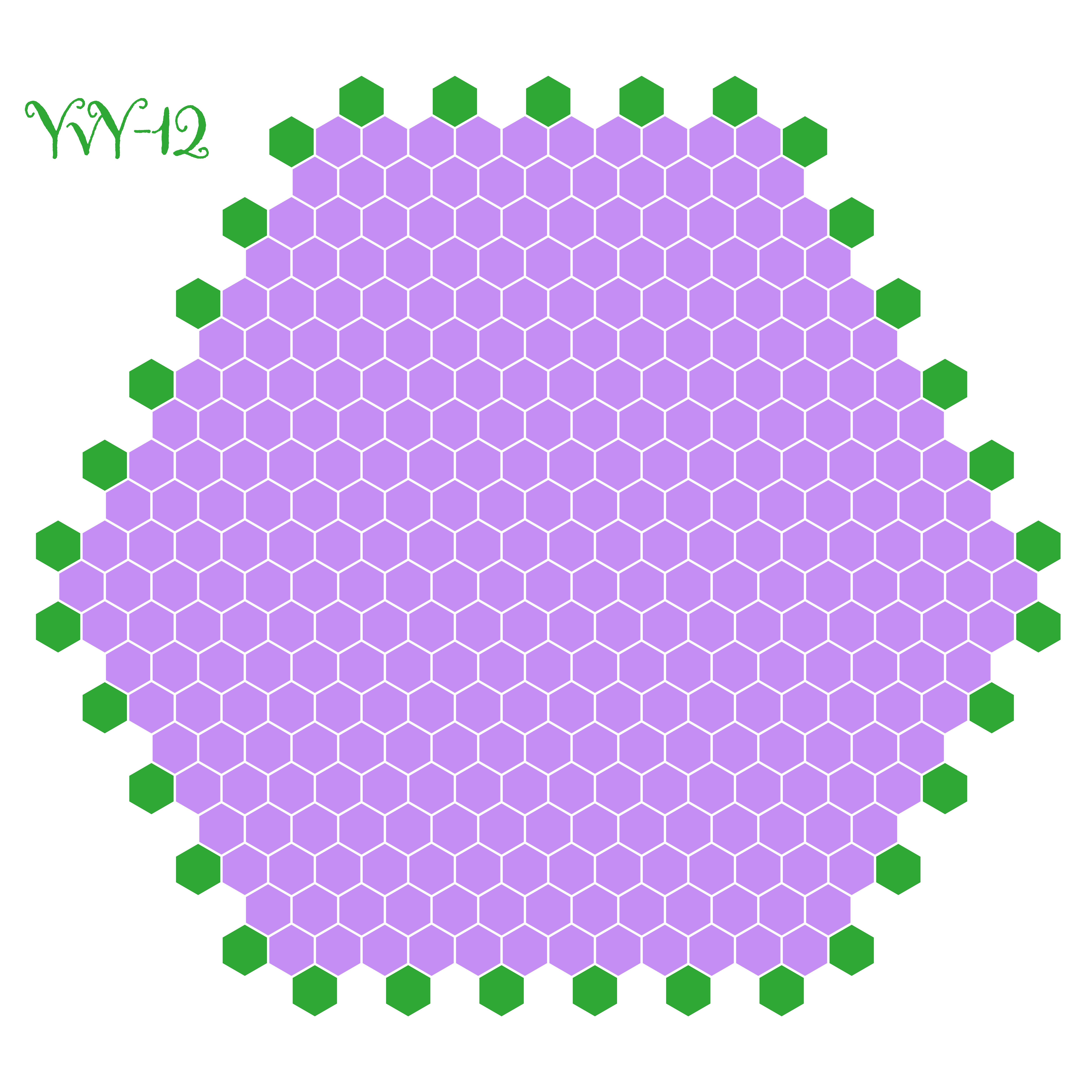
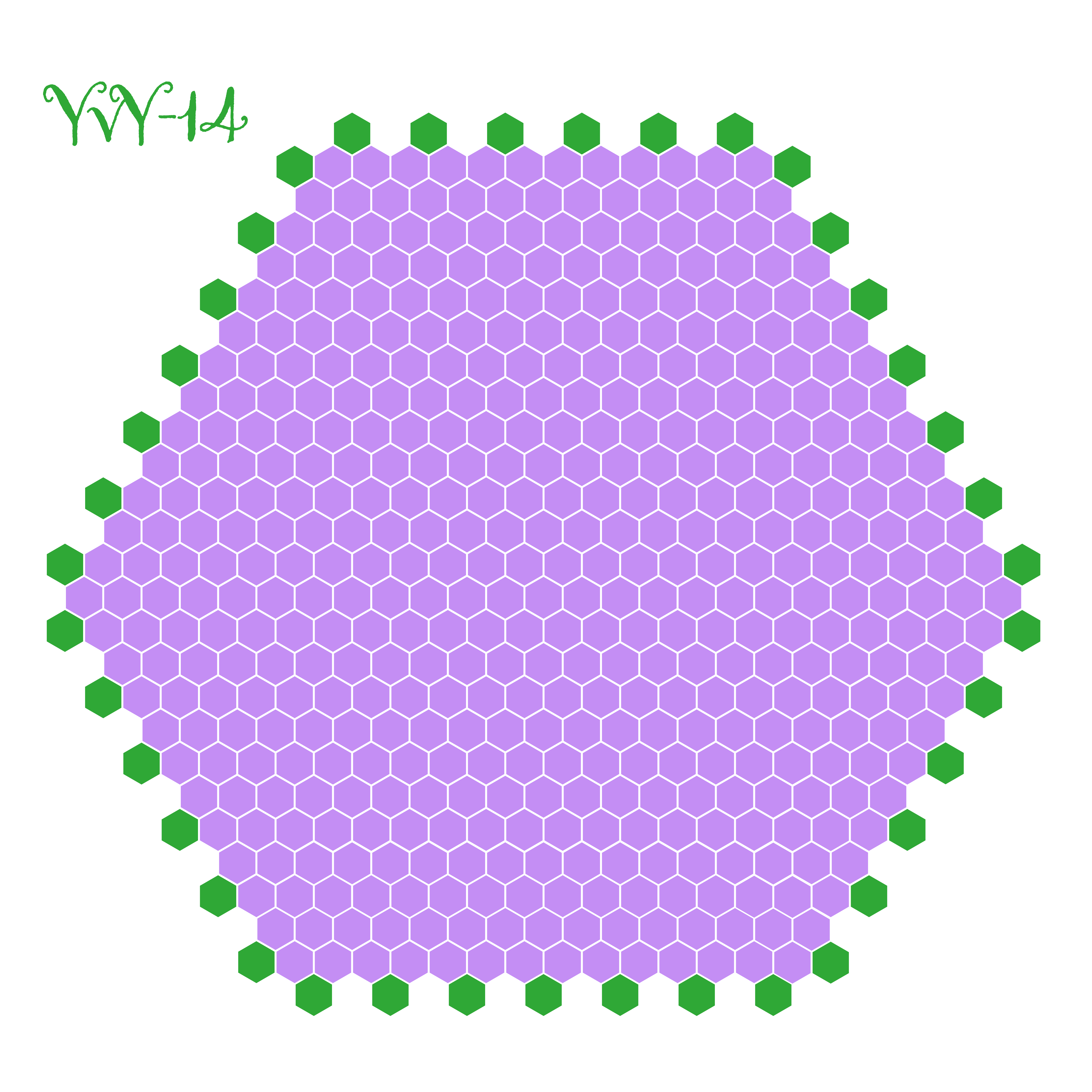
About the boards: As per usual, I made a few different sizes of boards for this game, to allow potential players to choose a game length that suits them.  The YvY board is oddly shaped, with three of the sides being two hexes longer than the other three; as a consequence of this shape and the need to place sprouts evenly around the outside edges, the boards all have even-length sides.  As is typical with games like this, the larger boards produce longer games of greater strategic complexity; the size-12 board above has 330 interior cells and 33 sprouts for a total of 363 cells, almost exactly the same as a Go board’s 361 points.  The size-12 board is thus suited for intense strategic contests; the size-8 board is great for beginners and more casual games, while size-10 offers a nice balance between depth and brevity.  If you’re feeling particularly adventurous, have a go on the size-14 board, with a whopping 468 interior cells and 39 sprouts.

New boards for old favourites

Side Stitch
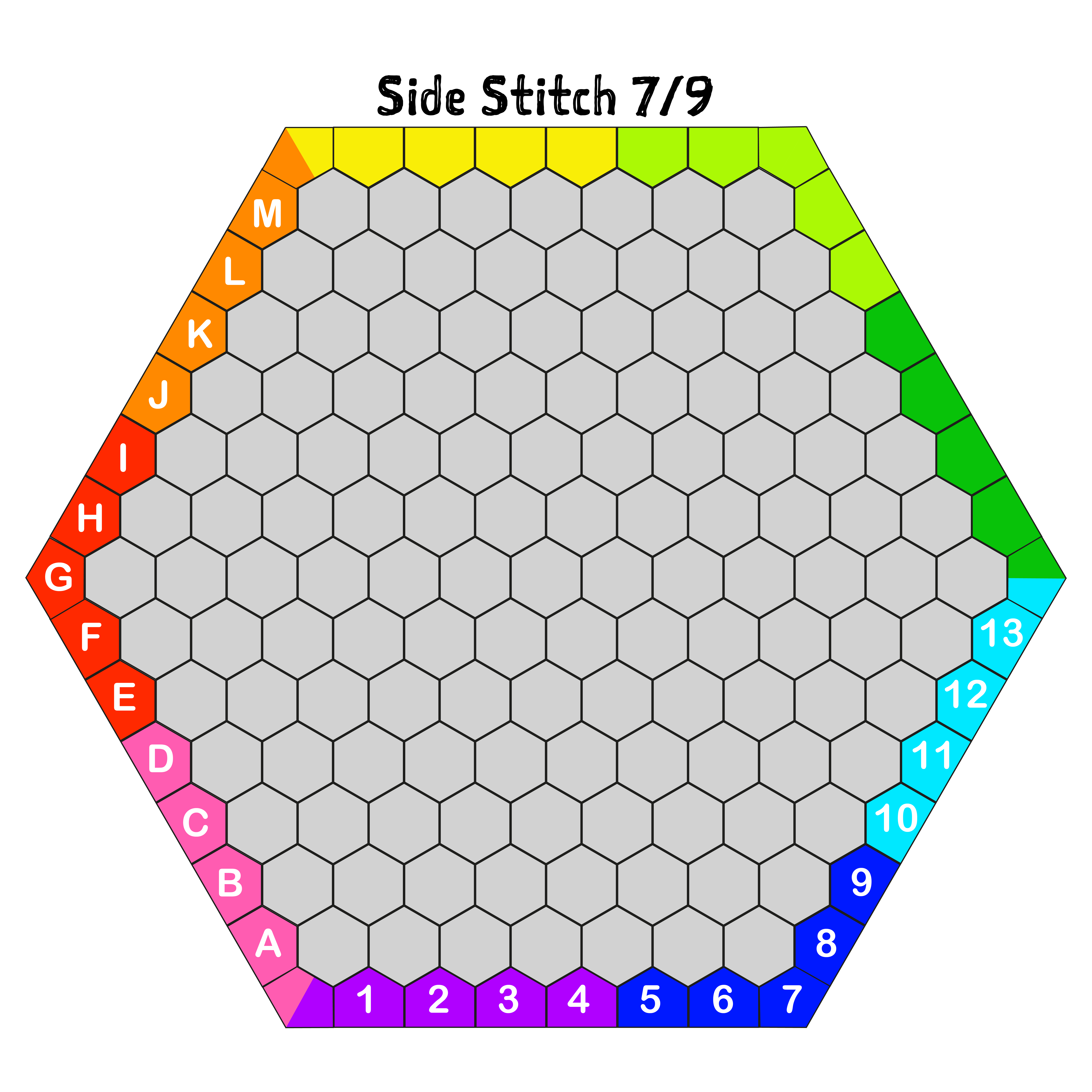
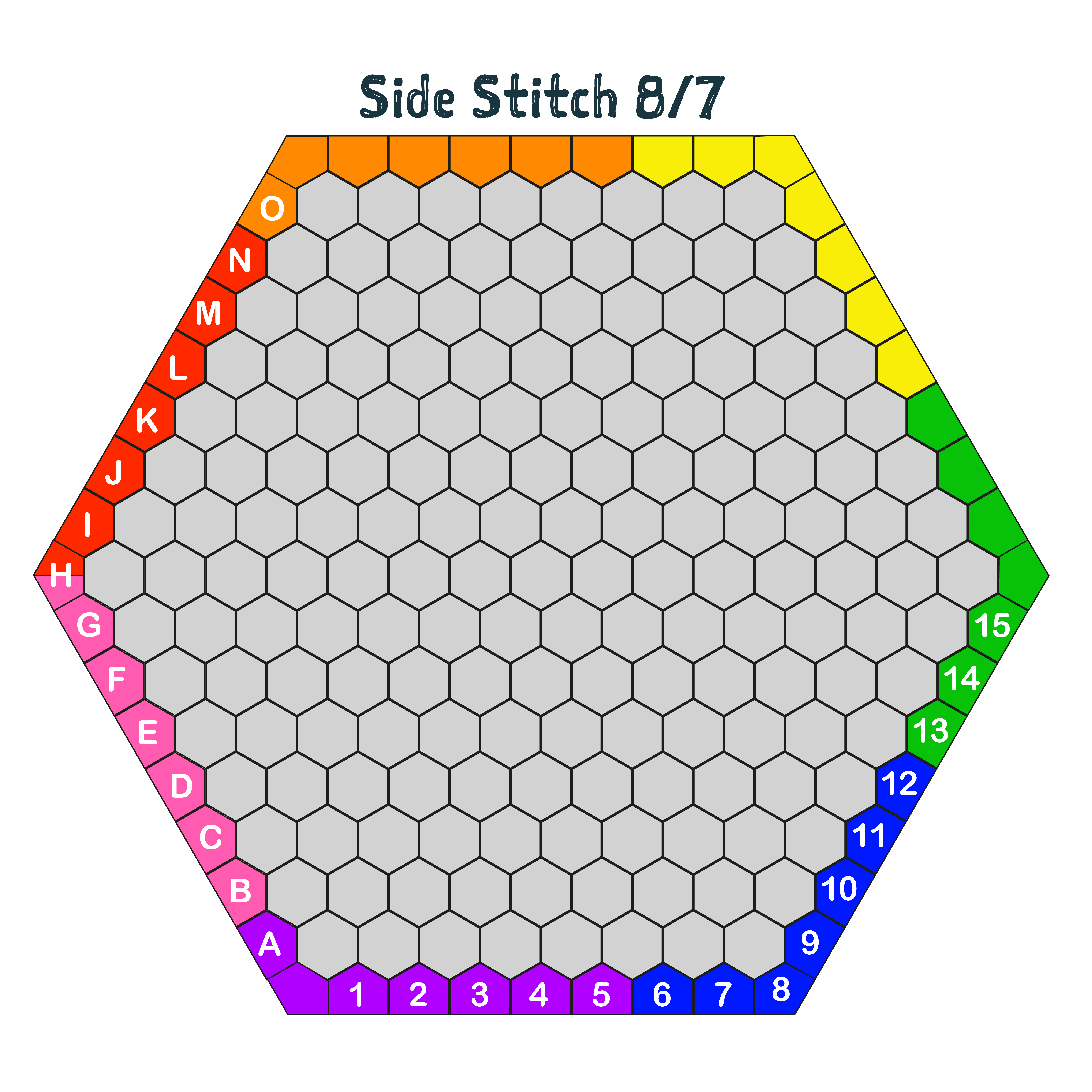
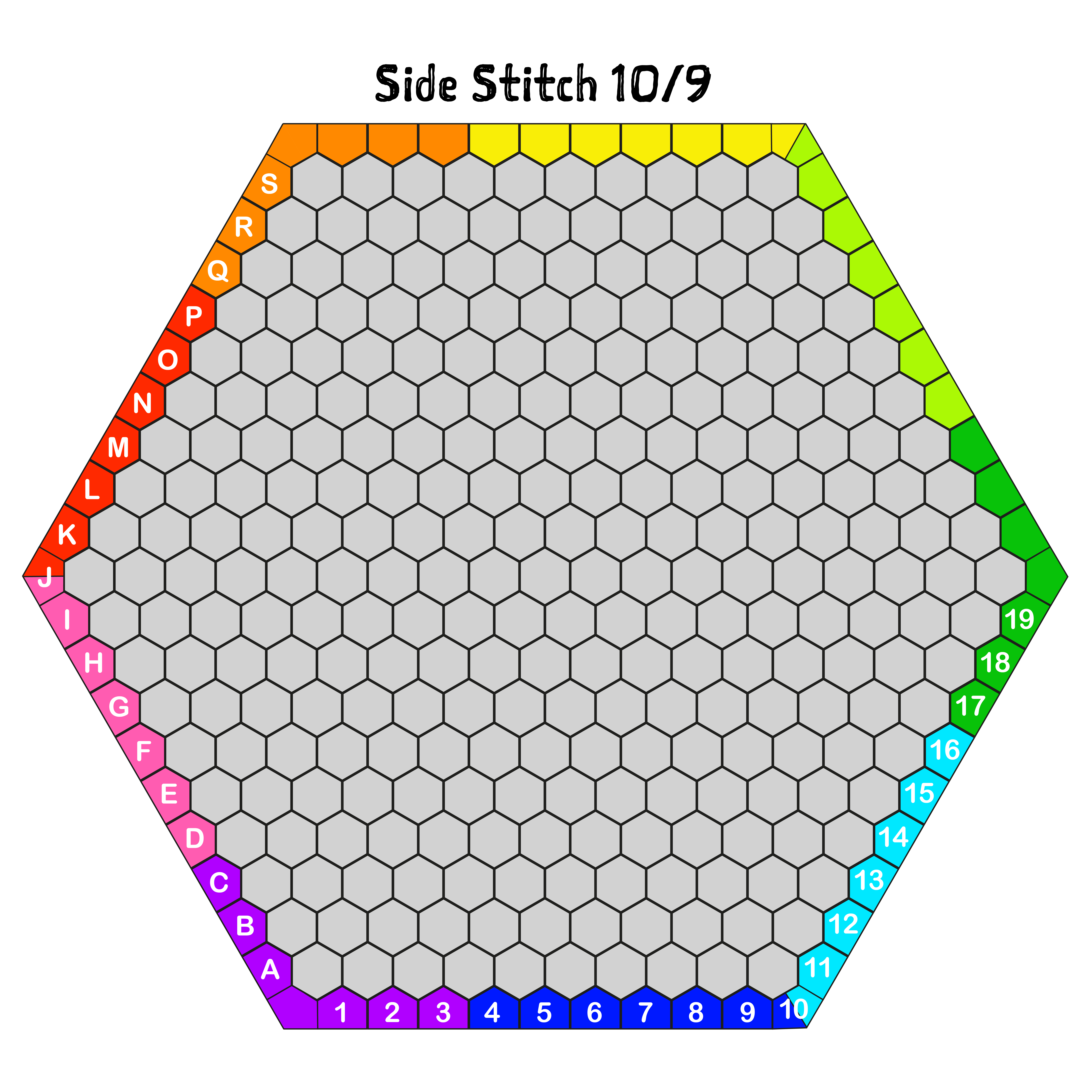
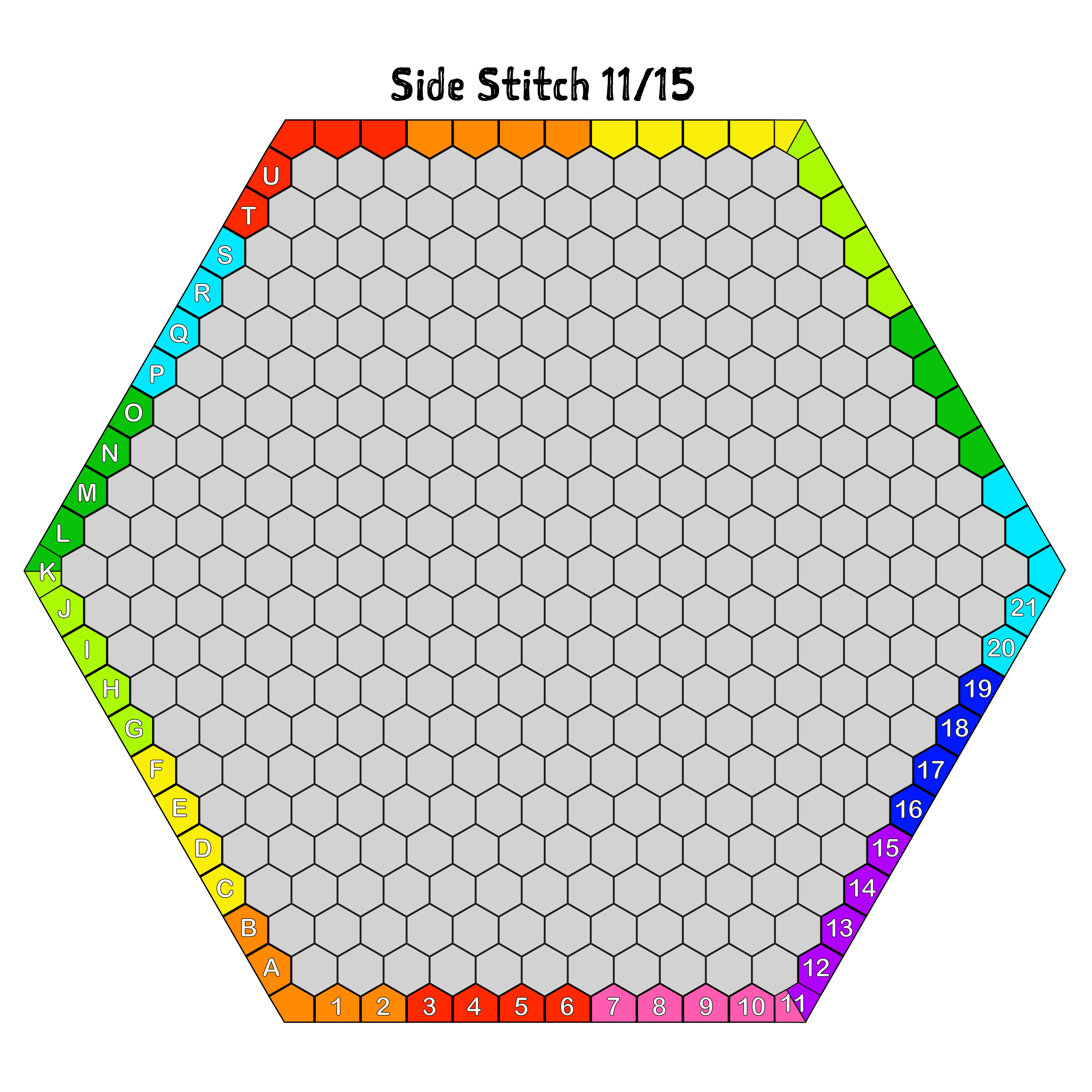
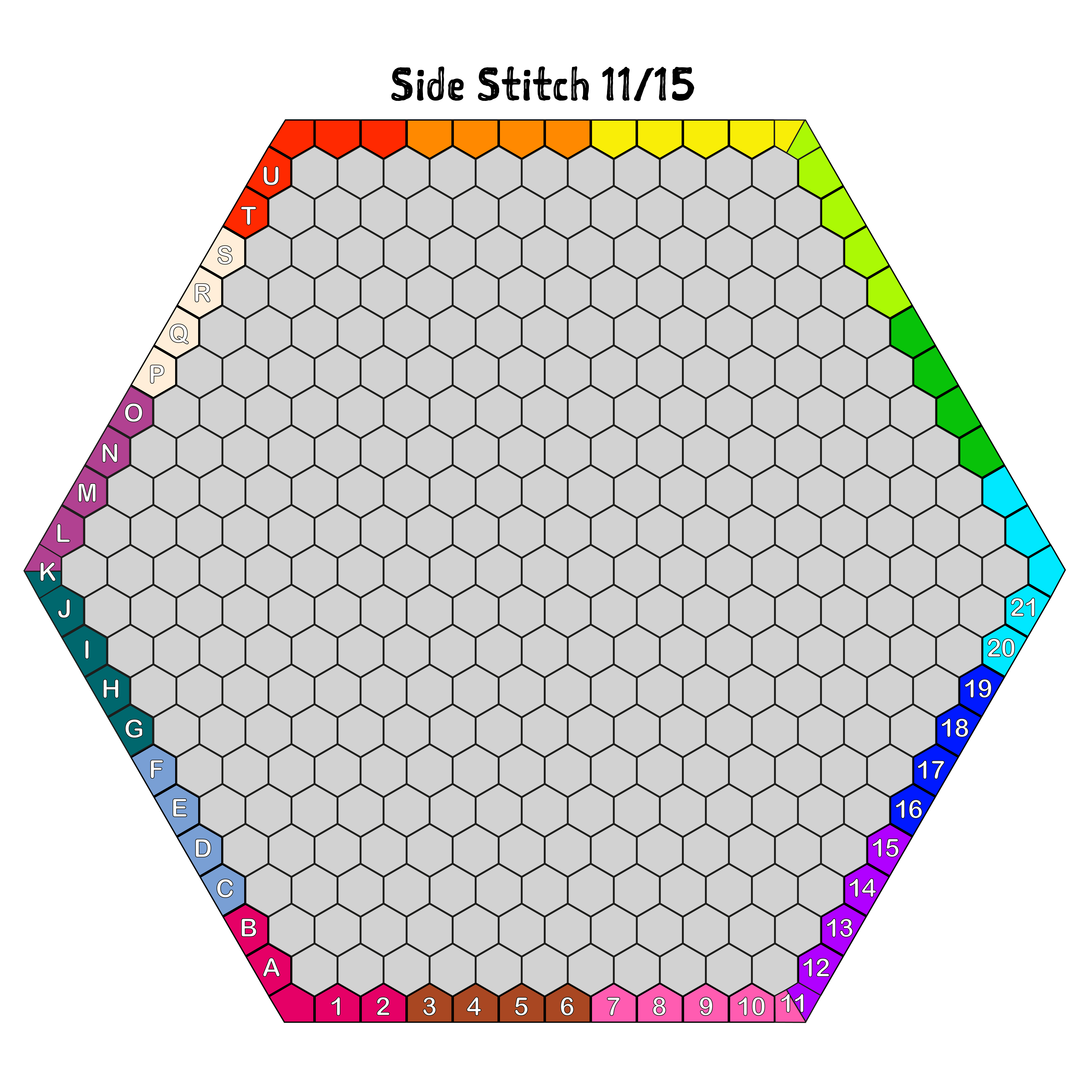
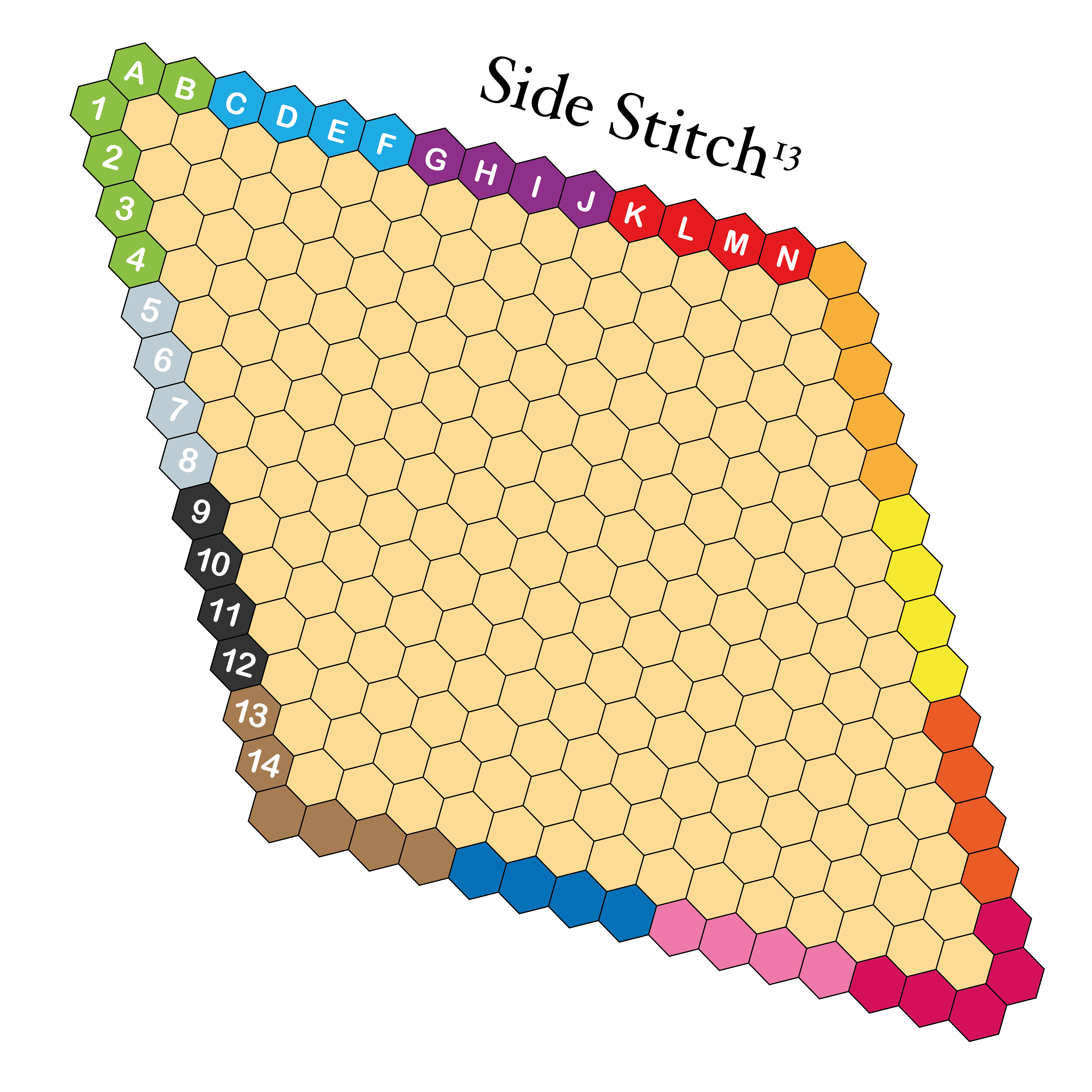
I’ve talked about Side Stitch before, of course, but in the last few months I’ve gone back and tidied up the boards I made previously, and added two new ones — the hexhex-11 with 15 colour-sides, and the 14×14 Hex board with 13 colour-sides.  Side Stitch is a favourite of mine not just for the actual game, which is great, but also the aesthetic — making boards for this game is really fun.

Why it’s great:  Side Stitch is a member of a class of connection games that I really enjoy — connective scoring games, where different types of connections have different values.  These games spice up the connection-game formula by allowing for a wide variety of winning connections, and the need to stretch across the board to connect key areas and score points gives them a dynamic flavour.  Side Stitch is even more dynamic than most, since players connect colours along the edges of the board which need not match up with the actual board’s sides, so there are a tonne of interesting board setups you can try.  I just wish Side Stitch was playable on more game servers, so that more people would get acquainted with this excellent game.

About the boards:  All of the boards above were based on designs originally uploaded to BoardGameGeek by the inventor of the game, Craig Duncan; I have simply replicated them in Illustrator and made them as clean and sharp as I can.  The ‘standard’ Side Stitch board is the hexhex-8 with 7 colour-sides (top middle in the above array).  The hexhex-7/9-colour board is great for quick games.  My personal favourites are the hexhex-10 with 9 colour-sides and the hexhex-11 with 15 colour-sides; note that I have two variants of the 11/15 board available, one with some repeated colours and another with all unique colours.  To my shame I have not tried the 14×14 Hex board version yet!

Star
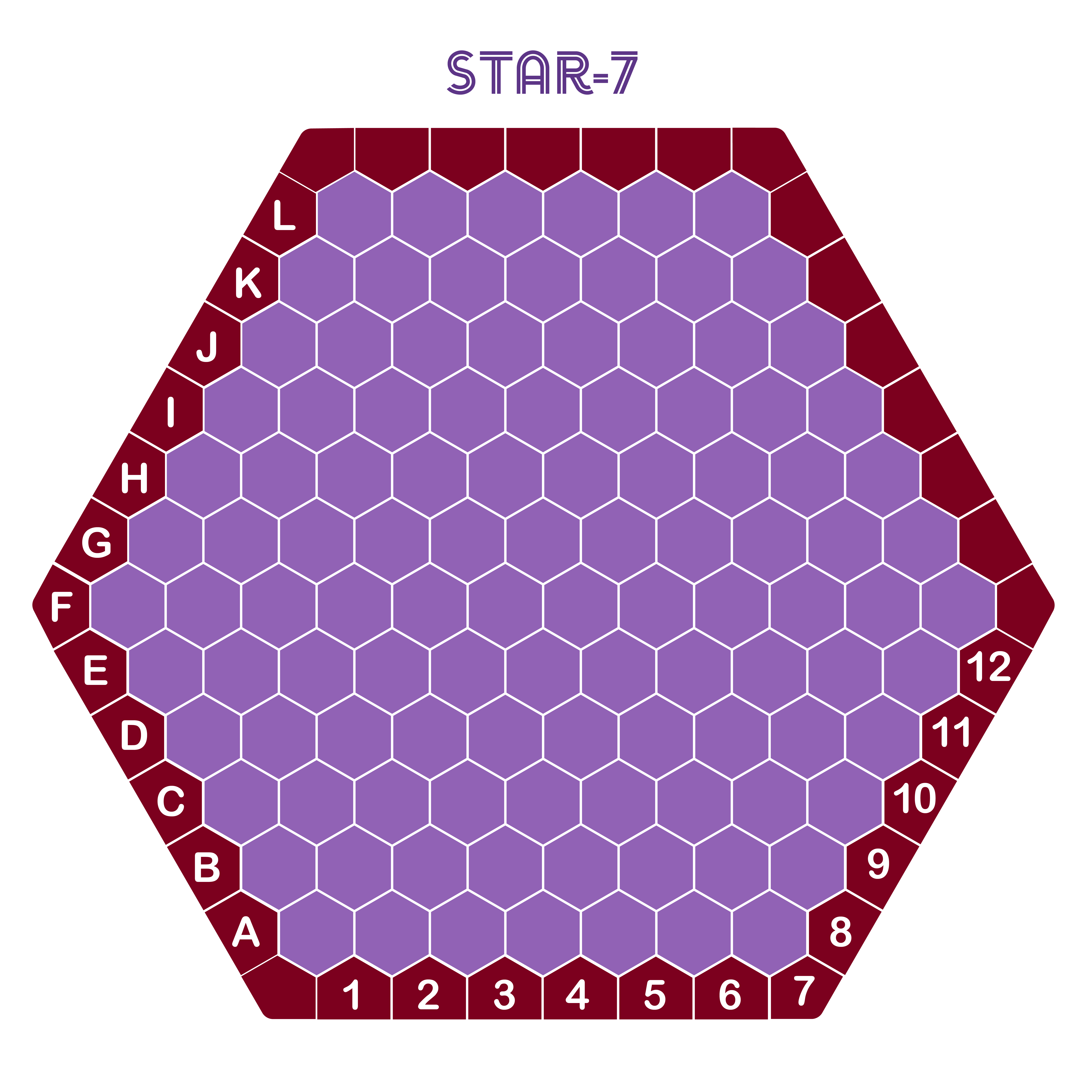
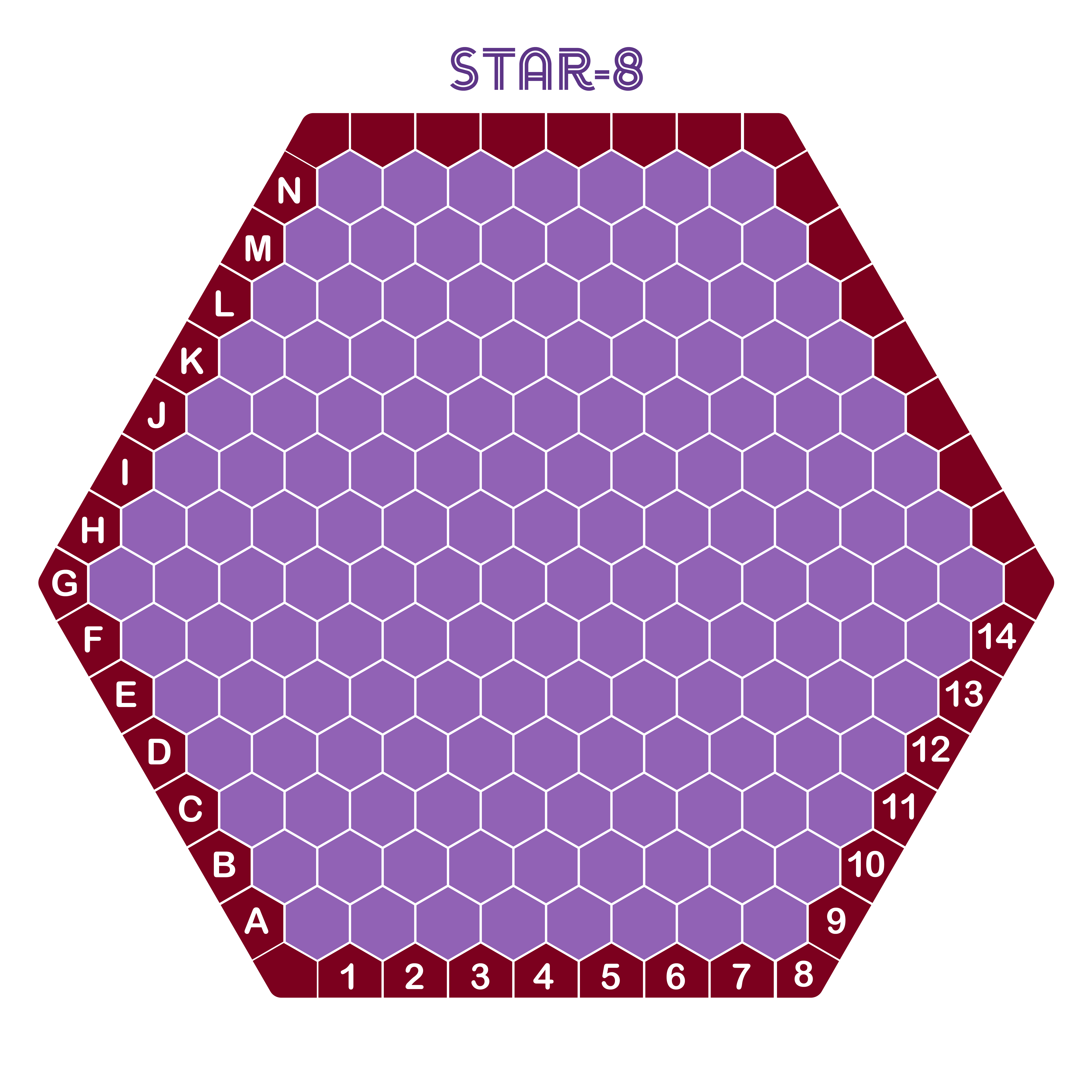
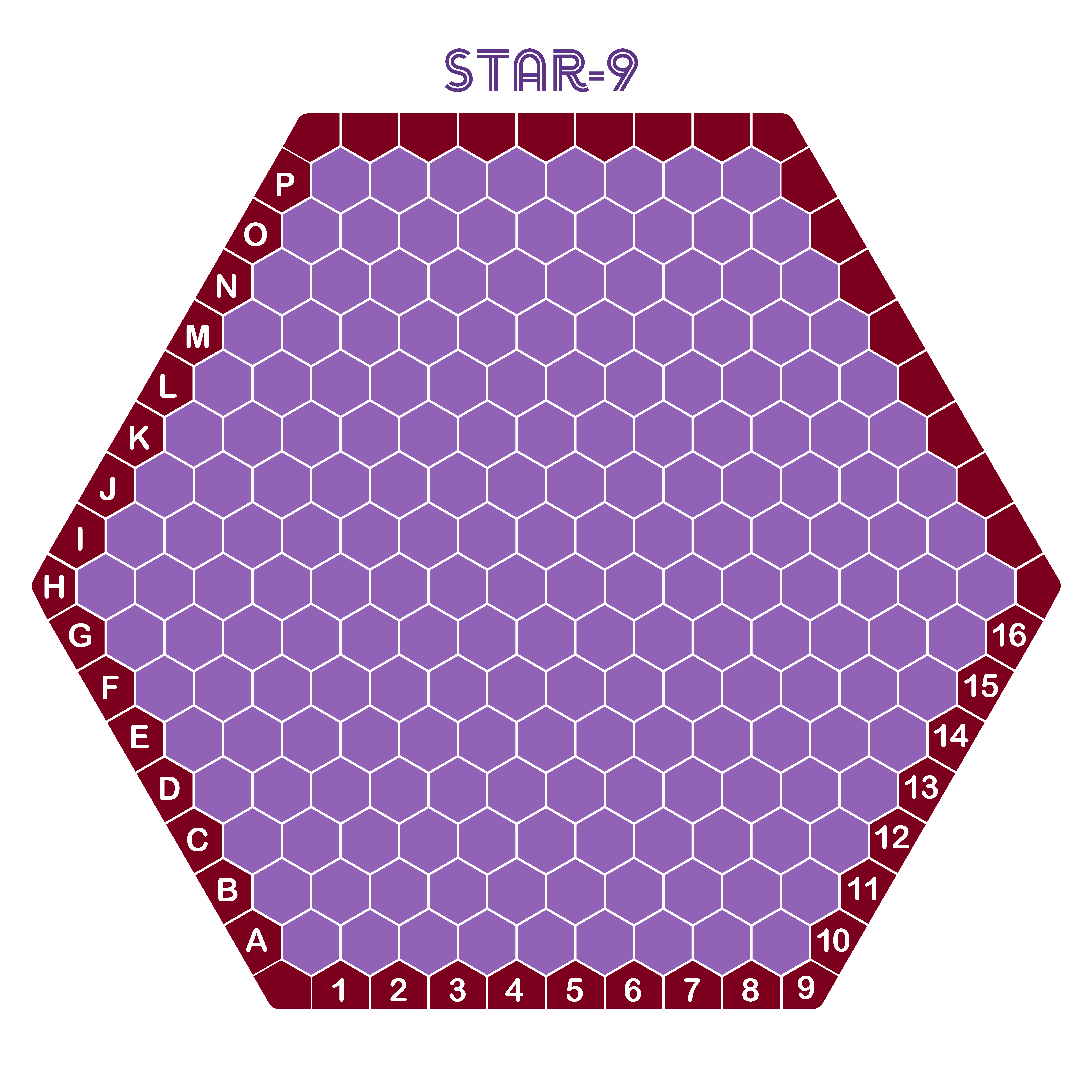
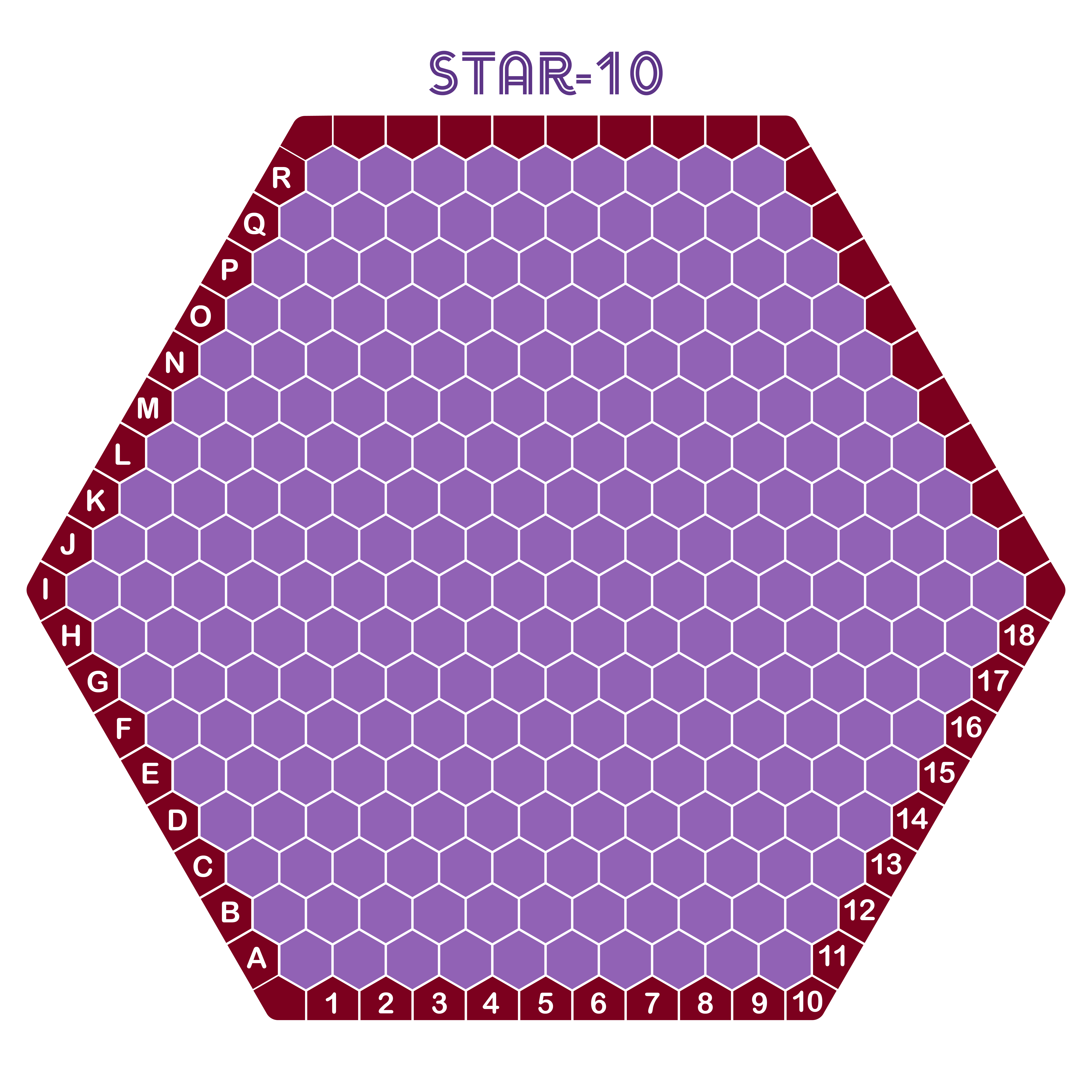
Star is a classic game of connecting edge cells by Craige Schensted/Ea Ea, which I’ve covered before on this blog, so I won’t spend too long explaining it.  These boards are slight updates of previous ones that I have made, with slightly cleaned-up cell placement and updated fonts.

Why it’s great:  Star is an unfortunately overlooked game, I think partially because the published version in Games Magazine years ago was on a too-small board that didn’t adequately showcase its marvellous depths, and also because it was followed by *Star, which seemed to overshadow it.  I think Star deserves more recognition than it gets, as it an accessible game only slightly more complex than something like Hex or Y, but the introduction of scoring and a group penalty takes it into a more territorial, strategic realm.  On larger boards like those you see above, Star becomes a deeply challenging contest, and often a game will see much of the board filled with complex, winding connections.  I highly recommend it both on its own merits as a beautiful game, and as a first foray into the connect-the-key-cells genre.

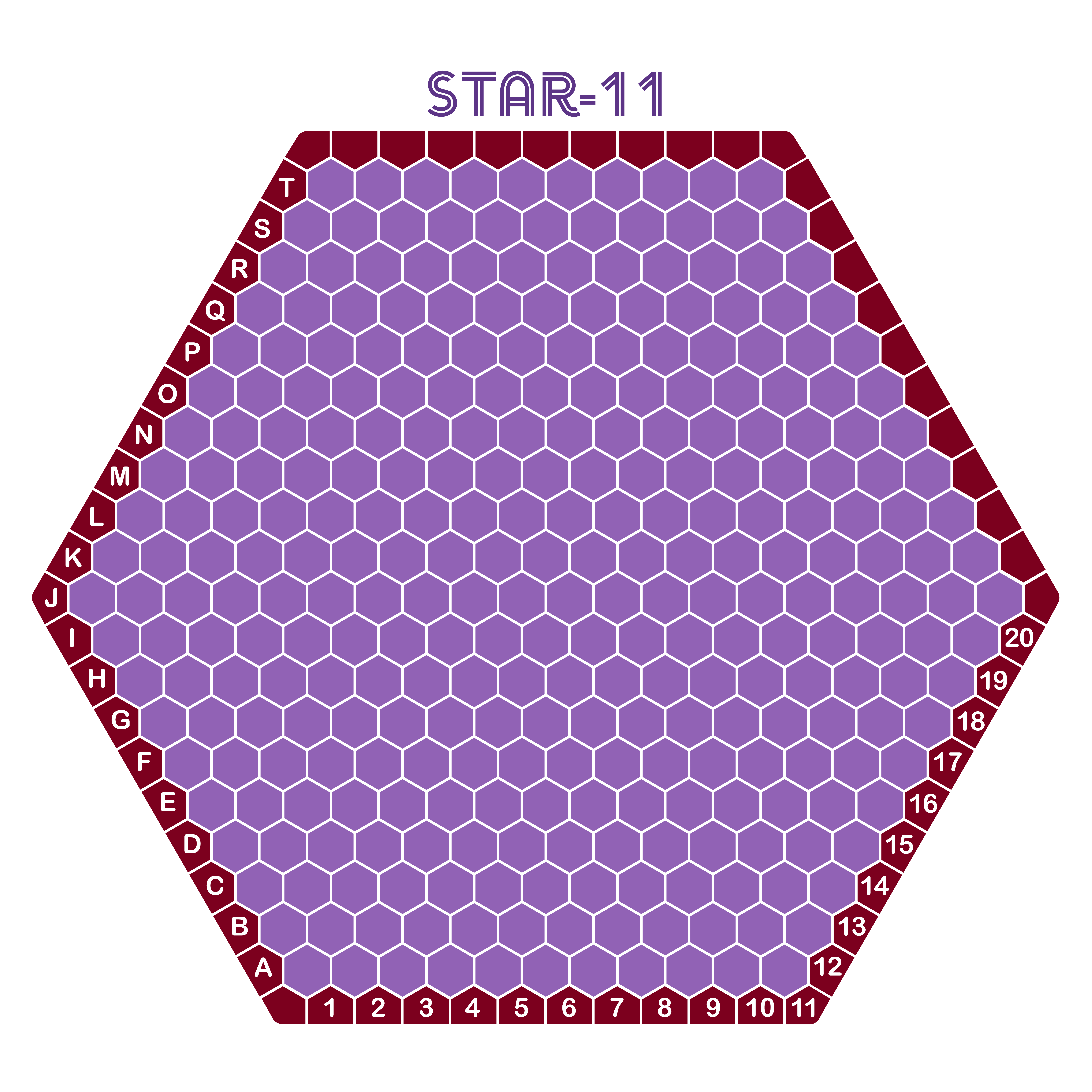
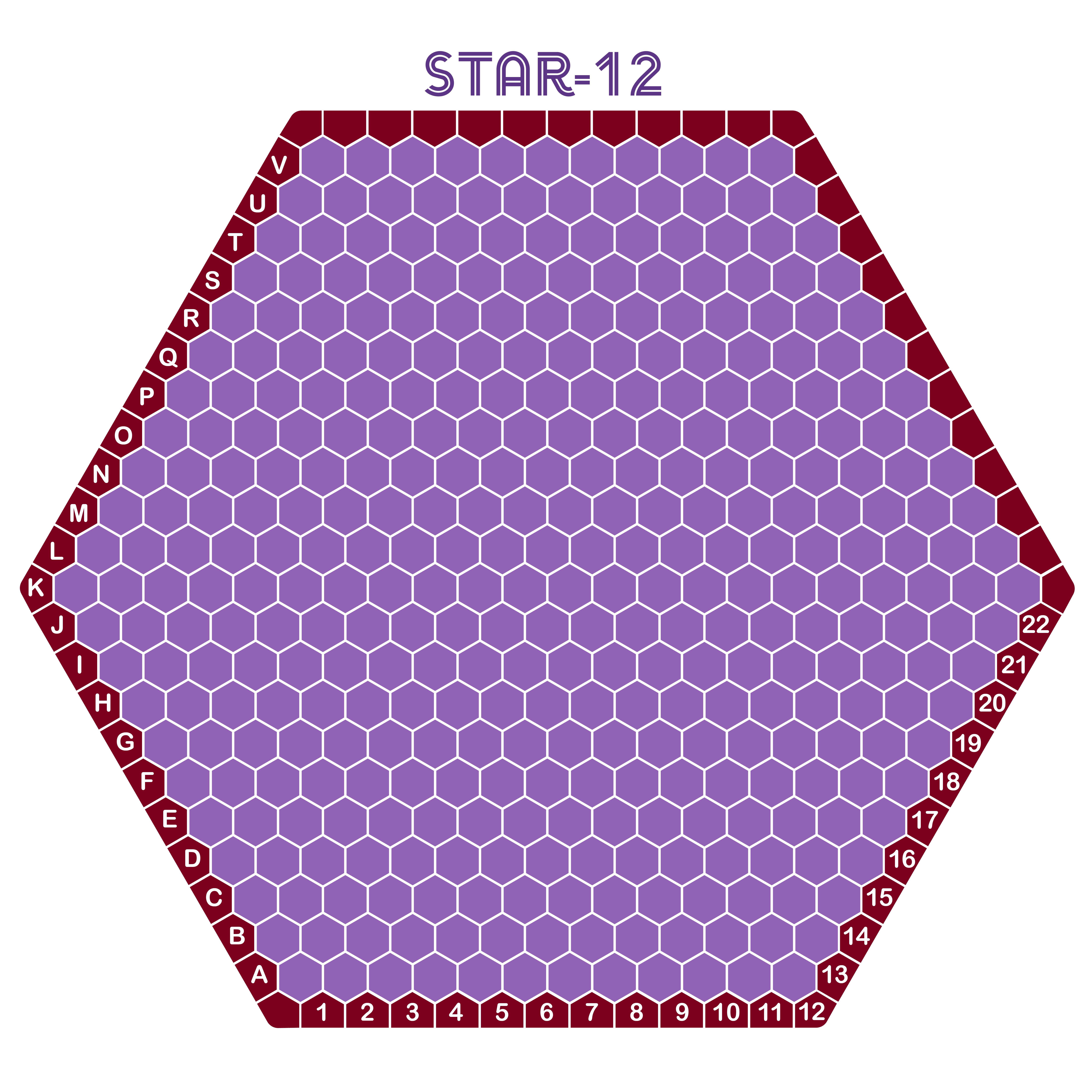
About the boards:  My boards adopt the standard uneven hexagonal grid used by the original game, and simply extend that to larger sizes.  I should note that the designer felt the corner cells, which on these boards would be worth three points due to being adjacent to three exterior edge cells, should be adjusted to only score two points; I don’t have particularly strong feelings about this, but in the future I do intend to make versions of these boards with corners altered in that way.  Of course you can use these boards and simply adjust the scores accordingly when you play, but certainly having the scores clearly visible from the board geometry would be better.  The largest board above, Star-12, contains 363 cells, similar to the Go board’s 361 points.  Given that Star games often use most of the board, Star-12 is probably the largest size most players would be willing to use, and above that size the game is perhaps a bit too much of a marathon.

Poly-Y
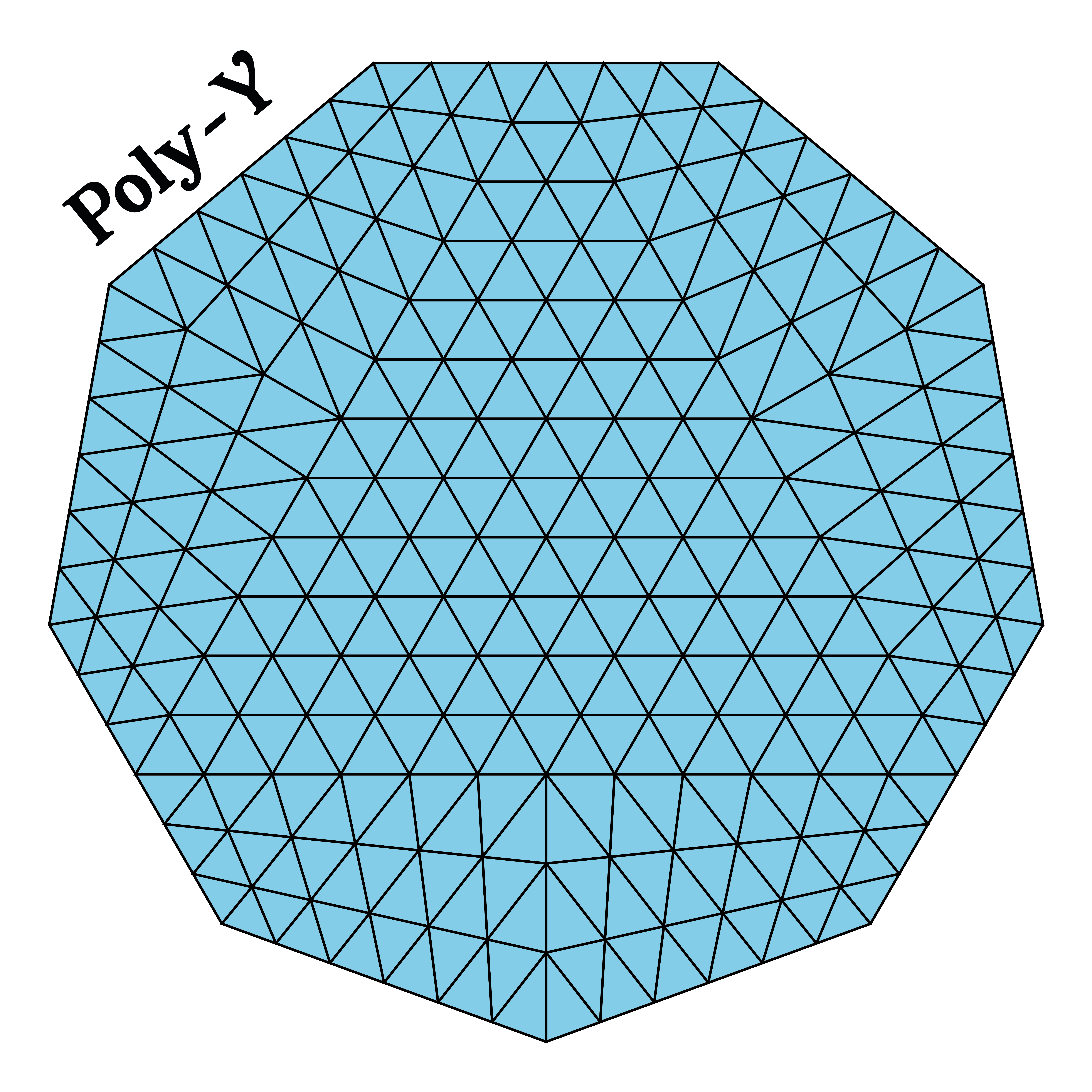
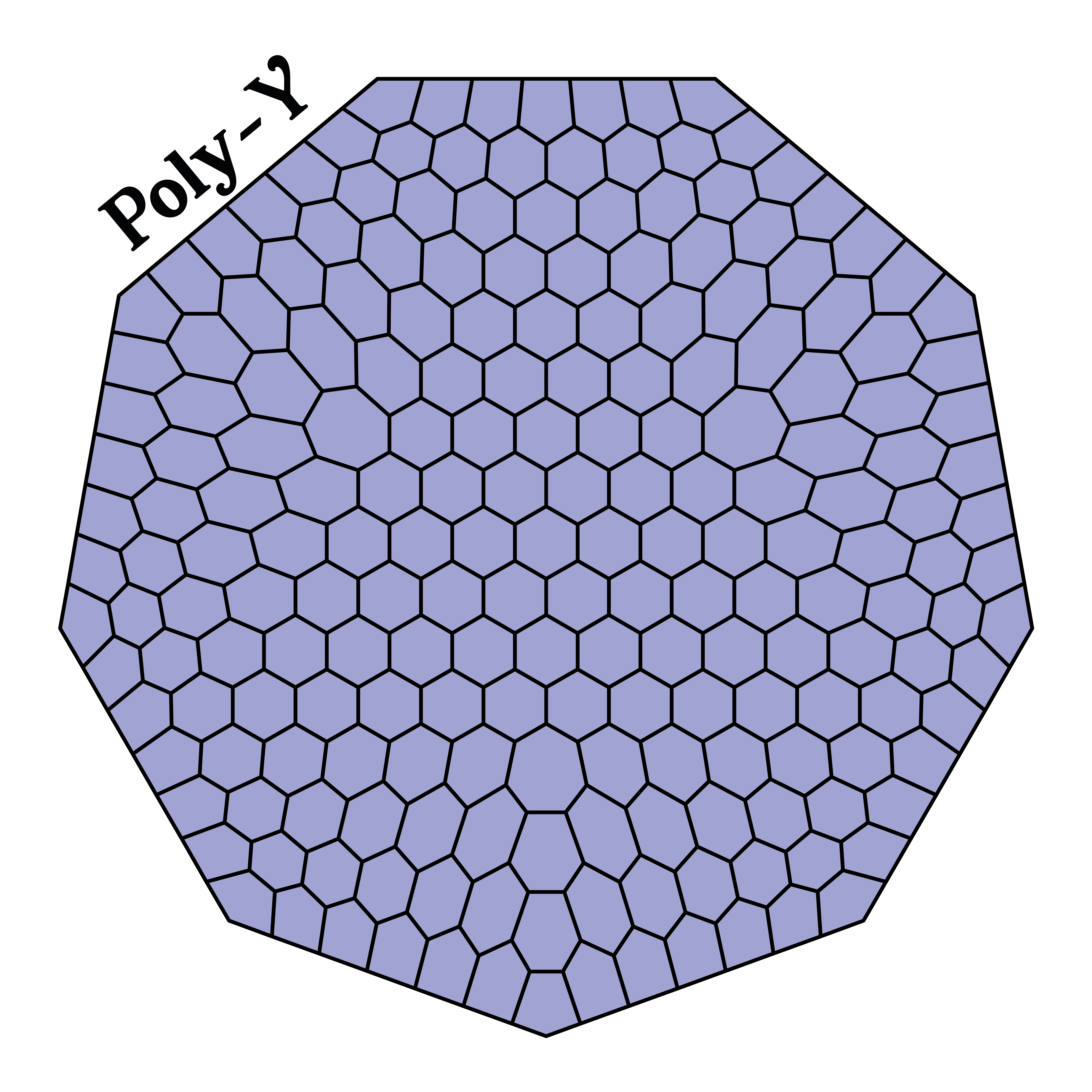
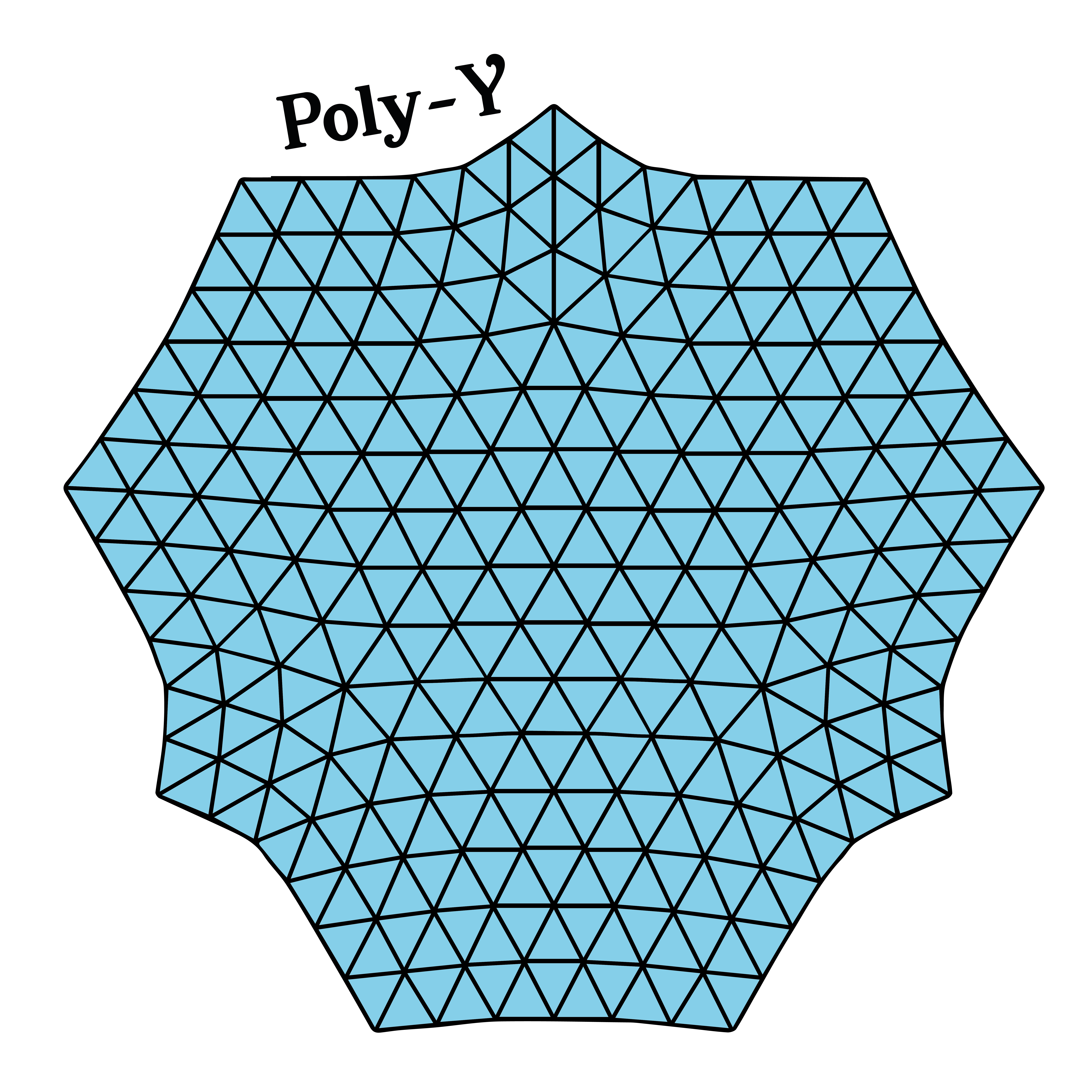
Poly-Y is the ancestor to Star and *Star, and marks the first attempt by designer Craig Schensted/Ea Ea to impart a connection game with a bit of territorial flavour.  In Poly-Y, players strive to control more corners of the board than their opponent; in order to claim a corner, a player must form a Y-shaped connection, connecting the two sides adjacent to the corner with another non-adjacent side.

Why it’s great: Poly-Y takes the connection goal of the Game of Y and adds a territorial element, using that connection as a way to claim parts of the board and score points.  The addition of the point-scoring element gives the game an appealing strategic flavour, while adding minimal rules complexity.  The importance of corners in this game means that oddly-shaped boards with larger numbers of corners are particularly well-suited for Poly-Y play, which adds a certain quirky visual appeal.  If you want the depth of something like Star or *Star with simpler score calculations, Poly-Y is a great option.

About the boards: Out of the three boards presented above, only the middle one is for playing stones within the cells; on the other two, you should place your stones on the intersections.  Making these boards was a bit of a challenge due to the odd geometry, but the final result is quite visually pleasing.  All three boards are nine-sided, which seems to be the most-recommended shape by the designer, so they will play similarly; just pick the one that most suits your aesthetics.

Game of Y (Kadon-shaped)
Y-17-Kadon-01

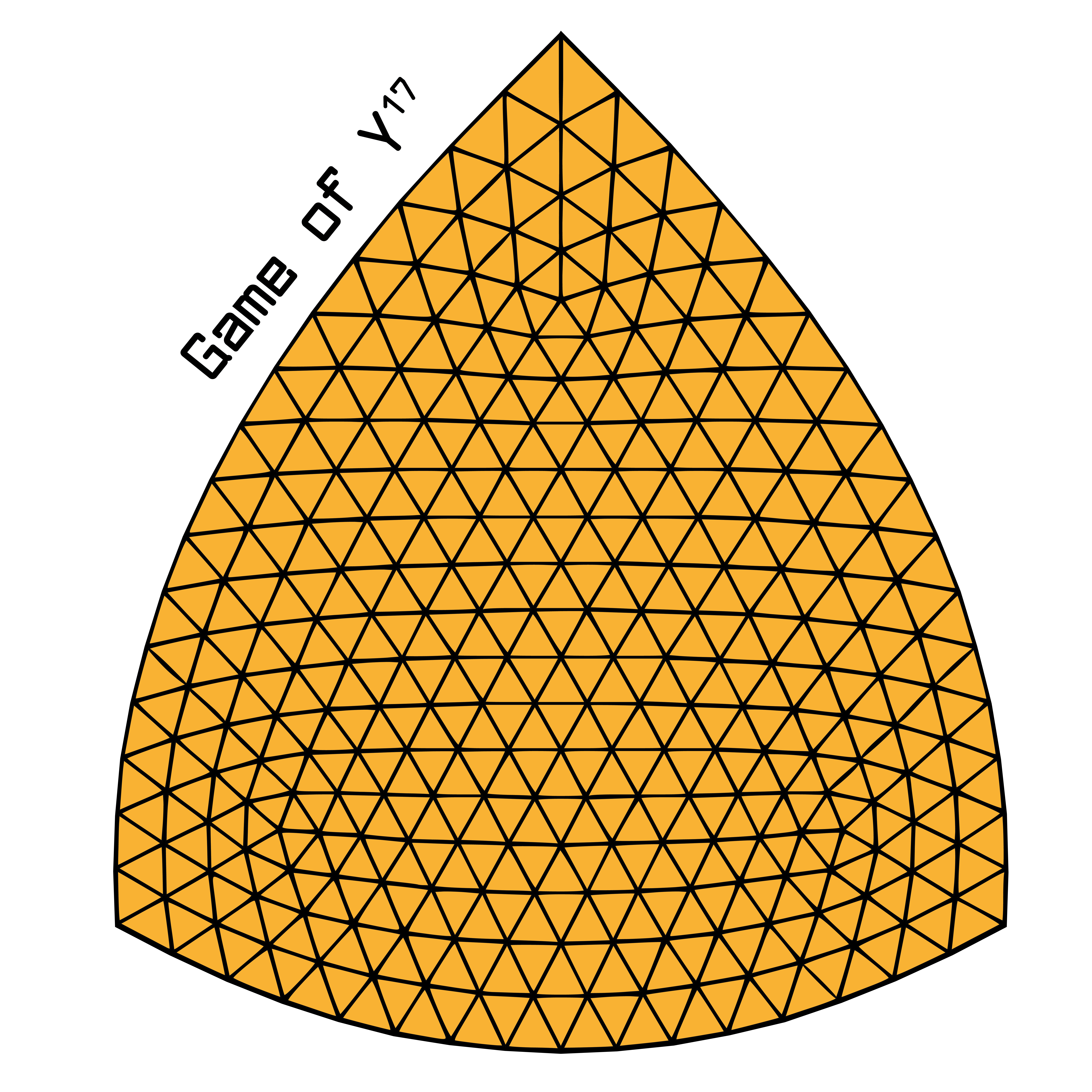
As I mentioned in the Game of Y/Poly-Y/Star/*Star article, the published version of the Game of Y uses a board of 91 points with a distorted triangular shape, designed to balance out the in-game value of the centre, edge and corner points.  However, the board published by Kadon is simply too small, meaning that every opening move by the first player should be swapped.  A better option is to use the same board geometry but substantially larger, and that is what I have attempted with this board.

Why it’s great:  Y is the most elemental connection game, even more fundamental than Hex — in Hex the two players have asymmetric goals, and are attempting to connect different sides of the board, while in Y both players have precisely the same goal.  The need to connect all three sides of the triangular board can produce some interesting tactics, and it has a bit of a different flavour from Hex as a result.  For people new to connection games, or to abstract strategy games in general, Y is right up there with Hex as an instantly accessible gateway to the genre.

About the board:  The board above is 17 points long on each side, meaning that games will be substantially longer and more balanced than on the 91-cell Kadon board.  Besides being visually appealing, this board geometry helps balance the values of board cells.  The downside is that I haven’t yet found a straightforward way to extend this board in Illustrator without reconstructing large portions of it, so for now this is the only large board of this type that I’ve made.

So, that was a whirlwind tour of some of the games I made boards for over the past 12 months or so.  Over the coming months I’ll try to cover a few of these gems in more detail, but at least for now I hope this will give you some ideas if you’re looking to try out a new game.

Next up: more Courier Chess!
Tagged , , , , , , , , , , , , , , , , , , , , , , ,

Courier Chess, Part I: It’s like Chess, but Wider

UPDATE 6 Nov 2021 — Added info and screenshots on playing Courier Chess and Courier-Spiel in Ai Ai.


As some of you may know, I’m a big fan of the large-board variants of Shogi, Japanese Chess.  These enormous games extend Shogi out from its normal 9×9 board with 20 pieces per player, up to Chu Shogi (12×12 with 46 pieces per player) and Dai Shogi (15×15 and 65 pieces per player), then through progressively more enormous boards and armies, all the way out to the ludicrous Taikyoku Shogi (36×36 with 402 pieces per player).  Not all of these games are particularly practical to play, at least not regularly, but the best among them use these large playing surfaces and diverse armies to create gargantuan strategic battles stay thrilling even over the course of hundreds of moves.

Large-Board Chess in History

Of course, Western Chess has a long history of variants.  A number of larger Chess games have been developed over the centuries as well, right from the earliest days of the game.  Shatranj, the ancient Arabic ancestor to Chess, was extended to the 10×10 board back in the 9th century to create Shatranj al-Tamma, or Complete Chess.  Inspired by Shatranj al-Tamma, Turkish Chess fanatics developed a family of enlarged ‘Turkish Great Chess‘ variants, ranging in size from 10×10 boards to 14×14.  Some other variants of Shatranj went off in some remarkably creative directions, such as Tamerlane Chess, where additional citadel squares hang off the 10×11 board and numerous new piece types appear.

At the time these games were invented, the pieces used in Chess were slower than today, with only the Rooks able to move unlimited distances.  That meant that on these larger boards the play tended to be rather slow, and while some may have appreciated the deliberate, strategic flavour this provides, some of these large-board games felt fairly ponderous.  Tamerlane was an exception, however; the piece density on the board was high and the board was shorter vertically as well, meaning that the opposing armies took less time to get into conflict.  The wide variety of pieces in Tamerlane also diversified play and provided some new tactical wrinkles compared to the smaller game.  Atranj and Indian Great Chess are also quite playable, largely because they include some powerful compound pieces (Bishop + Knight, Rook + Knight, Knight + Queen) that can range across the board very quickly and considerably speed up play.

Unfortunately, these more successful large variants still never quite established a significant foothold in the Chess-playing world, and most of these games have since disappeared and are now merely historical curiosities.  Tamerlane is still known to a degree, due to its unique character, but the others are long gone.  Generally speaking, historical large Chess variants came and went fairly quickly; clearly many players desired a larger game given the sheer number of attempts, but few games managed to maintain a following for very long.  Given that even the 10×10 variants had trouble finding players, none of the historical large Chess games were nearly as adventurous as the large Shogis, in terms of size, piece count or rules variation.  I suspect if these enlarged games had taken hold, we may well have seen Chess-based equivalents of the gargantuan Shogis.

Courier Chess

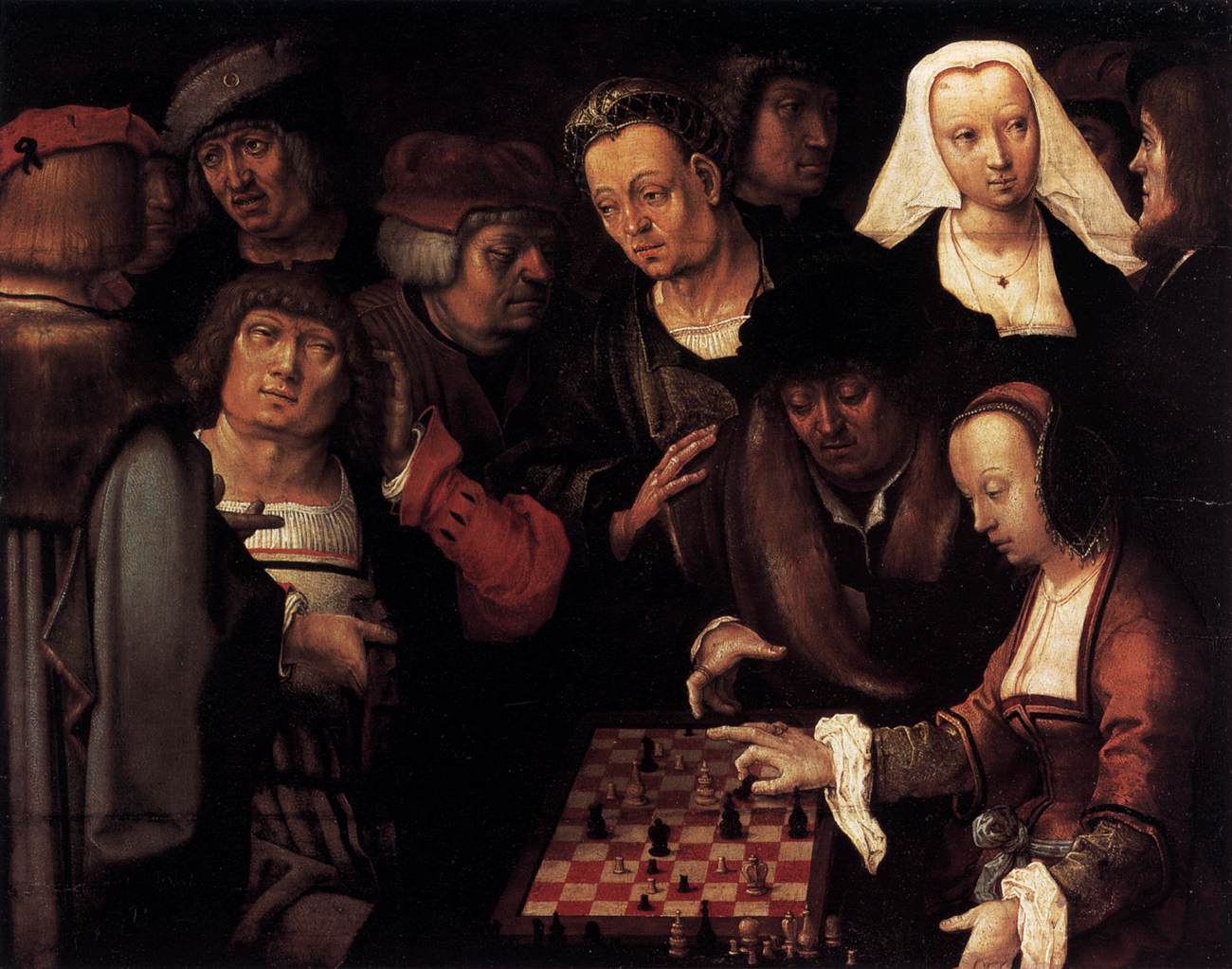
However, there is one large-board Chess variant that did have longevity — Courier Chess.   Courier Chess is believed to have originated around the 12th century, with its first known appearance being a tale written by Wirnt von Gravenburg in 1204 called the Wigalois.  Courier Chess is mentioned regularly in subsequent centuries, mostly in medieval German poetry, but its most famous appearance is in the painting The Chess Players by the Dutch master Lucas van Leyden in 1510:

Lucas_van_Leyden_-_The_Game_of_Chess_-_WGA12919

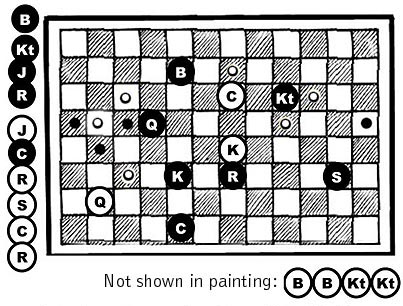
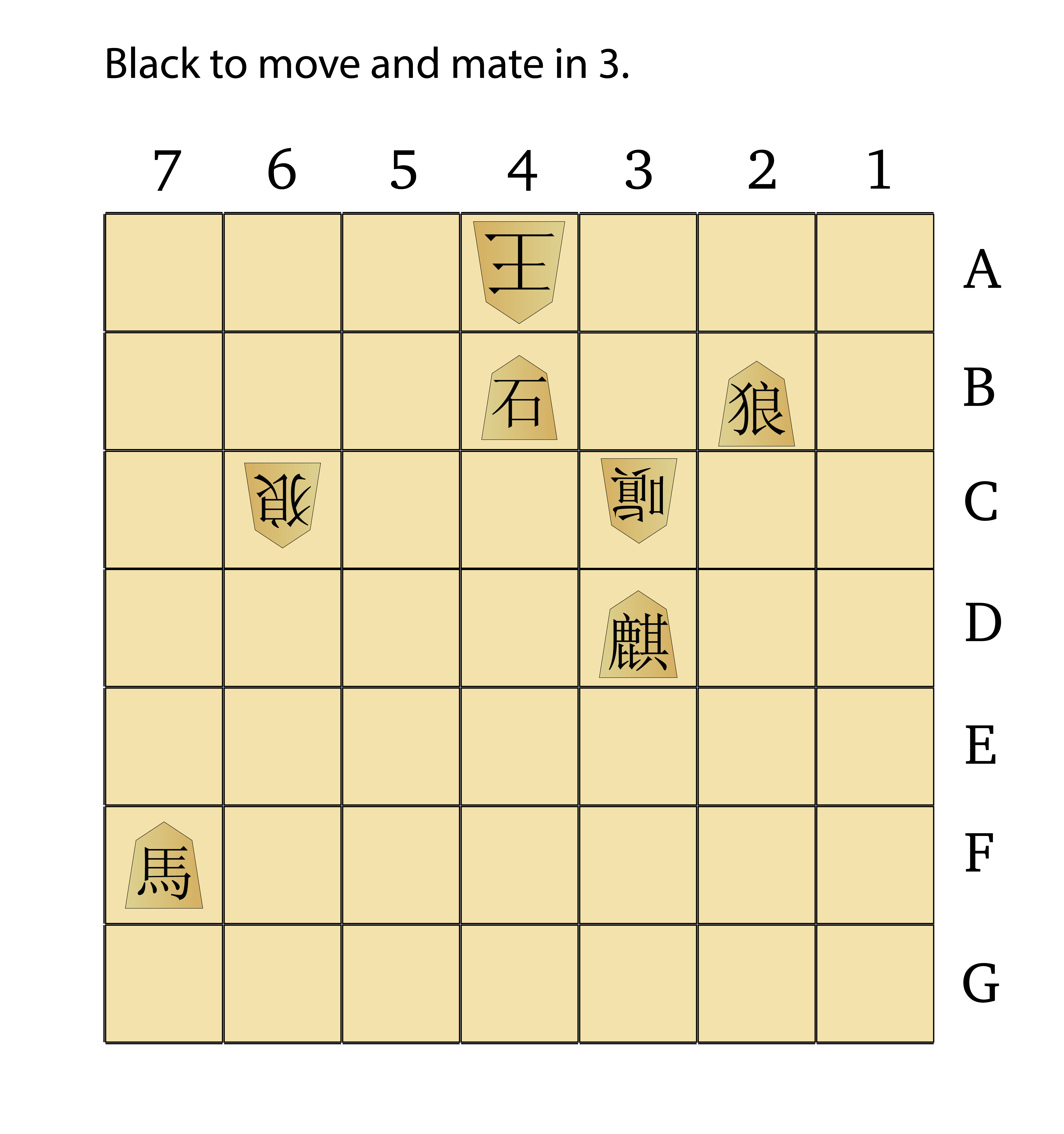
The gentleman on the left looks a bit chagrined, and he has every right to be — analysing the board position shows that the woman on the right will achieve checkmate in three moves!
Courier Chess -- painting game

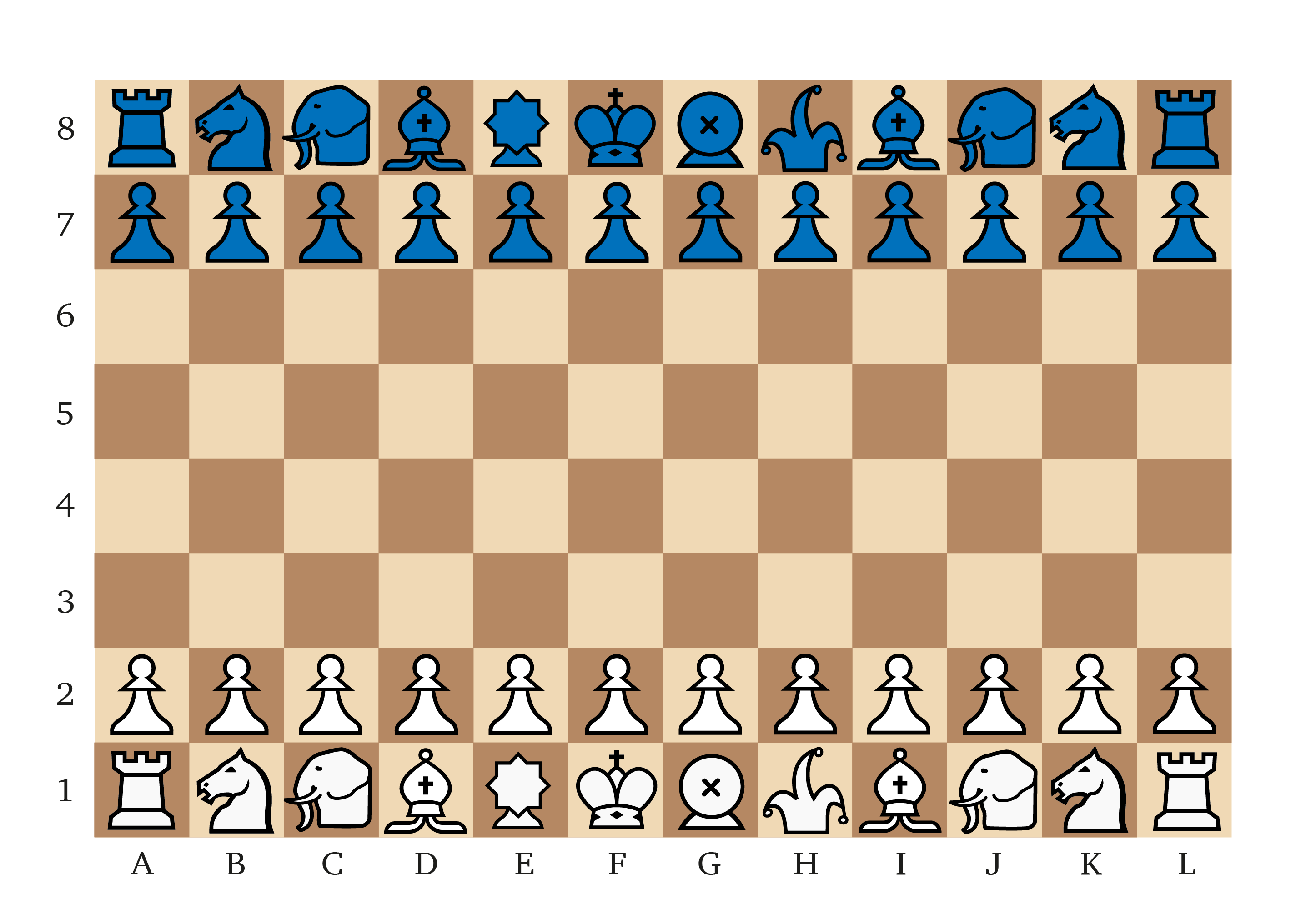
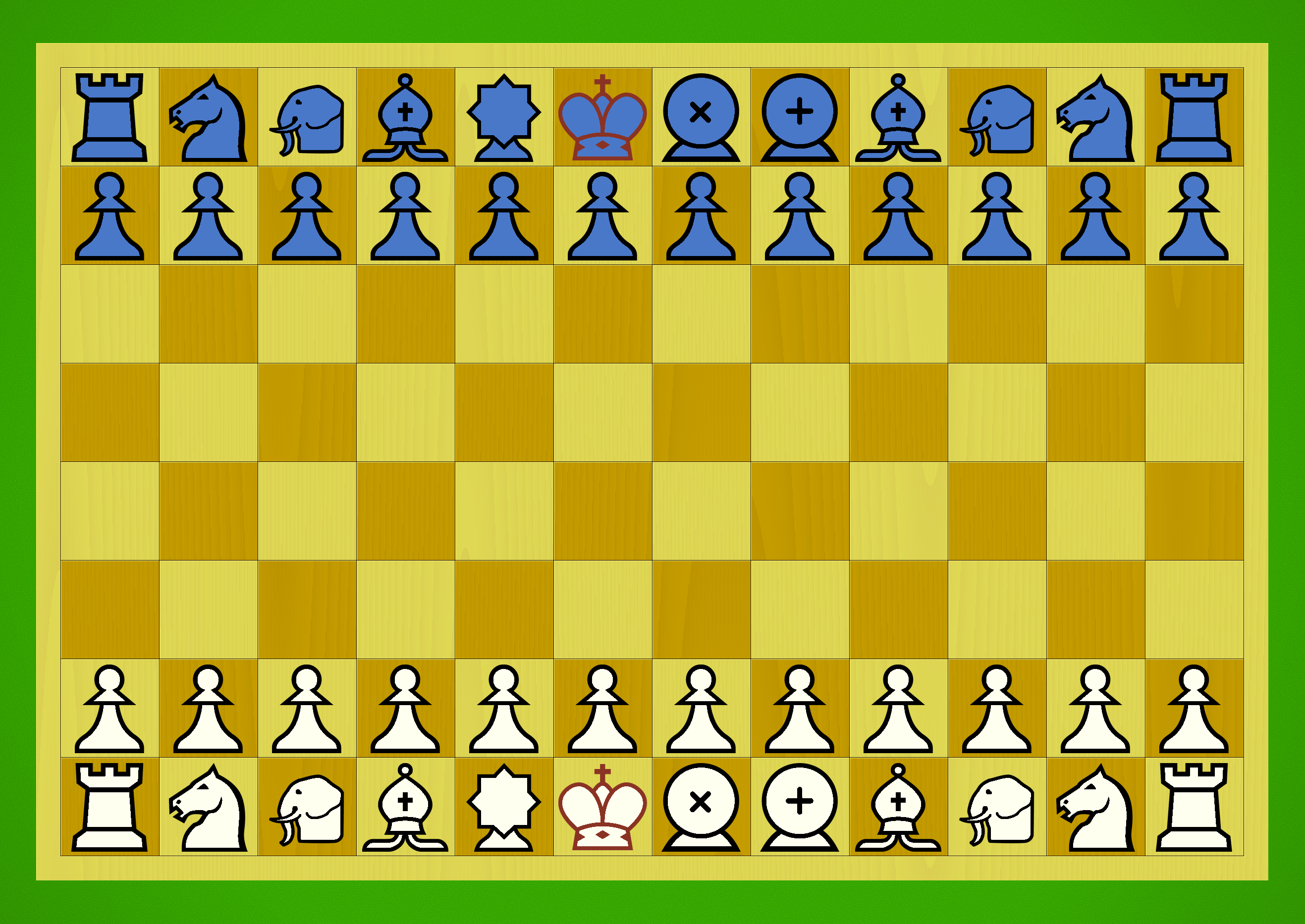
As we can see in the painting, Courier Chess is immediately remarkable for its elongated board; the playing area is 12×8 (96 squares).  In order to fill in the 12 ranks in each player’s camp, some additional pieces are added to the lineup as well.  The Courier starting position looks like this:

Courier-Chess-start-pos-alt-01

The starting array for medieval Courier Chess.

Moving along the first rank from left to right, this is the piece lineup: Rook; Knight; Elephant; Courier (Bishop); Sage; King; Queen (Ferz); Fool; then we have the Courier, Elephant, Knight and Rook again.  In keeping with Chess convention, the second rank is filled with Pawns to protect our valuable pieces.

While there are clearly some pieces here that aren’t in the standard medieval Chess lineup, what is most remarkable about the Courier Chess piece assortment is that this game marks the first recorded appearance of the modern Bishop.  This piece actually gives the game its name — what we would call the Bishop is called the Courier here.  At the time, most Chess players would have been playing some medieval variant of Shatranj where Rooks were the only long-range pieces, so having these Couriers slicing diagonally all over this extended board must have been a thrilling change from the standard game.  Confusingly, what I have portrayed here as Elephants were actually called Bishops in the original Courier Chess, but given their moves match the Elephant of Shatranj, I am using that piece instead to prevent any mix-ups with the Courier.

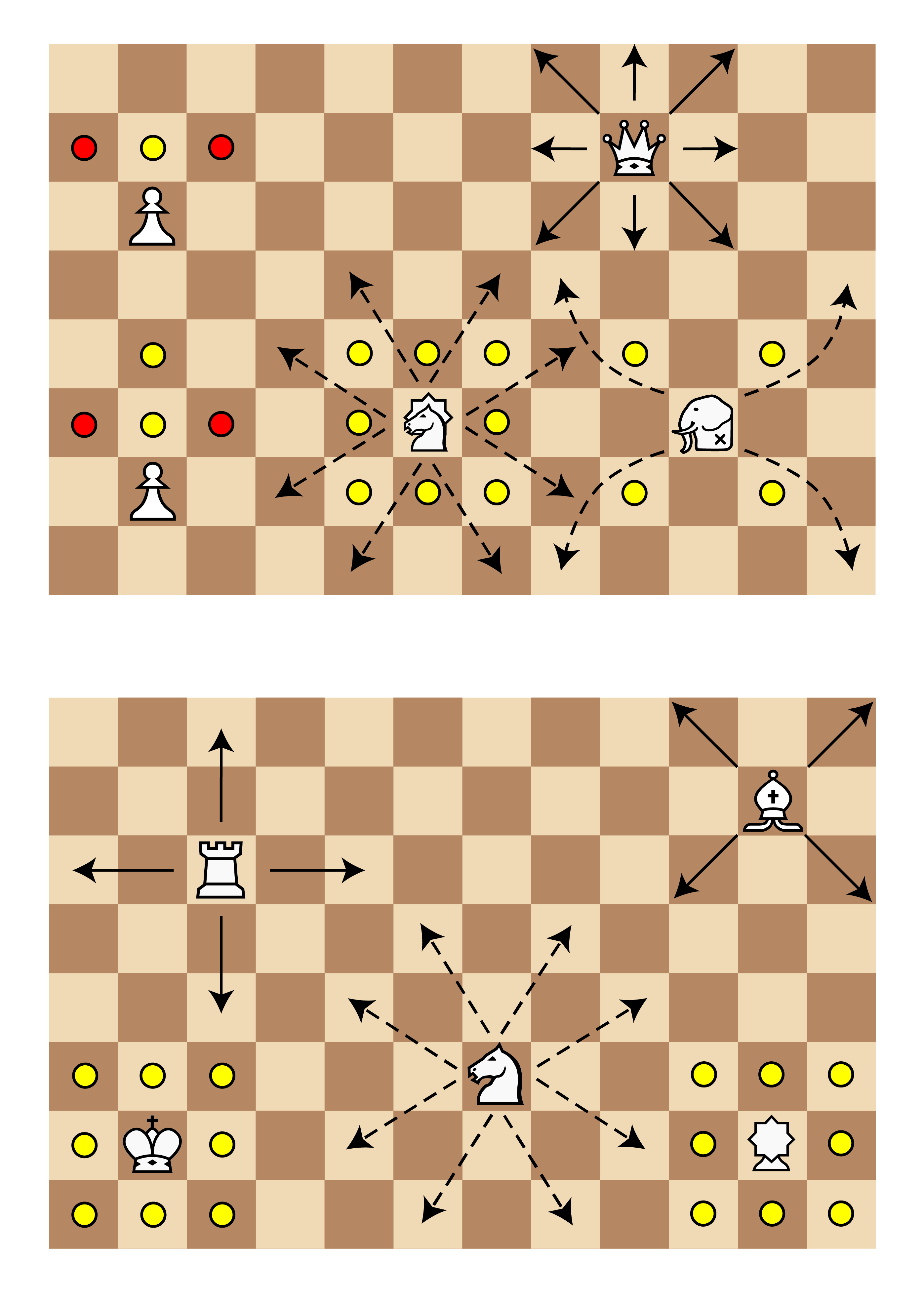
In Courier Chess the most powerful pieces on the board are the long-range Rooks and Bishops, followed by the always-tricky Knight.  From there we have an array of short-range pieces of varying abilities.  This diagram shows the moves of every available piece type — yellow circles indicate a stepping move; red circles indicate spaces where a piece can only capture; solid arrows indicate a sliding move over any number of squares in that direction; and dashed arrows represent leaps directly to the square indicated:

Courier-Chess-moves-01

The pieces in Courier Chess generally follow the conventions of medieval Chess in place at the time:

  • The Pawn moves one square forward only, or may capture an enemy piece diagonally forward to the left or right.  Unlike modern Chess, Pawns only ever move one square — there is no initial double-move available, and therefore there is also no en passant capture rule.  When Pawns reach the opponent’s back rank, they promote to Queen (Ferz).
  • The Sage moves one step to any adjacent square, just like the King, but it’s just a normal piece — no worries about check or checkmate.
  • The Fool moves one step horizontally or vertically only; this move derives from the Shatranj piece called a wazir.
  • The Queen is far, far weaker than the ‘Mad Queen’ we are accustomed to in modern Chess — it moves only one square diagonally.  This move derives from a Shatranj piece called the ferz.
  • The Elephant (which again would have been called the Bishop in the original game) moves as an alfil in Shatranj, a diagonal leap of two squares, jumping over any pieces on the square in between.  The Elephant is thus colourbound — it will only ever be able to visit squares of the same colour it starts on.  In fact, the Elephants may only visit a quarter of the squares on the board!
  • The Knight moves just like in modern Chess — a leap of one square horizontally or vertically, followed by one square diagonally, jumping over any intervening pieces.
  • The Rook moves as in modern Chess as well, sliding any number of squares vertically or horizontally.  Note that there is no castling in Courier Chess.
  • The Courier moves as the modern Bishop, sliding any number of squares diagonally.  Like the Elephant, it is also colourbound, forever stuck on either the light squares or dark squares.

As in modern Chess, the goal is to checkmate the opposing King.  However, we do not know the precise rule for stalemate, where the King is not in check but has no legal moves; given the conventions of Shatranj and medieval Chess we might expect that stalemate in Courier is a loss for the opposing player, rather than a draw as in modern Chess.

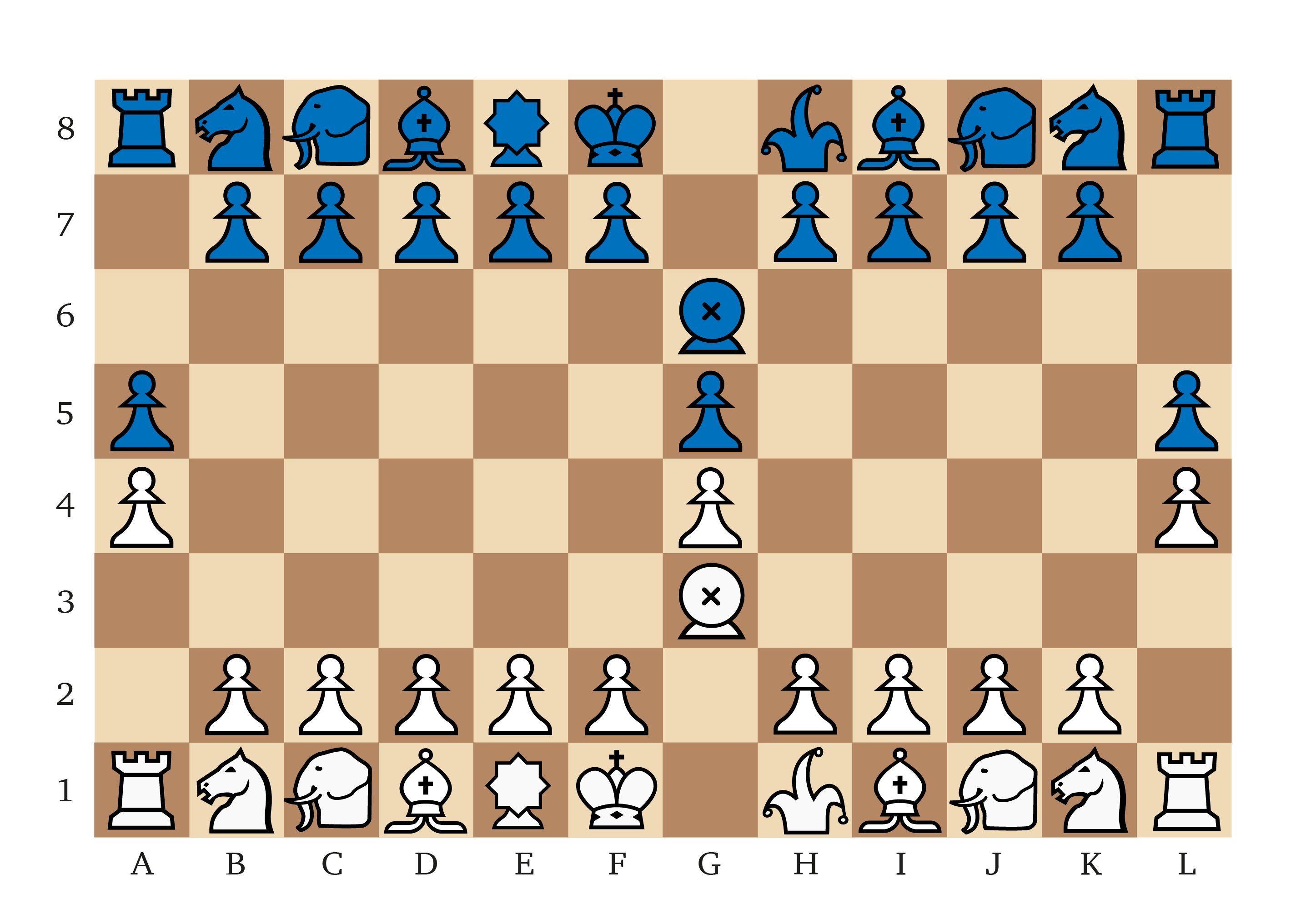
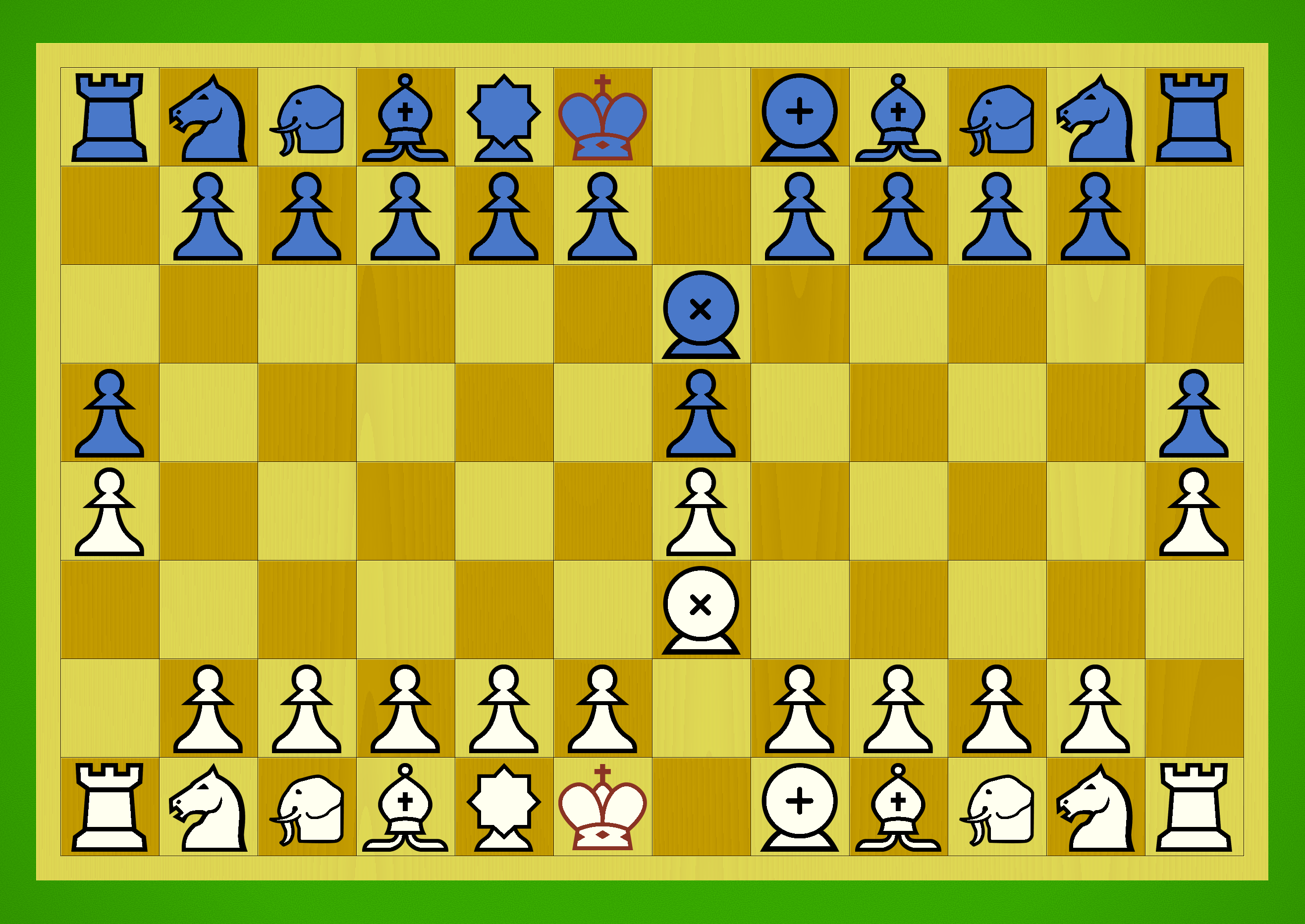
Intriguingly, before starting the game both players would traditionally mvoe the A, G and L Pawns forward two squares, then move the Queen up just behind her Pawn.  These special Pawn moves were called ‘joy leaps’ and were not available during the rest of the game; these may well be the first known examples of a double Pawn move in Chess.  Presumably these initial moves were done so as to open up the position from the start and encourage the players to develop their slower-moving pieces.  So, before starting the game proper, the Courier board would look like this:

Courier-Chess-start-pos-medieval-01

Remarkably for a medieval Chess variant on a large board with many slower pieces, in actual play Courier is quite a lively game.  The pre-advanced Pawns mean the Rooks can be developed quickly, despite the lack of castling, and the forward Queen allows some cover for further Pawn advances to attack the centre.  The Knights and Elephants can leap into the action right away, while the Sage and Fool mostly hang back to protect the King from all these spiky Couriers swirling around the board.  A typical game of Courier will generally take longer than a game of Chess, but not as long as you might think; most of my games against the computer last about 60-70 moves per player, as opposed to around 40 for modern Chess.  However, two strong players of near-equal ability could easily end up locking horns for far longer.

Thanks to Courier’s interesting board shape, varied yet easy-to-remember set of pieces, and enjoyable play, the game was able to last for about 600 years in the parts of Germany where it was most popular.  The game did start to die off in the 19th century, however.  At that time, standard Chess had matured essentially into the form we know today, and the fast-paced action and compact game length of the 8×8 Royal Game certainly worked to its advantage.

Courier-Spiel

Despite the increasing dominance of standard Chess, some dedicated fans did want Courier to make a comeback.  In 1821, H.G. Albers of Lüneburg proposed an updated version of Courier Chess, which he dubbed Courier-Spiel (The Courier Game).  Albers cleverly updated the pieces and rules of the game to increase the pace and tactical richness, making it more competitive with standard Chess.

Courier-Spiel updates the classic Courier experience with some more modern rules and more powerful pieces:

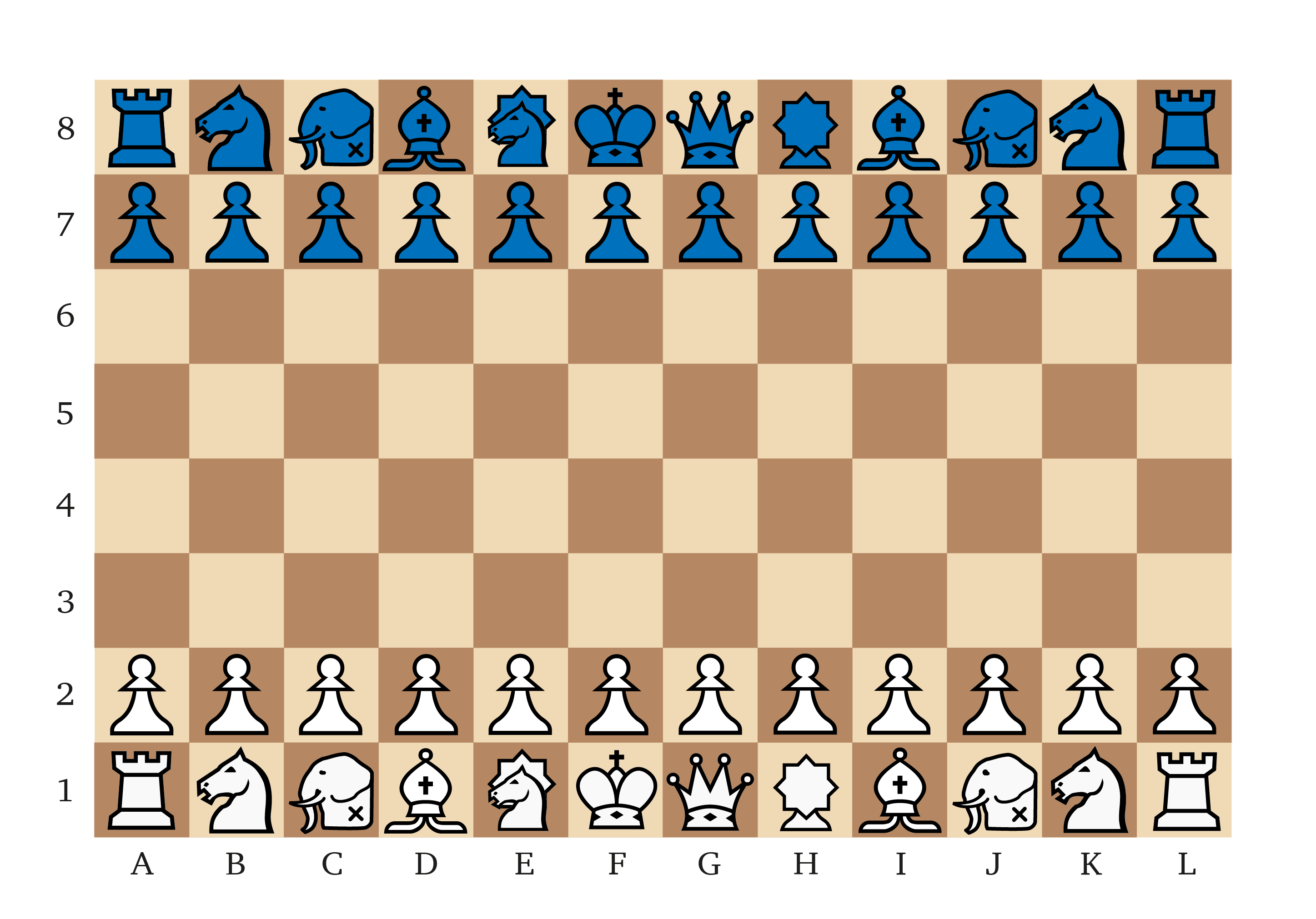
Courier-Spiel-start-pos-01

Starting again from the bottom-left corner and moving to the right, this is our new starting lineup: Rook; Knight; Elephant; Bishop; Councillor; King; Queen; Sage; then completing the set with Bishop, Elephant, Knight and Rook once again.  Courier-Spiel thus has some new pieces and some changes to the old ones:

Courier-Spiel-moves-01

The moves of the pieces in Courier-Spiel.

  • Pawns move as in modern Chess — one square forward and capturing on the forward diagonal squares, but they may also take an initial two-step move from their starting square only.  En passant capture is now possible.  Pawns that reach the opponent’s back rank promote in an unusual way — they must sit on the back rank for another two moves, and then finally promote on the third move to any piece from the Pawn’s army that has been previously captured.  If no pieces have been captured from their army yet, then promotion is impossible, and the Pawn must sit on the back rank until a captured piece is available.  We are not entirely sure whether these Pawns are vulnerable while waiting for promotion, but modern players seem to have settled on making them immune to capture until promotion occurs.
  • The Sage moves the same as in Courier Chess — one step to any adjacent square.  The Sage is now next to the Queen rather than the King.
  • The Fool has had a significant upgrade, and now moves like a combination of the King and Knight.  This powerful new piece sits next to the King where the Sage used to be.
  • The Queen is no longer a ferz, but instead functions exactly like a modern powerhouse Chess Queen — moving any number of squares vertically, horizontally or diagonally.
  • The Elephant is stronger too, and now moves as a combination of alfil and ferz — it may move one step diagonally, or leap two squares diagonally.  They are still colourbound like the Elephants in Courier.
  • The King, Knights and Rooks move the same as in Courier Chess.
  • Rules-wise, of course the goal of the game as usual is to checkmate the enemy King.  I have not seen a definitive statement of the stalemate rule, but as far as I am aware modern players have stalemate as a draw in this game.  Courier-Spiel does not use the initial ‘joy leaps’ of the Pawns and Queen that were customary in Courier Chess.

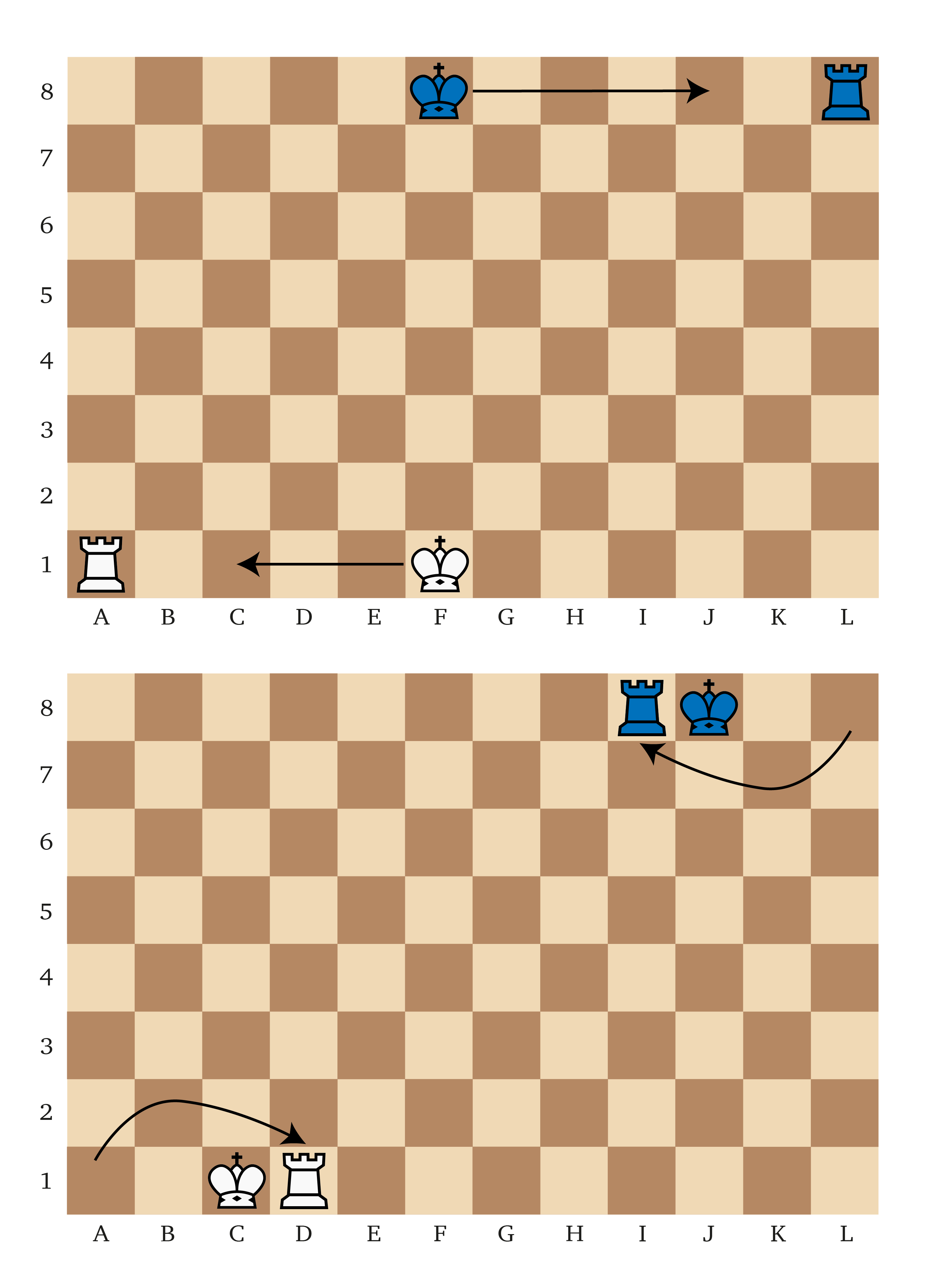
Along with the modernised Pawns, players may now castle in Courier-Spiel.  As in modern Chess, in order to castle the path between the King and the Rook must be clear of any other pieces, and neither piece must have already moved.   Castling may not be done if either the King or the Rook is under attack by an opposing piece, or if any of the intervening squares are under attack.  To castle, the King will move to the C file (if castling with the A-file Rook) or the J file (if castling with the L-file Rook), then the Rook leaps over to the space adjacent to the King on the opposite side:

Courier-Spiel-castling-01

Castling example.

Taking all these adjustments together, Albers did a good job updating Courier for a more modern era.  The increased power of the Elephants, Sage, Fool and particularly the Queen significantly increase the pace of the game.  Tactical exchanges are more frequent than in the original as well.  The addition of castling prevents too many early wins by allowing the King a quick path to safety.  The removal of the initial ‘joy leaps’ of the A, G and L Pawns also allows the King further protection, and avoids a prematurely-developed Queen.  Cleverly, the newfound single-square diagonal move of the Elephant also serves to protect the B and K Pawns, which previously were unprotected and thus vulnerable to early attack in Courier.  Finally, the increased powers of the Sage and Fool provide some strong checkmating powers in the late game, and are also strong defensively, preventing the deadly Queen from completely dominating play.

The glaring flaw in Courier-Spiel is of course the promotion rule, which adds some serious rules complications while also significantly slowing down the process of Pawn promotion.  This leads to some weird pacing in the endgame, where the typical race to promote Pawns becomes a strange, cagey stand-off instead.

However, there is historical precedent here that likely encouraged Albers to adopt this strange promotion method.  In the version of Courier played in Ströbeck, Germany’s famous ‘Chess Village’, the Pawns must go through an odd ritual in order to promote.  Upon reaching the opponent’s back rank, the Pawn would have to make a series of three double-step jumps backward, each one taken on a separate turn (the Pawn’s controlling player did not have to do these jumps immediately or consecutively, but could do them whenever the board situation was convenient).  Pawns making these leaps cannot capture this way, but they can be captured.  After the third backward leap, the Pawn would have returned to its starting square and could then promote immediately into another piece (any piece, not just the Queen).

Given this odd promotion rule was in use in the past, perhaps Albers adopted a version of it to avoid altering the feel of the Courier Chess endgame beyond what Courier fans may have been willing to tolerate?  In any case, I suspect most modern players would prefer to replace these three-turn promotion rules with the simpler method of the original Courier Chess, and just allow Pawns to promote immediately upon reaching the enemy’s back rank.

Playing Courier Chess and Courier-Spiel

While neither of these variants are played widely today, thanks to the internet and powerful Chess-playing engines we need not be short of opponents.  Perhaps the most promising way to find human opponents would be to sign up for an account at the Chess Variant Pages, and then use their Game Courier (how appropriate) Play-By-Email system to invite someone to a game.  Courier Chess has a setup available on Game Courier, and a fair few games have been played, so probably someone will take you up on the offer.  Courier-Spiel has some fans as well.

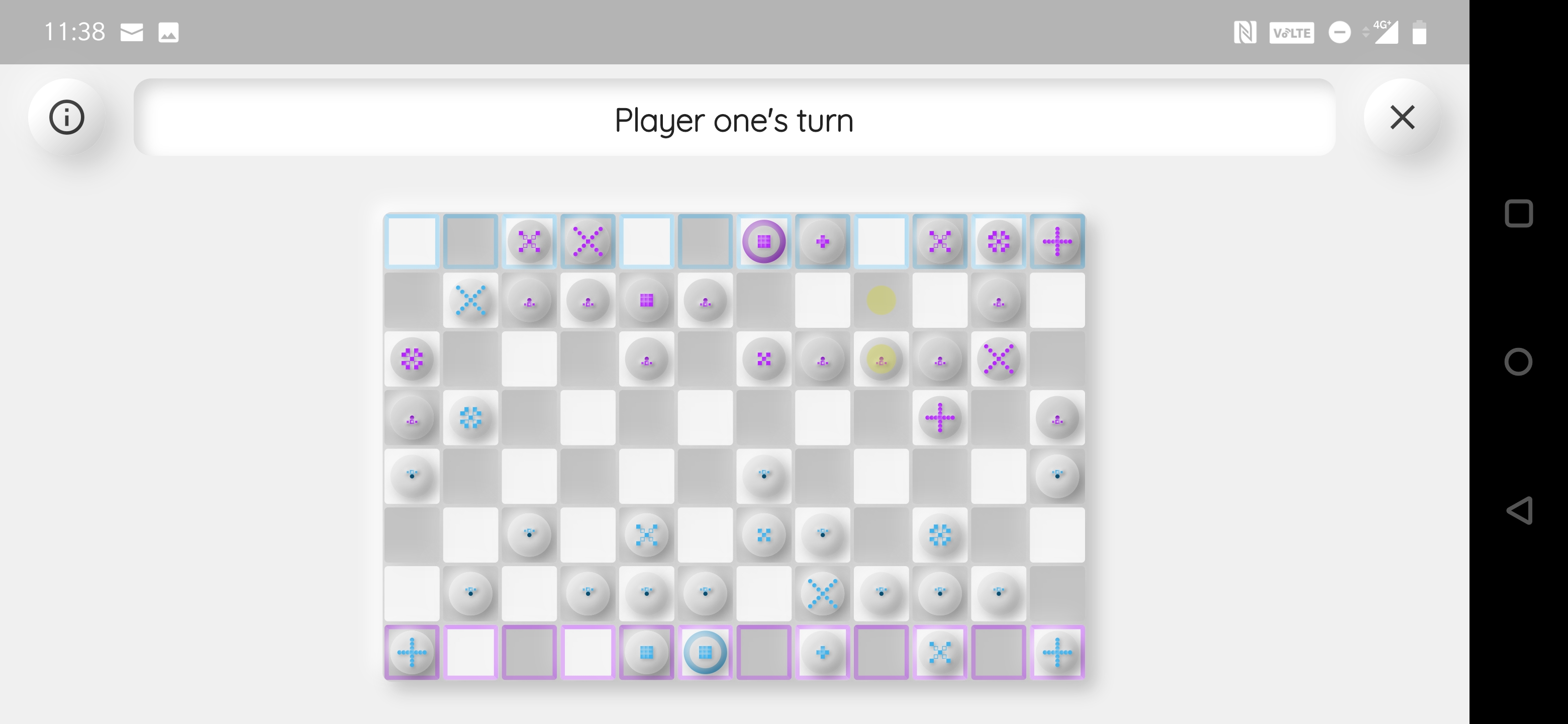
Since I wrote the first version of this article, I began working with Stephen Tavener on his wonderful Ai Ai general game-playing software.  I work primarily on the Chess/Shogi side of things, and have added many dozens of variants in recent months.  We of course added implementations of Courier Chess and Courier-Spiel, so you may play both these games against AI or human opposition:

As you can see, the piece graphics are slightly different — the Queen and Fool have been replaced with the generic Ferz and Wazir, respectively, but the piece images are schematic and easy to remember.  Subsequently I have added a number of Courier-inspired modern variants to Ai Ai; more on these in a future article!

Alternatively, if you want to play against a tougher AI, you can download WinBoard and play Courier Chess against the FairyMax computer engine.  This is quite an enjoyable way to get to know the game, and FairyMax is a decent opponent.  WinBoard does not appear to have a Courier-Spiel setup available by default, but it is possible to define your own variants.  Winboard supports variants all the way up to Tai Shogi and its 25×25 boards, so feel free to experiment with your own wild expansions of Courier Chess.

If you are looking for a real challenge, download the Fairy-Stockfish engine, which also supports Courier (and you can define Courier-Spiel very easily, check the file ‘variants.ini’ under the ‘src’ folder in the GitHub repository at the link).  Fairy-Stockfish is based on Stockfish, one of the strongest Chess engines on the planet, so it is an absolutely brutal opponent!  Conveniently, Fairy-Stockfish also supports a tonne of other good Chess variants, although due to engine limitations it cannot play any game with a board larger than 12×10 (although this may change further down the line).

For playing Courier Chess on the go, you can grab the Chess Remix app for your Android phone or tablet.  This great little app contains over 100 Chess variants, including many of the major regional and historical ones.  Alongside Courier, Tamerlane Chess, Chu Shog and Dai Shogi are in there, too.  The piece graphics are little pixel-art representations of the moves of each piece, which is probably helpful for some but I personally am not a huge fan of that approach.  As a Shogi purist who loves Japanese calligraphy, playing the Shogi family without the kanji characters feels particularly wrong and gross, but I do enjoy having the ability to play all of these games on the go.  Chess Remix, true to its name, also lets you create your own variants or modify the included ones in all sorts of different ways, so it is a must-have if you enjoy mucking around with Chess.

Screenshot_20210207-113848

Playing Courier Chess against the AI in Chess Remix.

Over-the-board Courier play is a bit more challenging to arrange due to the lack of any 12×8 boards on the market, although some chessboard specialists may be able to make one to order.   There are some occasional reproductions available based on the Courier Chess set depicted in van Leyden’s painting, but these are handmade and the pieces are brass, so they are quite expensive!  A better option may be to buy a couple of inexpensive vinyl or neoprene chess boards, slice one in half and attach it to the other.  For pieces, a couple of regular Chess sets plus some variant pieces would be sufficient.

However, if you are willing to be a bit patient, the Chess Club of Ströbeck is planning to produce a run of Courier Chess boards and pieces sometime in 2021.  The boards will be handmade, and without a doubt these sets will be a fine collector’s item as well as being great for play.

Next moves

The second part of this series will examine some modern extensions of the Courier Chess concept, all of which are available to play in Ai Ai.  I had previously planned to present some analysed games of Courier and Courier-Spiel, but due to a backup mishap I lost the substantial work I’d already done on these.  At some point I’ll do that work again, but for my own sanity I need some time before I dive back into that analysis a second time!

In the meantime, please give Courier Chess and Courier-Spiel a try — in my opinion they are easily among the most interesting historical Chess variants, offering a unique feel and entertaining strategic dilemmas.  Courier’s distinct medieval feel and pacing is surprisingly absorbing, and while the modernised takes on it are probably more polished games, I still find myself returning more often to the 800-year-old original.  Certainly Courier will not appeal to everyone, but I feel every Chess fanatic owes it to themselves to experience this unique offshoot of the medieval game.

Tagged , , , , , ,

Understanding Buddhism, Part I: The Diversity of Buddhist Practice

As I wrote in my critique of Todd May’s Death there are some misconceptions about Buddhism and its philosophy and practices that are widespread in Western sources.  Much of this is probably due to the works on Buddhism produced by Western scholars in the late 19th/early 20th centuries, which viewed Buddhism through a colonialist lens, with everything they perceived being positioned against a Judeo-Christian conception of reality.  These sources often viewed Buddhism as a nihilistic faith, a perception that would have been proven false had they engaged more deeply with Buddhist literature.  

Today, misconceptions of Buddhism have taken some additional forms, often inspired by a modern view of Buddhism as a ‘philosophy’ more than a religion.  There is a tendency to view Buddhists as largely secular, rational thinkers — introspective scientists probing the depths of the human mind.  Figures like the Dalai Lama present to us as benign, kindly monks promoting generally-acceptable ideas like the power of compassion, and they explicitly support other types of spirituality rather than positioning Buddhism as the One True Path.  As a consequence we believe that Buddhism sits comfortably within our Western materialist tradition, and some even go so far as to propose that core Buddhist concepts like rebirth and karma are metaphors rather than actual beliefs.  This way of thinking has led to the rise of Secular Buddhism, spearheaded by writers like Stephen Batchelor. 

Adding to the confusion, millions of people now practice Mindfulness-Based Stress Reduction — essentially Buddhist meditation stripped of all of its wider context; this further colours our perceptions, leading some to confuse these reduced practices with the whole of Buddhism.  In positioning Buddhism in this way we implicitly deny many centuries of Buddhist scholarship, the importance of esoteric practices and mysticism in Buddhism, and the deeply-rooted cultural influences that give each regional expression of the Buddha’s teachings their own vibrant traditions.

As another outgrowth of my own studies of Buddhist history, philosophy and practice, I decided to start putting together a summary of some common misconceptions about Buddhism found frequently in popular culture and Western scholarship.  I hope this may be useful for some of you out there who are interested in Buddhist traditions and practices, but mainly it will serve as a living reference document for myself, as my own understanding of Buddhism continues to evolve and deepen over time (hopefully).

Before I get started, a note about style.  When speaking of concepts drawn from the teachings of the Buddha as recorded in the Sutta Tipitaka, I will use terminology from the Pali language in which the suttas (sutras) were written.  When speaking of Mahayana and Vajrayana traditions, I will use terminology derived from Sanskrit, as these terms are more commonly used in these contexts.  This is primarily for my own convenience, so that on later readings and edits I can quickly identify what sources are being discussed in any given passage.

One more note about books on the Dharma (the teachings of the Buddha), since I recommend a number of these below.  Traditionally any book containing the Buddha’s words or any Buddhist teachings should be treated with particular respect.  Such books should not be placed on the floor or stepped over, have other books or objects placed on top of them, and they should be kept on high shelves and preferably away from non-Dharma books.  When reading them, you should only do so while sitting upright or standing.  Whether you do all this or not is up to you, there are no Dharma Police to arrest you and there are no gods in Buddhism around to punish you, but just bear this in mind in case you have visits from serious Buddhists someday, who may notice this kind of thing.

Before getting to the misconceptions themselves, in this first article I’ll quickly summarise the major Buddhist traditions and their differences.  I will provide much more specific details here than in my previous introductory article on Buddhist thought and meditation.  In the second part of this series, we’ll build on these foundations and explore some common misconceptions about Buddhism.

Just to lay out my position up front: throughout these articles, I will make an argument that capital-B Buddhism is built on a foundation of an incredibly comprehensive, internally-consistent philosophy, and that anything we call ‘Buddhism’ must include, at a minimum, a coherent subset of that philosophy.  The Buddha himself urged his followers not to be fanatics, and to test all his statements using their own critical faculties; so in that respect, there is nothing wrong with being a Secular Buddhist, or with being a Christian who practices mindfulness meditation, or whatever else.  Problems do arise when we claim that these patchwork Buddhist practices *are* capital-B Buddhism, or that our own interpretation of Buddhist thought is the correct one, and that we have some special insight into the Buddha’s teachings that 2,500 years of Buddhist scholarship somehow missed.  Ultimately I feel we need to re-examine how Buddhism is taught in the West; have more respect for the Buddhist scholars who precede us; and make more efforts to learn how Buddhism is actually practiced by the cultures in which it thrives, rather than simply presenting it as an abstract philosophical framework.

The Buddhist Path to Liberation

Many of us, Buddhist or not, are familiar with His Holiness the Dalai Lama.  The Dalai Lama is an incredibly charismatic person, and has single-handedly made the world aware of the fraught political situation in Tibet and has helped spread Tibetan Buddhism across the world.  His influence is so pervasive that many non-Buddhists perceive him as a sort of Buddhist Pope.

In reality, of course, there is no Buddhist Pope.  Buddhism takes many different forms in the numerous countries where it is practiced, and the Dalai Lama is connected only to Tibetan Buddhism.  Within the Tibetan context, the Dalai Lama comes from the Gelug tradition, which historically has been the most powerful and influential of the Tibetan Buddhist schools, but there are several other schools that have existed for just as long (or longer) and which have significant differences in how they practice compared to the Gelugpas.  

Before we dig deep into the complexities of Buddhist thought, we should start by clarifying what types of Buddhism exist, and develop some basic concepts of how each of these traditions view the teachings of the Buddha and the nature of existence.  In this way we can better appreciate the incredible diversity of Buddhist life in different traditions, and better understand how evolutionary steps in Buddhist doctrine have lead to very different approaches to practice.  Buddhism is traditionally divided into three ‘vehicles’, each of which builds on the foundation of the previous and extends it with new philosophical concepts and practices; below I will describe each of these vehicles in turn.

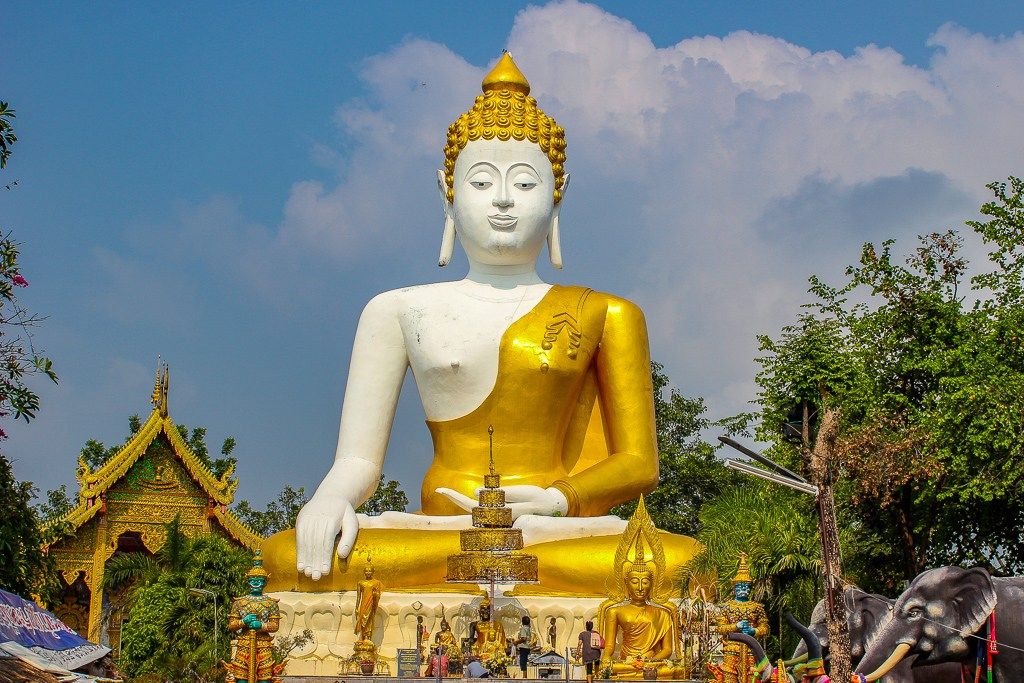
chaing-mai-buddha

A huge statue of the Buddha in Chiang Mai, Thailand.

Early Buddhism (previously called ‘Hinayana’):

The first ‘vehicle’ in Buddhism is Early Buddhism, formerly known as Hinayana (‘the Lesser Vehicle’), which follows the original teachings of the Buddha as laid out in the very extensive suttas (sutras, or discourses) given by the Buddha during his lifetime, and subsequently recorded in the Tipitaka, which were written in the ancient Pali language.  These suttas focus primarily on the Buddha’s fundamental realisations about the nature of suffering, which he codified in the Four Noble Truths, and his prescription for ending suffering, The Noble Eightfold Path.  The early Buddhist practitioner seeks to become an arahant, an enlightened being who perceives the true nature of existence, is free of the ignorance that leads to suffering, and will reach nibbana (nirvana) and thus ultimate freedom from suffering at the end of their life.

Core philosophical concepts:

The Buddha’s original teachings gave us the Four Noble Truths, the Buddha’s explanation of the nature of human suffering, and the Noble Eightfold Path, his prescription for ending that suffering and achieving nibbana (nirvana).  The Four Noble Truths can be expressed as follows:

  1. Suffering (dukkha) is an innate characteristic of existence in samsara.
  2. Suffering is due to attachment and desire — the desire for pleasure; the desire for existence; and the desire for non-existence.
  3. Suffering can be ended, by ending this attachment and desire.
  4. The way to end suffering is to practice the Noble Eightfold Path.

So, dukkha arises due to our desire for identity and constancy in a world that is constantly changing, and this desire and attachment causes us to perpetuate this suffering, in the form of continued existence in samsara — the endless cycle of life, death and rebirth that all sentient beings experience.  Samsara leads to endless suffering, as each rebirth is doomed to eventually age, decline, and die, only to start all over again.  By cutting off this desire and attachment, and by curing our ignorance of the nature of reality, we can end this suffering and free ourselves from cyclic existence.

The nature of each rebirth is determined by our kamma (karma), which is the only aspect of each life that persists to the next; in Buddhism each rebirth is a separate being and consciousness from the preceding one, as there is no soul or essence that transfers over (as would be the case in Hindu reincarnation, for example).  Kamma is understood as a cause-and-effect process; bad actions lead to suffering, good actions lead to a reduction of suffering.  Kamma is not a divine judgment on our behaviour imposed from outside, but instead exists in the outcomes generated by our actions that affect the world around us.  The only beings that may change our kamma are ourselves, by understanding the action of kamma and following the Noble Eightfold Path.

The Noble Eightfold Path provides the eight means by which we end craving and attachment:

  1. Right View — we must understand the functioning of kamma and the nature of dukkha (the Four Noble Truths), and avoid holding views of existence which enable attachment and craving.
  2. Right Intention — we must cultivate an intention of renunciation (abandoning craving), an intention of good will (metta, loving-kindness), and an intention of harmlessness (a compassionate wish that all beings be free of suffering).
  3. Right Speech — we must not lie, speak unkindly, or use our words to cause discord and suffering.
  4. Right Action — we must not kill or injure others, steal anything which is not ours, or engage in sexual misconduct (abuse, adultery, assault, etc.).
  5. Right Livelihood — we must earn our living legally, peacefully, without coercion or violence, and without trickery and deceit.  Our livelihood must not cause suffering for others.
  6. Right Effort — we must abandon our existing unwholesome mental states, and prevent the arising of other unwholesome mental states.  We must maintain and perfect our wholesome mental states, and generate wholesome mental states that have not yet arisen.
  7. Right Mindfulness — we must cultivate serenity and insight in the mind through the contemplation of the four foundations of mindfulness: the body; feelings; states of mind; and phenomena.
  8. Right Concentration — we must cultivate single-pointed mental concentration, progressing through four successive stages of increasing meditative absorption called the jhanas.

Note that the Noble Eightfold Path contains three elements focussed on meditational practice — Right Effort, Mindfulness, and Concentration — but the rest of the path consists of actions we must take in everyday life and in our relationships with other people.  So the image occasionally presented of the Buddhist as a detached, cold, robotic meditator is not accurate; Buddhists must cultivate positive actions and qualities in all aspects of life, as well as within their minds.  Part of the path is to demonstrate good will and compassion for others, as well as refining our internal mental states.  The Noble Eightfold Path must be practiced in its entirety if one wants to achieve liberation.

The truth of suffering in Early Buddhism leads us to the three marks of existence: dukkha (suffering), anicca (impermanence), and anatta (not-self).  Dukkha is the concept that all existence leads to suffering, due to our fundamental ignorance of the nature of reality and our grasping for solidity and changelessness in a world forever in flux.  Anicca is the concept that everything is impermanent and subject to decay and dissolution; on a human level we experience this as the reality of mortality, that all of us are born, will age and decline, and eventually die.  Anicca extends this to all things, including our own thoughts, which continually arise and disappear again from moment to moment.  Finally, anatta denies the existence of a permanent self.  This means not only that humans, and all sentient beings, do not have a permanent, changeless essence like a soul, but also that our perception of self is fundamentally illusory.  We perceive single unified selves, but in fact each of us is a constantly-changing bundle of perceptions interacting with the world, and on a fundamental level all phenomena are dependently arisen — they are the consequences of the interactions of various causes and conditions, rather than singular entities with an independent, absolute existence.

In modern times some Western scholars choose to believe that the Buddha talked about rebirth symbolically, but this is definitely not the case.  The suttas are nothing if not scrupulously clear, and whenever rebirth is mentioned it is described carefully and precisely, often with the phrase ‘after death and upon the break-up of the body, [thing happens]’.  Rebirth is very explicitly discussed throughout the suttas as a real process.  Some have argued that the Buddha included rebirth in the suttas simply because that was the default position in India at the time; this is also incorrect, and part of the reason rebirth is described so carefully and extensively in the suttas is that the Buddha’s position was novel and controversial.  Kamma likewise is often misinterpreted as a system of supernatural reward and punishment, but in the suttas it is simply portrayed as cause and effect, a spiritual equivalent to gravity or electromagnetism.  Kamma is determined only by our own actions and is not imposed by outside agencies or deities.   

In the early days of Buddhism, there were 18 schools of Buddhism with varying interpretations of the suttas.  Today only the Theravada tradition remains.  Theravada is widely practised in Thailand, Sri Lanka, Burma, Cambodia, and in the West.  Mahayanists used to refer to Early Buddhism as Hinayana, which literally translates as ‘the Lesser Vehicle’, but today this term is considered derogatory because all three Buddhist ‘vehicles’ are capable of achieving enlightenment for their practitioners, and therefore none can really be characterised as inferior.  I will use the term ‘Early Buddhism’ to refer to the general category of traditions focussing purely on the Pali Canon, and ‘Theravada’ to refer to Early Buddhism how it is actually practiced today.  According to various sources, about one third of all Buddhists in the world today are Theravadins.

Within the Theravada tradition, there is a fairly widespread belief that achieving enlightenment is almost impossible unless one chooses to become a monk or nun.  As a result, in countries dominated by Theravada traditions like Thailand, lay practitioners are extremely reverent of the monastic community, and go to great efforts to pay them respect and help out with donations and so forth.  Many lay Theravada Buddhists focus on cultivating good karma so that they may be reborn as someone who is in a position to become ordained, and thereafter can focus on achieving enlightenment.

However, in the suttas there are prominent lay practitioners who are portrayed as arahants, or at least on the path to arahantship, which suggests that enlightenment is very much still achievable for laypeople with families, homes and jobs.  Naturally, becoming a monk and devoting onself to constant, unceasing practice of the Dharma makes achieving enlightenment much easier, but the suttas do suggest that laypeople can become enlightened as well.  This is also very much the case in the Mahayana sutras and the tantras; the Mahayana sutras feature numerous laypeople who are portrayed as just as wise as enlightened monks, and the history of Buddhist tantra is littered with lay yogis who are revered as enlightened beings.

Recommended Reading: 

In the Buddha’s Words, by Bhikku Bodhi: a complete, detailed and readable introduction to the core of the Buddha’s teachings in the Pali Suttas.  Perhaps the best introduction to the Pali Canon available today.

The Pali Canon, by the Buddha: the Pali Canon, or Tipitaka, includes three parts:

  • Vinaya, a collection of teachings outlining the conditions under which monks and nuns should live.  The Vinaya justifies each rule of conduct in detail, and in essence aims to be a comprehensive document illustrating how a spiritual community should function. 
  • Sutta Pitaka, a huge collection of discourses delivered by the Buddha during his 45 years of teaching.  These are subdivided into various collections called nikayas.  Together they form an extremely clear and internally consistent statement of the core of Buddhist philosophy, and taken as a whole the suttas provide a complete path for liberation from cyclic existence.
  • Abhidhammaa collection of seven books that systematise the principles outlined in the suttas into a staggeringly complex and ambitious framework for analysing all conscious experience.  Reading commentary on these is absolutely essential in order to develop a useful understanding of the dense theories contained here.

All of these texts are freely available to read on Access to Insight or Sutta Central, or in hardcopy form in the series of fantastic hardcover volumes from Wisdom Publications.

Mindfulness in Plain English, by Ven. Henepola Gunaratana: the best guide to insight meditation (vipassana) practised in the Theravada tradition, but equally usable and applicable in all traditions.  The author’s related books on samatha, or single-pointed concentration (Beyond Mindfulness in Plain English), and metta, or loving-kindness meditation (Loving-Kindness in Plain English: The Practice of Metta) are equally excellent, and owning these three books will give you a very comprehensive and practical guide to some of the most important meditation practices in Buddhism.

Teachings of the Thai Forest Sangha:  The Thai Forest tradition is quite popular in the West, and at the link you will find a huge collection of free ebooks with teachings from a number of monks in that tradition.  Ajahn Chah is particularly popular, but there’s tonnes of good stuff in there.  I recommend checking out some of these books to get a sense of modern Theravada practice.

Teachings of Thanissaro Bhikku:  Another treasure-trove of Theravada books and essays, including complete translations of the Vinaya and the Sutta Pitaka.  Thanissaro Bhikku is a very good communicator, so again I highly recommend these for some very readable explanations of Theravada philosophy and practice.

For more on Early Buddhist history, check the Buddhology section of the library at A Handful of Leaves, which includes a huge number of free downloadable books.

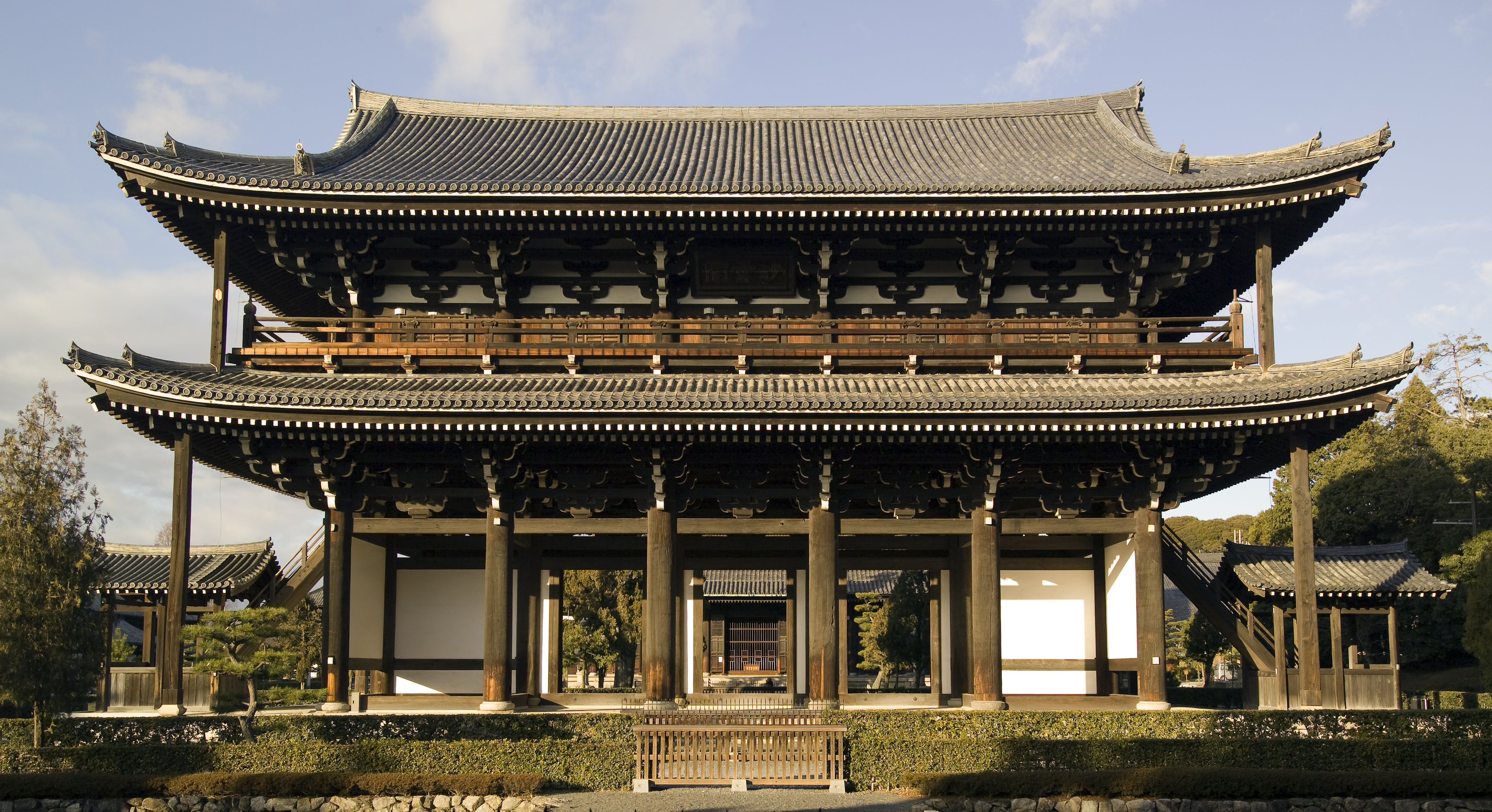
Tofukuji-Sanmon-M9589

Tofuku-ji, one of the five great Zen temples in Kyoto, Japan.

Mahayana Buddhism:  

Mahayana, like Early Buddhism, evolved in India and is believed to have first arisen around the 1st century CE.  The Mahayana traditions accept the entirely of the Early Buddhist teachings, but add to these numerous additional teachings in the form of the Mahayana Sutras.  The name ‘Mahayana’ means ‘Greater Vehicle’ in Sanskrit, and refers to the fact that Mahayana traditions go beyond seeking purely individual liberation and becoming an arahant.  Instead the Mahayanist strives to become a bodhisattva, a fully-enlightened being that remains in the suffering of cyclic existence (samsara) to help others, until all sentient beings are likewise liberated.  This altruistic motivation was seen by adherents as being of higher aspiration and quality than the individual liberation promoted in Early Buddhism, hence the name Mahayana (and the subsequent disparagement of Early Buddhism through the ‘Hinayana’ label).  In modern times most Mahayanists avoid such statements, and view Early Buddhism/Theravada as a valid path to liberation, and acknowledge the Pali Canon as being central to all Buddhist traditions.

Core philosophical concepts:

The Mahayana sutras build upon the foundations laid by the Tipitaka and incorporate some additional concepts that end up substantially evolving the Buddhist view of reality and mental factors.  However, the Mahayana traditions include a wide range of views, so here I will only outline a couple of critical concepts, and leave some of the finer doctrinal distinctions up to the reader to discover.

The Buddha outlined the concept of dependent origination in the Tipitaka, in which all phenomena arise through the interaction of causes and conditions.  The Mahayana texts extend this concept significantly, and explore the metaphysical consequences of this framework.  The resultant concept of shunyata (emptiness) is hugely important in the Mahayana literature, and has lead to the development of two major interpretations:

  • Madhyamika: Meaning ‘the Middle Way’, this school is largely credited to the incredibly influential texts written by Nagarjuna, great Buddhist scholar and sage (150 – 250 CE).  Nagarjuna used dependent origination to systematically refute any theories that proposed an inherent existence to any phenomena, including the Buddha and the Dharma themselves.  What makes this the ‘Middle Way’ philosophy is that the inherent emptiness of all phenomena does not mean they do not exist at all, but instead proposes that they have no inherent independent existence.  This concept is often presented as a dichotomy between relative existence — for instance, my sofa relatively exists because I can see it with my conceptual mind — and absolute existence, where we cannot find any specific property that absolutely defines a sofa, since they exist only as a confluence of causes and conditions, labelled by our conceptual mind.
  • Yogacara: Attributed to the Indian philosophers Asanga and Vasubandhu, Yogacara proposes that all conditioned phenomena have no inherent existence but instead are simply outgrowths of the dependently-originated course of mental phenomena arising and falling.  In other words, external objects only apparently exist, but are in fact generated by mind alone.  For this reason Yogacara is often called the ‘mind-only school’.  This is a significant simplification of course, and numerous alternative interpretations have been proposed.  A ‘mind-only’ approach to existence has some fascinating repercussions when discussing other aspects of Buddhist thought and practice, such as karma and nirvana, so I highly recommend reading more on the topic.

Mahayana also introduces the concept of the tathagatagarbha (lit. ‘essence of the Thus-Gone one’), or the Buddha-Nature.  This idea asserts that all sentient beings share a fundamental nature which allows all of us to become Buddhas.  This stands somewhat in contrast to the Madhyamika philosophy, which focusses so directly on the emptiness of all phenomena, and some have proposed that tathagatagarbha edges perilously close to endowing all sentient beings with an independently-existing ‘self’ of sorts, which of course would go against the word of the Buddha himself.  In practice the tathagatagarbha serves more as a positive and hopeful expression of the capacity for all beings to achieve Buddha-hood, and suggests that we all may glimpse this fundamental purity of all beings when we clear our minds of defilements and obstacles.  Key sutras for further reading include the Tathagatagarbha Sutras, Nirvana Sutra, and Uttaratantra Sutra. 

Prominent Mahayana traditions:

Perhaps the most well-known Mahayana tradition for most Westerners is Zen Buddhism, a Japanese school of Buddhism that originated from Ch’an Buddhism in China, which was heavily influenced by Daoist philosophies.  Zen practice emphasises rigorous meditational practices, namely zazen (seated meditation) and shinkantaza (‘just sitting’, a form of meditation aimed at emptying the mind and not using any meditation object), and challenging one’s perceptions via koan practice (stories or questions designed to test a student’s understanding).  Zen practitioners generally value examination of mind and the nature of existence through direct experience above all;  encyclopaedic knowledge of doctrine and sutras is often de-emphasised in Zen practice.  Zen is said to be one of Japan’s largest cultural exports, and has had significant influence on Western popular culture. 

These days we tend to use ‘Zen’ as a term expressing a sort of ‘going with the flow’, but in reality Zen practice is very disciplined and often heavily ritualised (at least this tends to be the case in Japanese Zen centres, less so in Western ones).  Zen appears in two varieties: Rinzai, a school of Zen that focusses more on zazen, koans, and is known for being quite severe (as in, expect to be hit with a stick if you don’t sit properly); and Soto, which emphasises shinkantaza and is generally more accessible and a bit less formalised.  The experiential and minimalist approach of Zen has made it remarkably popular with Western practitioners, and its undeniable results lead to it being highly respected by other Buddhist traditions as well.

Of particular note is the Plum Village community of globally famous Vietnamese Buddhist monk Thich Nhat Hanh.  Plum Village is a community of engaged Buddhists who reinforce the importance of expressing loving-kindness for others through charitable works.  Thich Nhat Hanh is very good at communicating the Buddha’s words to Westerners; in particular his book on the life of the Buddha Old Path, White Clouds, and his summary of Mahayana principles The Heart of the Buddha’s Teaching are worth reading.  Plum Village is of course inspired by Thich Nhat Hanh’s Vietnamese Zen (Thiền) background, but has adopted its practices very skilfully to make them more compatible with Western lifestyles.  Some argue that Plum Village is perhaps too Western-friendly, and honestly I agree to an extent, but Thich Nhat Hanh’s expressions of Buddhist thought, mindfulness and compassion are superb even if I differ with him on some finer points.  

Alongside Zen and its variants, there are numerous Mahayana schools that developed in China, Korean, Vietnam and elsewhere; far too many to name here.  My experience of the Mahayana is largely defined by my experience of Zen and Zen-adjacent practices, so I will refrain from saying too much about other traditions.  Tibetan Buddhism is often referred to as Mahayana, but generally is classified separately as Vajrayana due to the focus on tantric practices.

Recommended Reading:

Mahayana Buddhism — The Doctrinal Foundations, by Paul Williams:  This excellent book summarises all the key points of Mahayana Buddhist doctrine and practice in detail, with exhaustive notes.  Highly recommended as a broad overview of the core of these traditions.

Mahayana Sutras:  There are hundreds of Mahayana sutras, and many of them are exceedingly long, so I do not recommend necessarily trying to read all of them unless you are seriously motivated.  However there are a few categories of sutras that are very valuable in terms of understanding Mahayana doctrine, and also are full of fascinating imagery and astounding cosmologies filled with Buddhas, bodhisattvas and their Buddha-fields.  For background on the bodhisattva ideals and the six virtues, check out the Prajnaparamita Sutras.  The Lotus Sutra is widely considered one of the most important sutras in East Asian Mahayana, and states that all paths in Buddhism eventually lead to Buddha-hood.  The Yogacara Sutras are critical for understanding the Yogacarin view of reality (unsurprisingly).  The Tathagatagarbha Sutras expound on the Buddha-Nature inherent to all sentient beings.  The lengthy Vimalakirti Sutra expresses numerous critical concepts in the Mahayana, including emptiness and the non-dual nature of phenomena, and explores them via debates between various powerful beings and the lay practitioner Vimalakirti.  This is possibly my favourite sutra.  A close second would be the Surangama Sutra, which is well over 400 pages long but covers an enormous amount of ground, from Buddha-Nature to 50 mental states that interfere with meditation and all kinds of other stuff.

Zen Mind, Beginner’s Mindby Shunryu Suzuki:  This was one of the first books I read about Zen proper, and I still believe it’s an excellent first book on Zen thought and practice.  This book to me epitomises the Zen approach — austere, minimalistic, and focussed on developing wisdom through the practice of zazen.

Shobogenzoby Eihei Dogen (1200-1253):  The Shobogenzo is the masterwork of Eihei Dogen, father of the Soto Zen school.  This is a very long (1100+ pages) and deeply challenging work, so perhaps not for Zen beginners, but certainly should be read at some point by anyone with a substantial interest in the tradition.  Numerous commentaries and teachings on the text are available as well.  Dogen’s work is dense, poetic, and challenging, but it also expresses non-dual awareness and the experience of impermanence better than anything else I have read.  Well worth reading and contemplating.  Many Shobogenzo experts prefer the Gudo Nishijima translation, which is available in hardcopy or as 4 free PDF volumes from BDK America.

Vajrayana Buddhism

Vajrayana, also referred to as Mantrayana or Secret Mantra, is the third ‘vehicle’ of Buddhist practices for achieving enlightenment.  The vajra is a powerful, mythical weapon found in the ancient Indian vedas, and is said to be indestructible, so Vajrayana is sometimes translated as ‘the Diamond Vehicle’ or ‘Indestructible Vehicle’.  Vajrayana is most associated with Tibetan Buddhism, though it also appears in other traditions such as Shingon Buddhism in Japan.  The Vajrayana builds on the foundations of the two previous vehicles — Early Buddhism and Mahayana — and incorporates all of their core ideas, but further extends on these concepts, particularly in relation to the tathagatagarbha (Buddha-Nature).

Practitioners of Vajrayana follow the Four Noble Truths and the Noble Eightfold Path (like Theravadins), and they aspire to be a bodhisattva and take vows to achieve enlightenment for the benefit of all sentient beings (like Mahayanists), but they add to this a substantial, intricate body of esoteric ritual designed to achieve Buddha-hood far faster than the Theravada or Mahayana.  Indeed, Vajrayana is said to be able to lead to enlightenment in a single lifetime, whereas becoming a bodhisattva in a Mahayana context may take ‘three incalculable eons’ (Buddhism loves talking about extremely long periods of time).  Vajrayana practitioners achieve this by following the teachings of the tantras, Buddhist texts laden with symbolism and unusual, often transgressive practices.  Tantric practices diverge from more traditional Buddhist practices by embracing mental states and behaviours normally considered negative — anger, desire, intoxication — and harnessing those states to generate realisations.  As stated in the Hevajra Tantra:

“Those things by which evil men are bound, others turn into means and gain thereby release from the bonds of existence.”

Origins of Tantra

The true origins of tantra are shrouded in mystery.  The earliest Buddhist tantras appeared in around the 7th century CE, with most of those early texts focussed on the use of mantras and rituals to generate useful real-world consequences.  In the 8th and 9th centuries, the tantras developed toward higher ends, aiming to harness our innate Buddha-Nature and reach enlightenment at breakneck speed.  The Kalachakra Tantra, an incredibly comprehensive text that includes detailed descriptions of mystical cosmologies and astrological practices along with tantric ritual, appeared around the 10th century.  The Dalai Lama has given numerous initiations into Kalachakra Tantra practices for very large audiences.

According to Tibetan Buddhist scholars, Vajrayana was actually taught in secret by the Buddha himself to his closest disciples, and was kept hidden from the wider world until Padmasambhava, also known as Guru Rinpoche, revealed the tantric teachings in Tibet in the 8th century.  Some Tibetan historians claim that the appearance of Padmasambhava was foretold by the Buddha; others claim Padmasambhava was himself a reincarnation of the Buddha.  Academic historians question the veracity of these claims, of course, and propose that the Buddhist tantras emerged gradually from around the 1st century CE as an evolution of earlier Vedic practices.

Some Buddhist scholars have developed a narrative for how the Buddha may have taught the tantras during his lifetime.  They claim that the concepts and methods outlined in tantra likely derived from earlier practices, which the Buddha would have experimented with during his long search for enlightenment.  Tantra by nature is esoteric and kept secret by practitioners, and while Tibetan tantric practices are widely known today, some tantric practices are still highly secretive and virtually unknown to outsiders (as in Shingon Buddhism).  This suggests that the Buddha’s disciples may indeed have been able to keep tantric teachings secret for centuries after his death.  So if we accept these premises, perhaps it is possible that the Buddha may have developed tantric methods, transmitted them secretly, and left his later disciplines to determine when the time was right to reveal them.  Textual evidence is hard to decipher and nearly impossible to date, so quite possibly we may never be able to prove or disprove this account or the academic historical account.

In any case, there are numerous tantric texts and systems in evidence today, with around 3,000 tantric texts currently in the Tibetan canon.  Tantra remains a hugely active area of study and practice, and with Tibetan Buddhism having now spread across the globe, it is quite possible there are more tantric Buddhist students and practitioners now than at any other time in history.

Tantric practices

Tantric practices and texts are esoteric, meaning that many of them are not accessible to the average student of Buddhism.  Aspirants must be initiated into these practices by qualified teachers, gurus, who hold direct connections to lineages of tantric transmission going back centuries.  Traditionally these practices are kept secret so as to avoid damaging unprepared minds; tantric practices are considered very powerful, and require in-depth knowledge of complex symbolism and difficult philosophical concepts in order to be practiced correctly.  If someone practices tantra without the appropriate instructions and guidance, they may inadvertently create bad karmic results for themselves or others, including their guru.  Tantric texts themselves are typically very dense and cryptic, and often intentionally obscure their meanings with coded statements and metaphor, making them incomprehensible without the guidance of a guru.

Secrecy in tantra is further upheld by the vows taken by initiates called samaya.  Samaya requires that initiates undertake specific practices transmitted by the guru during the initiation in order for the practice to stay effective, and further demands that the initiate maintain strict spiritual and ethical discipline in perpetuity.  Breaking samaya is said to lead to severe karmic consequences for both the initiate and the guru, so gurus tend to be cautious about giving initiations to students they feel may not be able to keep samaya.  Typically samaya is only required for the two highest levels of tantric practice (there are four levels); for the lower two levels the initiate must take the bodhisattva vows.

Some specific lower-level tantric practices are fairly accessible, and may be practiced by even novice Tibetan Buddhists.  Typically these practices are mantra recitations, visualisation practices, or varieties of deity yoga.  In deity yoga, practitioners visualise themselves as specific enlightened beings in an effort to cultivate characteristics of enlightened beings in themselves.  Initiated tantric Buddhists may conclude these practices by visualising themselves taking the form of the deity directly (‘self generation’), whereas the uninitiated will be restricted to visualising the deity in front of them or on the crown of their head (‘front generation’).

A common question about deity yoga is whether Tibetan Buddhist deities are ‘real’ deities — do they really exist out there, ready to help us refine our minds and achieve liberation?  When we call them to being in our visualisations, are they really appearing in some way, or are we just fooling ourselves?  Most who ask that question end up being dissatisfied by the answer, given that producing an answer requires us to determine what is ‘real’ in Buddhism in general, and for Buddhists all things, including ourselves and the deities, are empty of inherent existence.  Asking if the deities are ‘real’ implies a materialist, dualist framework in which things are either fundamentally existent or non-existent, but Tibetan Buddhist thought doesn’t really support that view.  So perhaps we might just say that the deities are as real, or unreal, as the yogic practitioner — both are empty of inherent existence.  Of course there is a lot more to say on this topic — this is always the case with any topic in Buddhism.

Tantric practices also focus on the visualisation and manipulation of the ‘subtle body’, a complex psycho-spiritual ‘map’ of the body which includes numerous channels that direct energies throughout the body, and points of focus for these energies known as chakras.  The form of the subtle body varies widely between different tantras and practices, and sometimes has the seven chakras we may know from yoga and sometimes not, but in any case it’s not seen as a concrete map of our spiritual form, but instead a collection of useful symbols for aspects of phenomenal experience/consciousness that the tantric practitioner wishes to apprehend and manipulate.

Tantra in Tibetan Buddhism

Tibetan Buddhism is the most known and most developed tradition of Vajrayana Buddhism, with each major Tibetan school incorporating numerous tantric texts and practices.  The intense imagery associated with the Tibetan traditions is derived from tantra, including the trappings used in rituals at all levels of practice, and devotional art like thangkas (detailed images of tantric deities used as an aid to visualisation) and mandalas (maps of the celestial dominions of tantric beings).

For the newcomer to Tibetan Buddhism, first encounters with the intensive ritual practices can be quite intimidating.  We are accustomed to the Dalai Lama and his extremely calm and light-hearted demeanour and his simple robes, so we can quite easily find ourselves taken aback when confronted with imagery like this:

dandapani-mahakala

“Hey what’s up? Don’t mind me, I’m just chillin’, wearing a crown of skulls and a belt of human heads, standing on a fresh corpse, surrounded by an aura of flames. You know, the usual.”

Couple these scary deities with rituals involving intensive chanting, lots of smoke and drums and bells, people waving daggers around, and drinking wine from skulls (yes, really), and it can all come across pretty weird and cult-ish.  But the imagery and ritual objects are not just intended for shock value — they are dense with layers of symbolism, and are all defined in reference to core concepts of Buddhist philosophy.  So in the image above, the deity’s crown of five skulls represents mastery of the Five Buddha Families; his flaming aura represents the light of the Dharma (the Buddha’s teachings); the corpse under his feet represents his conquering of attachment; and so on.  By visualising oneself as this being, with precise and detailed knowledge of all the qualities it represents, tantric practitioners believe we can cultivate these enlightened qualities within ourselves.  Similarly, mantra repetition cultivates states of mind that are receptive to the Dharma; prostrating ourselves repeatedly in front of symbolic deities generates humility, and so on.

All told, Tibetan Buddhism is quite a bit more Extreme Death Metal Buddhism than most outsiders commonly expect — ‘I just wanted a chill meditation session, what’s with all the skulls?!’  But this transgressive imagery and practice is the core of the tantras, where enlightenment can be reached not only by cultivating knowledge of suffering and non-self and the nature of emptiness, but also by harnessing our afflictive emotions and redirecting them in a positive way.  The tantras have in turn influenced the everyday practices of Tibetan Buddhism, even those that do not require initiation.  Thus, in the Tibetan traditions, we see the influence of tantric themes: meditation on death using very direct and visceral imagery is very common; many Tibetan meditation practices are highly ritualised and involves mantra recitations, dedications of merit, and prostrations; and rich visualisations are used much more than in other traditions in practices like guru yoga and tonglen.  Whether one is explicitly practicing tantra or not, Buddhist practice in the Tibetan traditions is often rich with vibrant colours, powerful imagery, intricate ritual objects and complex procedures.

This intense take on the path to enlightenment has appeared in Tibetan Buddhism since its early days.  Tibetan legends have long portrayed Buddhist practice as powerful but at times risky, compassionate but sometimes fierce.  Padmasambhava’s biography makes for incredible reading; according to Buddhist historians he was essentially an ancient Dharma sorcerer, flying all over Tibet like a yogic Superman, subjugating the local spirits and demons and swearing them into service of the Dharma.  Milarepa, another Tibetan Buddhist saint, began his life by using black magic (!) to murder his aunt and uncle for stealing his family’s fortune, along with numerous other people, only to later achieve enlightenment through Vajrayana practice.  In the Tibetan view, enlightenment is something fought for with intensive, powerful methods, and these practices are so powerful that even murders and black magicians can still use them to achieve enlightenment (assuming they also stop murdering/evil-wizarding, of course).  In taking on these commitments we also take greater risks, but the payoff is significant if one can truly reach enlightenment in a single lifetime.

The Effectiveness of Tantra

As we have seen, Vajrayana practitioners believe that these powerful tantric rituals enable them to potentially reach enlightenment in a single lifetime, as opposed to the three incalculable eons of following the bodhisattva path in standard Mahayana practice.  There are a number of arguments out there for why tantric practice is considered so effective, of which two in particular seem to recur in numerous sources.

First, tantric practices are transgressive — they use visceral imagery with images of corpses, skulls and severed heads; tantric deities are frequently depicted in sexual union with other deities, and visualisations of ritual sex are part of some high-level tantric practices; and other behaviours that go against the usual Buddhist moral precepts, like ingesting alcohol and meat, are also seen in some rituals.  This is not only because the tantras advocate the harnessing of afflictive emotions and behaviours for positive ends, but also because the very act of transgressing moral codes in this way promotes non-dual awareness.  We are conditioned to think of existence in terms of dualities: this thing exists or doesn’t exist; this behaviour is good or bad.  In tantra, flagrantly violating those categorisations forces the practitioner to abandon dualistic thinking, and in this way move closer to the pristine, clear light of the Buddha-Nature, which knows no such divisions between phenomena, as they are all empty of inherent, absolute existence.

Second, tantra is said to ‘take the result as the path’, as opposed to sutra Mahayana, which focuses on causes.  In sutra Mahayana, practitioners focus on developing the causes of awakening — the Thirty-Seven Factors of Awakening, the Six Perfections, and following the Bodhisattva Path.  In tantra, practitioners assume they have already achieved the goal of the path — they contain a Buddha-Nature, as do all sentient beings.  Visualising oneself as an enlightened deity and developing ‘divine pride’, in which the yogi sees themselves as inseparable from the deity and hence fully awakened, aims to remove the obscurations that hide their inherent Buddha-Nature from view.  Thus, the tantric practitioner makes Buddha-hood part of their practice directly, and in that way they ‘take the result [of Buddha-hood] as the path [to enlightenment]’, rather than patiently developing karmic seeds to allow that nature to ripen over many lifetimes.

Of course there is much more to say about all of these aspects, but I leave that to the experts who are capable of studying these arcane texts and unraveling the tangled history of tantric practice.  Weirdly, Buddhism studies at the turn of the 20th century largely ignored tantra, as biases in the Western scholarly community considered it in a way ‘impure’ compared to the crystal-clear, logically-consistent framework for enlightenment developed in the Pali Canon.  As a result, the academic study of tantric Buddhism is actually quite new, only really becoming a serious area of enquiry after the Dalai Lama’s escape into exile in 1959 and the subsequent spread of Tibetan Buddhism across the world.  If you want to learn more about the fascinating history of tantra, and about the evolution of these practices over the centuries, Buddhist Thought by Paul Williams has a concise summary of Vajrayana history and practice in the closing chapters, and The Origins of Yoga and Tantra by Geoffrey Samuel goes into intense detail on the development of tantra from its earliest appearances to the 13th century.  

Recommended reading:

Tibetan Buddhism is packed to the brim with complex imagery and symbolism, and has a seemingly endless supply of mind-boggling esoteric literature to study, so it’s a real joy to dive into if you like such things.  

Indestructible Truth and Secret of the Vajra World, by Reginald Ray: This two-volume set of detailed, yet approachable summaries of Tibetan Buddhist history, doctrine and practice are essential for the newcomer to the subject.  Reginald Ray has been a practicing Tibetan Buddhist for a very long time, worked with many of the most famous lamas and teachers, and is an excellent source in general.  Check out his podcast and other stuff too.

The Lotus-Born: The Life Story of Padmasambhavaby Yeshe Tsogyal: this spiritual biography describes the incredible life of Padmasambhava, AKA Guru Rinpoche, who brought tantric Buddhism to Tibet.  His life story as depicted here is filled with fantastic deeds and the demolition and subjugation of ornery spirits and demons.  Guru Rinpoche’s influence on Tibetan Buddhism today remains prodigious, so understanding his life and teachings can be very insightful for the student of Vajrayana.

The Library of Wisdom and Compassionby His Holiness the Dalai Lama and Thubten Chodron:  This remarkable series is intended to provide a comprehensive introduction to the whole of the Buddhist path, from the basics in volume 1 through to deep and complex investigations of core Buddhist philosophical issues in the following seven volumes.  Books 1 through 5 are available now, and book 6 is coming next summer.  The detailed academic investigation of Buddhism is broken up by chapters from both the Dalai Lama and Thubten Chodron sharing quite personal reflections on their own experiences in Buddhism, which gives the books a personal touch and a strong connection to real-world practice.  Highly recommended.

Library of Tibetan Buddhist Classics:  This series of books collects new, comprehensive translations and commentaries on crucial Tibetan texts ranging across a variety of traditions.  The texts include foundational commentaries for all the major schools of Tibetan Buddhism, and tantric texts previously unavailable in English.  Just be aware that some volumes will contain material and rituals that should not be practiced without the guidance of an experienced teacher; indeed, some will insist that one should not read them at all without receiving the appropriate tantric empowerments from a guru.

Three Turnings of the Dharma Wheel

Hopefully now you can see that the three main ‘vehicles’ of Buddhism are connected, with each subsequent vehicle building directly on the previous one.  Throughout the many Buddhist traditions, at a minimum they share the original teachings of the Buddha, as laid out in the Pali Canon — the Four Noble Truths, the Noble Eightfold Path, and the Three Marks of Existence, among other things.  The Mahayana extended this foundation, developing the Path of the Bodhisattva, sunyata (emptiness), and tathagatagarba (Buddha-Nature).  Vajrayana extended this further, with deeper examinations of the concept of emptiness, and working directly with the fundamental nature of mind and the innate Buddha-Nature of all beings.   

This three-part hierarchy of the Buddhist path to enlightenment is further reinforced by the common expression of these three vehicles as being Three Turnings of the Dharma Wheel.  Each turning corresponds to one cycle of teachings by the Buddha, each revealing extensions to the core teachings of the previous turning.  The Dalai Lama in Approaching the Buddhist Path defines the critical concepts the Buddha taught in each Turning of the Dharma Wheel as follows:

  1. The First Turning (Early Buddhism): defining the nature of suffering (the Four Noble Truths), the path to eliminating suffering (the Noble Eightfold Path), the Three Marks of Existence (dukkha, anicca, anatta), and the Thirty-Seven Aids to Awakening.
  2. The Second Turning (Mahayana): the Prajnaparamita Sutras (Perfection of Wisdom Sutras), revealing that all phenomena are empty of inherent existence; defining the Six Perfections (generosity, ethical conduct, fortitude, joyous effort, meditative stability, wisdom) and the Bodhisattva Path.
  3. The Third Turning (Vajrayana): further interpretation of emptiness in all categories of phenomena; the pure, ‘clear light’ nature of mind, and the Buddha-Nature.

We can see from the clear connections between the three vehicles/turnings that while the Buddhist traditions differ hugely in their practices and approaches to enlightenment, there are core teachings common to all of them that all Buddhists accept, and these lie in the original teaching delivered by the Buddha.  For practicing Buddhists of any tradition these elements are essential to all paths to enlightenment.

amitabha-statue

A statue of Buddha Amitabha.

Pure Land Buddhism

Pure Land Buddhism is somewhat hard to categorise in the typical three-vehicle structure, and is practiced in a very different way than the other traditions I have outlined above.  Many Mahayana and Vajrayana traditions have practices related to the Pure Lands — these are celestial realms linked to Buddhas and Bodhisattvas.  These practices can allow one to aspire to rebirth in a Pure Land, rather than the human world, which makes practice of the Dharma in that future life much easier, thereby accelerating the path to enlightenment.

However, Pure Land Buddhism takes this idea as the sole focus of practice.  In Jodo Shinshu, one of the most popular Buddhist traditions in Japan, adherents believe that the human world is simply too corrupt for any of us to have any hope of practicing enough Dharma to achieve enlightenment.  Therefore, our only salvation is to be reborn in a Pure Land where there is no such corruption, and at that point we can focus entirely on practicing the Dharma and achieving Buddha-hood.  As a consequence, Jodo Shinshu adherents do ‘the practice of no practice’, where they do not practice anything other than the repeated recitation of the mantra of Buddha Amitabha — namu Amida Butsu or ‘I take refuge in the Buddha Ambitabha’.  They believe that Buddha Amitabha made a Primal Vow to allow any beings that recite his mantra with true intentions to be reborn in his Pure Land, and thereafter practice Dharma in a pristine environment.

Essentially, this tradition is a kind of ‘faith alone’ form of Buddhism, in which meditation, the Noble Eightfold Path, and so on are left aside, and one simply relies on the grace of Buddha Amitabha to save them from this corrupt world in the next life.  This idea became very popular with people who did not want, or were not able, to practice intensive Buddhist activities like meditation, or those who had committed serious crimes and could see no way to redeem their karma in this life.

Jodo Shinshu and similar Pure Land sects can be considered Mahayana traditions, as they do believe that the Dharma is effective (just not here), and they certainly believe in the Buddhas, Bodhisattvas, and Pure Lands found in the Mahayana Sutras.  But then, they do not actually practice anything else in those sutras, or in the Pali Canon for that matter.  Also, the Buddha was very explicit that blind faith was to be discouraged, and one should test all Dharma teachings (and teachers) for themselves and determine whether they were effective; this is of course impossible with Pure Land traditions like Jodo Shinshu, since the effectiveness of these beliefs cannot be determined until after death, whereas practices like meditation have benefits in this life that can be experienced and tested.  With all that in mind, to me Pure Land Buddhism of this type is a very different animal from anything present in the three vehicles, and is more akin to Christianity than any of the other forms of Buddhism.

I have to admit to a personal bias here, of course.  What attracts me to the teachings of the Buddha is that the practices they outline are accessible to everyone and described in a coherent and clear way, and they are testable and are subject to our own discernment and critical analysis.  While the truth that ‘everything is suffering’ sounds bleak, the Buddhist is ultimately empowered to change this state of affairs, and can do so without relying on any external teacher or authority if they so wish.  Not only that, but human existence is seen as very fortunate, even though many of us suffer immensely, because we have opportunities to improve ourselves and to end that suffering for ourselves and others.  In Jodo Shinshu the outlook is far bleaker, as even the Dharma cannot save us, since the world is simply too corrupt for us to be able to practice it successfully.  We have no power at all to change this — in fact, the tradition explicitly lays out a distinction between ‘self power’ and ‘other power’, and only other power can save us from suffering, in the form of Amida Butsu’s vow.  So in essence, Pure Land traditions eliminate the most meaningful element of Buddhism to me, which is the practice of the Noble Eightfold Path, and that means I tend not to engage with them. 

I hasten to add though that many Pure Land practitioners are heavily engaged in the study of Buddhist philosophy, and supplement their faith in Amida’s Vow with additional study of Buddhist principles in preparation for that future life in the Pure Land.  I also fully understand the difficulties Buddhist practices present for many people; not all of us are capable of meditation, or have the time and resources available to study the Dharma.  Across all Buddhist traditions there is broad agreement that practicing and studying the Buddha’s teachings to even the tiniest extent is better than not doing it at all, and one should simply try to do what they can in this life according to their own limitations.  So in that sense, even the ‘practice of no practice’ is still striving to create the conditions for future study of the Dharma, and is providing a connection to the Buddha’s teachings that is accessible to everyone, regardless of their circumstances.

The whole concept of Pure Lands in general is valuable to Theravada/Mahayana/Tibetan Buddhist practice, too.  In Tibetan Buddhism, Pure Land elements exist as part of the typical framework of Buddhist practices — meditation and visualisation.  Visualising the Pure Lands reinforces the power of the Buddha’s teachings, by portraying planes of existence where Buddhas and Bodhisattvas have transformed reality into blissful reflections of pristine Buddha-Nature.  Some Pure Land practices also function as ‘karmic parachutes’, where one can perform them at the time of death to shunt your mindstream off to a Pure Land if enlightenment has not been reached.  If there’s one thing Tibetan Buddhism loves, it’s optimising their practice to achieve powerful results, so Pure Land practices fit right into that.  

dalai-lama-gifu-soto

His Holiness the Dalai Lama joins two Soto Zen monks in paying respects to the Buddha, before addressing a meeting of 1,600 Soto Zen priests in Gifu, Japan in 2015.

A Note About Sectarianism

A natural question that may arise after reading all this is: what happens if someone follows the Buddha’s advice, studies the teachings and investigates everything for themselves, and discovers that none of the traditions out there completely match what works for them?  Alternatively, what if they want to participate in multiple traditions at once?

I’ll defer here to Drubwang Tsoknyi Rinpoche, a Tibetan Buddhist lama of the Driking Kagyu tradition:

Seen from my point of view, the Buddha taught what we call Three Vehicles. Each of them contains a complete path for sentient beings to eliminate their negative emotions—desire, hatred, ignorance, pride, and envy—with all their 84,000 proliferations and variations. It is therefore entirely possible when someone practices free of laziness and procrastination any of these three paths to attain the same level as Buddha Shakyamuni.

Moreover, it is possible for any person to practice all three vehicles in combination without any conflict whatsoever. This is often the case in the Tibetan tradition of Buddhism, where many practitioners have practiced the three vehicles either separately or unified into a single system.

In the present time, when we see a growing interest in Buddhist practice all over the world, I find it important that people come to understand the primary emphasis and special qualities of each of these three vehicles. Free of bias, and with clarity, each person is then free to adopt what is closest to their inclinations — whether one of the vehicles alone or the three in combination.

In other words, Buddhists believe that all three vehicles can lead to liberation, and thus each is a worthy path to take.  As a consequence, Buddhists are welcome to partake of elements of some or all of the vehicles simultaneously.  There is no issue with going to a Zen temple for zazen one day and a Tibetan Buddhist puja on the next.  Buddhists often say that the Buddha taught 84,000 versions of the Dharma, each one adapted to the needs of a different audience.  He adapted his teachings to ensure that the truths of existence he offered could be put into practice, and made accessible to as many people as possible; he speaks in the suttas as well of the importance of testing all teachings we receive with our own experience and critical faculties, and not engaging in fanaticism.  With all that in mind, we might imagine that the Buddha himself would have had little patience for sectarianism.

Of course, if you venture into Buddhist forums around the internet and social media, you will certainly see infighting between traditions, and seemingly interminable debates on finer points of doctrine.  But when you venture into real-world Buddhist centres of all stripes, you are likely to find Buddhists being quite accepting of varied points of view.  When I attended three days of teachings by the Dalai Lama in Glasgow in 2004, I saw monks in the yellow robes of the Thai tradition, in the red and orange of Tibetan traditions, and the austere black and grey of Zen.  The Dalai Lama has been a strong supporter of unity across Buddhist traditions, and speaks often of the need to pay equal respect to the teachings of all three vehicles.  

The quote above comes from the foreword to a book by Ajahn Amaro called Small Boat, Great Mountain, a series of talks comparing the Tibetan teachings of Dzogchen, the Great Perfection, with similar concepts in Theravada Buddhism.  This book is a nice example of a fascinating dialogue between Buddhist traditions.

Next Steps

So, now that I have outlined some of the core elements of the three main Buddhist pathways to enlightenment, in the next article I will examine some of the more common misconceptions about Buddhist practice one tends to find in the media and popular culture.  Over time I will add more to this article, although it is already so long that I will try to avoid extending it to ridiculous levels.  At present I am planning to add some details on the Bodhisattva Path to the Mahayana section at some point, and after that I will see where it goes.  


Tagged , , , , ,

A critique of Todd May’s ‘Death’

Death (The Art of Living): Amazon.co.uk: May, Todd: Books

UPDATE 11 Dec 2020: I added a piece of Buddhist artwork depicting death meditation, and some details on the very significant role that mortality and impermanence play in various Buddhist traditions and practices.

Recently my wife and I re-watched the excellent series The Good Place, a comedy centred around the misadventures of four souls marooned in a confusing and flawed afterlife.  In addition to being simply funny and enjoyable, with great characters, the show stands out due to its surprisingly nuanced depictions of key concepts in ethics and moral philosophy.

One of the central characters of the show, Chidi Anagonye, is a professor of ethics and moral philosophy, and ends up teaching the other characters about ethics in an effort to help them become better people.  Throughout the show he makes reference to numerous well-known works in ethics and moral philosophy.  I have read some of these already, but at one point he mentions the book Death by Todd May, and after having that on my reading list for some time I finally picked it up off my e-bookshelf last night and read through it.

I want to start by saying that the book, considered as a whole, is a highly readable reflection on the reality of human mortality, and manages to be at once both gentle and disarming.  This balance is hard to strike, and I’m genuinely impressed that the author was able to thread that needle so successfully.  I also applaud Todd May for expressing these concepts so clearly, and for translating difficult concepts into a form that’s highly accessible for non-philosophers.

The book consists of three parts: first, an investigation of the problems death presents for the human condition; second, a discussion of the problems that would be created by immortality; and third, an attempt to synthesise a point of view that accepts death as the central fact of human existence, without being overwhelmed by it.  The first part coalesces around the four central characteristics of death as outlined by Heidegger in Being and Time:

  1. Death is final — it marks the end of human existence and conscious experience.
  2. Death is not an accomplishment or a goal to reach, and dying is not a form of closure for our lives — it simply is an end.
  3. Death is both inevitable and uncertain, in that we cannot avoid it, and we can never know for sure when it may happen to us.
  4. These three facts about death lead us to search for meaning in life.

These four points provide a framework for Todd May to confront his readers with the grim reality of human mortality.  They underline his central thesis, which is that death is not merely an intruder that appears at the end of our lives, but in fact it is the most important defining element of human experience.  Everything that humans do — the relationships we form, the projects we undertake, the passions we indulge — are shaped by the fact that we are mortal, our time in this Universe is limited, and therefore we must try to make things happen before that time ends. 

May places this perspective, a frank assessment of the facts of human mortality, against the more typical response many of us have to thinking about death, which is to avoid it. He discusses Christian theology as an example, in which the terrifying reality of death is soothed in the minds of believers with the idea that death is not an end to their experience, but that the soul, the self, continues beyond death. He points out that this may be comforting even if one believes in Hell, because at least even in Hell there is no cessation of existence; Hell-bound souls continue to be, even if they do so in abject suffering.

From there he offers Buddhism as another example of the avoidance of the reality of death in religious thought, and here is where I must part ways with May’s take. He presents Buddhism as avoiding the final cessation of death via reincarnation:

When you’re reborn, it is into a different body.  It is your mind or your soul – again as in Christianity – that is. reborn. If your karma consists in what you have made of yourself in a particular life, your rebirth situates you in a particular karmic state in your next one.

In the past I have written extensively about Buddhist thought, and Buddhism has been an object of study for me since I was a teenager.  The characterisation of reincarnation May offers above is fundamentally at odds with the Buddhist concept of life, death and rebirth.  What he describes is reincarnation as in Hinduism, and indeed later in the book he explicitly conflates the two.  But in reality, Buddhist thought defines itself in opposition to Hinduism in this regard.

In Buddhism, the concept of anatta — non-self — is one of the three marks of existence, alongside anicca (impermanence) and dukkha (suffering).  The word anatta itself stands in opposition to the Hindu concept of atman, that within all of us lies an essence, a soul, which transfers from one life to the next.  In Buddhism, there is no eternal soul, and there is no essential self that transfers between existences.

May attempts to sidestep this a few pages later in the text:

There are those who study Buddhism who will want to take issue with the interpretation I have offered here. After all, they point out, for Buddhism the self is a myth. There is no self, only the ever-changing process of the cosmos. This is true. All Buddhist doctrine denies the idea of a distinct self. The significance of this denial, though, depends on one’s interpretation of Buddhism. For those who do not embrace the doctrine of reincarnation, it is easy to see how there is no self.

The central thrust of this paragraph is flawed, however; there are, by definition, no Buddhists who embrace the doctrine of reincarnation.  Buddhists believe in rebirth, which is not the same thing.  Reincarnation does rest on the concept that souls transfer between lives; one’s current life ends, and our essence moves on to another life, and there is a continuity of our essential self between those lives.  But that does not apply here, since Buddhism does not include reincarnation.

In Buddhism, the end of one’s current life is an actual end.  When I die, Eric Silverman will cease to exist; my consciousness and all my experiences will vanish along with my corporeal body.  My karmic actions, presuming I have not achieved enlightenment, will create the conditions for a rebirth, but that rebirth will be a different life.  Rebirths are linked by the causal processes of kamma (karma), not by a soul or identifiable, independently-existent self.

The central problem here is that May has dismissed anatta as if it were a quirk of interpretation, rather than the centrepiece of an extensive and coherent belief system.  Anatta is not a concept one can separate from the Buddhist view of the cosmos and our place in it; since the time of the Buddha this concept is central to Buddhism, and many of its practices rest on apprehending and experiencing the absence of self and the emptiness of existence.  Without anatta, we are no longer talking about Buddhism.

To further reinforce this point, I would stress that Buddhists of every stripe — Theravadins, Mahayanists, Tantric practitioners — all agree that anatta is a central component of Buddhist thought.  In 1967, a historic meeting of representatives from every major Buddhist sect agreed on a set of common beliefs: 

The Buddha is our only Master (teacher and guide)

  1. We take refuge in the Buddha, the Dharma and the Saṅgha (the Three Jewels).
  2. We do not believe that this world is created and ruled by a God.
  3. We consider that the purpose of life is to develop compassion for all living beings without discrimination and to work for their good, happiness, and peace; and to develop wisdom leading to the realization of Ultimate Truth
  4. We accept the Four Noble Truths, namely duḥkha, the arising of duḥkha, the cessation of duḥkha, and the path leading to the cessation of duḥkha; and the law of cause and effect.
  5. All conditioned things (saṃskāra) are impermanent (anitya) and duḥkha, and that all conditioned and unconditioned things (dharma) are without self (anātma).
  6. We accept the thirty-seven qualities conducive to enlightenment as different aspects of the Path taught by the Buddha leading to Enlightenment.
  7. There are three ways of attaining bodhi or Enlightenment: namely as a disciple (śrāvaka), as a pratyekabuddha and as a samyaksambuddha (perfectly and fully enlightened Buddha). We accept it as the highest, noblest, and most heroic to follow the career of a Bodhisattva and to become a samyaksambuddha in order to save others.
  8. We admit that in different countries there are differences regarding Buddhist beliefs and practices. These external forms and expressions should not be confused with the essential teachings of the Buddha.

Note point 5, which explicitly includes anatta (written here in the Sanskrit as anatma) as a core belief common to all Buddhists.  Point 8 is also important, as it acknowledges that other forms of Buddhism may exist, but these must not be confused with core Buddhist principles.

So, in other words, the moment May proposes an interpretation of Buddhism which includes a soul or self, he has ceased talking about actually-existent Buddhism and begun talking about something else.

Ultimately, if we introduce reincarnation to Buddhism instead of rebirth, the whole edifice no longer functions, and the core concepts of mind and existence that define it no longer make sense together.  Reincarnation requires a soul to be transferred from one life to another, and anatta makes this impossible, so these two elements are mutually exclusive.

May continues along this line of reasoning, further conflating reincarnation and rebirth:

Things are more complicated with the doctrine of reincarnation, however. If, in a way, the self is an illusion, in another way it is not. As with the Christian doctrine we discussed, there must be something that survives death in order to get reincarnated. And that something must be continuous with the previous life, or else the nature of one’s reincarnation would be entirely arbitrary. We might put the point this way: the self is an illusion that only dissipates when one achieves nirvana.

Again this logic does not hold, although there is some room for argument here.  As described briefly above, in Buddhist thought the thread that links different lives is not an independently-existent soul or essence, but instead the karmic actions of one life create the causes and conditions for the next.  To expand a bit on this I will quote myself from that post of a few years ago:

It is this kamma that continues beyond death.  The Buddhist belief, at its core, is that once we die, the consequence of our kamma is that another birth takes place, and our little bundle of karmic pluses and minuses determines what kind of birth that will be.  This cycle is inevitable, and eternal, unless we are able to break free of this cycle via liberating ourselves from clinging to this world and become enlightened.

This cycle can be hard to conceptualise, so it’s often described using an analogy.  Imagine my life as a burning candle, with the flame representing my consciousness.  Right as the candle is running out, I use that flame to light the next candle.  The next candle lights up right as the old one burns out.  So my consciousness directly causes another, subsequent consciousness to arise in the next life, but my original consciousness burns out — the new one is a different consciousness, existing in a different body (which may or may not be human).  Kamma is what lifts the old candle to the new and causes the new one to light up.

The philosophical difficulty for Buddhists in this context is that logically we might expect that some causal agent would need to exist that creates the causes and conditions for the reborn consciousness to arise, rather than a mind arising from nothing yet still somehow being linked to a previous mind.  Kamma is posited to be the agent in this case, but how does a formation of karmic aftereffects lead to the creation of new mental events, a new consciousness?

There are several approaches to this, but the most common one I’ve seen in the Buddhist community is the concept of one’s existence as being a mindstream, a continuous stream of moment-to-moment sense impressions and mental events which continue across lifetimes, but like anything else has no inherent independent existence.  This stream is affected by our positive and negative actions during our various lives and is the ‘stuff’ that transfers the karmic ‘seeds’ one has planted in previous lives into that next existence.  In that sense, there is a continuity of mind at a fundamental level, but again this is not a soul or essence, and while my mindstream may continue after this life, Eric Silverman will not.  My death will be an end to my life, and only my karma survives me. 

Part of the source of confusion here may be that, as with any other conditioned thing, consciousness in Buddhism is actually a confluence of numerous causes and conditions.  Consciousness exists in different forms, and at different levels of subtlety, and these interact in different ways with the physical aggregates that form our body.  In Western theology we think of the mind as a singular entity, whereas Buddhism does not; this can lead us to think that the mindstream indicates a continuity of consciousness from one rebirth to another, whereas in Buddhism the continuity occurs at the subtlest levels of mind.  Since my lived experience as a human is defined by the grosser forms of consciousness as well as the subtler one, and those grosser forms interact inextricably with my physical form, in a fundamental sense my different rebirths are different existences, despite sharing at a deeper level a subtle continuity of mind.  This means that even though there is a link between this life and the next, that next life will be different from this one, with a different mind and experience, linked by kamma and the subtlest levels of mind.*

On that basis I reject May’s contention that Buddhists avoid the finality of death.  While there is a continuity of existence between lives, at the core this is not reincarnation, and does not require a self or soul to be transferred. 

In practical terms, Buddhists do take death as an end to life, and there are numerous traditional practices that confront this directly: Thai forest monks meditate in dangerous and scary places to contemplate the impermanence and eventual dissolution of all things; and monks of various traditions sometimes meditate in graveyards or near decaying corpses to confront the reality of our eventual death.  This practice is as old as the Buddha himself, and can be seen depicted in Buddhist art:

Tibetan Buddhists in particular view meditation on death and dying as a supremely important aspect of their practice.  Beyond the meditating-in-charnel-grounds stuff, which was recommended from the earliest days by the Buddha himself, there are other common practices of death meditation practiced in Tibet:

Another powerful technique for developing awareness of death involves visualizing oneself lying on one’s deathbed, with life slowly ebbing away. All one’s friends and relatives are gathered around, weeping and lamenting, and one’s body progressively degenerates. The glow of life fades from the face, and the pallor of death replaces it. Breathing becomes shallow. The lips dry up, slime forms on the lips, and the body becomes like a lump of flesh, unable to move freely. Bodily temperature drops, eyesight, hearing, and other senses lose clarity, and one becomes aware of past negative deeds…. Through cultivating this meditation one should develop a sense of urgency regarding religious practice and a poignant awareness of death. (John Powers, Introduction to Tibetan Buddhism, p 331)

These practices are considered so important that in some cases Buddhist teachers recommend they be practiced daily:

Atisa is said to have told his students that for a person who is unaware of death, meditation has little power, but a person who is mindful of death and impermanence progresses steadily and makes the most of every precious moment. A famous saying of the school he founded, the Kadampa, holds that if one does not meditate on death in the morning, the whole morning is wasted; if one does not meditate on death at noon, the afternoon is wasted; and if one does not meditate on death at night, the evening is wasted. (Ibid., p 326)

The Tibetans also produced the Tibetan Book of the Dead (Bardo Thodol, lit. ‘Liberation Through Hearing at the Intermediate State), a detailed description of the processes the mind undergoes at the moment of death and during the intermediate state between lives (the bardo).  Tantric practices in Tibet go into exhaustive detail into the process of death, and view it as a vital opportunity to momentarily touch the subtlest aspects of mind and the Buddha-nature that pervades all of us.  

The bardo concept is also applied to the moment-to-moment deaths we all experience, as our consciousness changes, adapts and reforms itself continually:

Each moment is said to give us a glimpse of the bardo, the intermediate state between death and rebirth, since every moment of mind passes away and is replaced by a successive moment. Reflection on one’s own mental processes graphically indicates the fleeting nature of consciousness: thoughts flow along in unending succession, each one giving way to its successor. Cognitions and emotions change in response to our experiences and perceptions, and even our most cherished ideas and aspirations are subject to change. Thus, for a person who has awareness of death, every moment becomes a lesson in death and impermanence. (Ibid., p 328)

Buddhists as a whole, and Tibetan Buddhists in particular, encourage continual awareness of death and its finality, and have developed detailed practices aimed not at avoiding death, but using its power to progress further on the path to liberation.  These practices are not particularly obscure; the Tibetan Book of the Dead is widely known through The Tibetan Book of Living and Dying by Sogyal Rinpoche, an international bestseller.  Death meditation in the traditional form outlined by the Buddha is still practiced in Thailand, and the original sutras on death and impermanence are freely available in English.  That being the case, I struggle to understand how Buddhism can be characterised as a religion that avoids death; even a brief look at Buddhist literature on the topic shows that Buddhists confront death and mortality very directly, and specifically encourage adherents to develop a continual awareness that death stalks us all.**  

Unfortunately, this erroneous presentation of Buddhism’s attitude toward death is a continuing thread in the book, and at times presents what seems to me a rather colonialist view on Buddhism.  A vibrant and complex system of thought is lumped in amongst ‘Eastern religions’ with no attempt made to distinguish it from other, equally nuanced approaches to these critical human questions: 

In Eastern religions , as with the monotheistic tradition, death is ultimately something that is avoided. It’s not just that it can be avoided. It is essentially avoided. If we can put it this way, it is unavoidably avoided. Whatever happens to your body (or your bodies), you continue to exist.

This passage positions Buddhism — and all ‘Eastern religions’ — as avoiding death, and not only that, but forcing one to exist continually.  The core concept of Buddhism centres on breaking out of that cycle, so death is not ‘unavoidably avoided’ — the whole point of Buddhist practice is to achieve enlightenment, and thereby break the cycle of death and rebirth.  While it is true that one may be stuck in samsara forever if no action is taken, the moment one becomes a Buddhist, one is attempting to avoid this endless loop.

May goes on to contrast Buddhism with Taoism, claiming that Taoism is more consistent in its beliefs than Buddhism:

Taoism, like Buddhism, takes the concept of the self to be illusory. There is simply the unfolding process of the cosmos, and what appears to be a self is nothing more than a moment in that cosmic unfolding. But, unlike those Buddhists who believe in reincarnation, Taoism is more consistent in this regard. Reincarnation has implicit in it the idea of a self. That self may disappear again when it reaches nirvana, but at least it remains throughout a series of lives.

Leaving aside this additional wholesale dismissal of centuries of Buddhist thought on these issues, again the description of Buddhist beliefs here is not accurate.  As we know by now, Buddhists do not believe in reincarnation, and there is no independently-existent self or soul that remains throughout our numerous lives.  The elements of mind that continue to the next life do not include the grosser consciousnesses and physical aggregates of our previous lives, and therefore do not represent a continuation of the same existence in the way that a transference of self or soul would imply.

Taken as a whole, the overriding impression is that May has taken a view of Buddhist thought that seems quite common among Western thinkers.  Buddhism is a highly developed and systematic philosophical system, encompassing enormous numbers of sutras, commentaries and analytical works investigating the nature of the mind, consciousness, the nature of reality and the Universe.  Perhaps due to the systematic approach Buddhism takes to these questions, we have a tendency to view Buddhism as more of a ‘scientific’ take on these topics than other religions, and that leads some to conclude that we can carve off and recombine bits of Buddhist thought in whatever way suits our argument.

This is true to an extent, in the sense that Buddhists do not believe in a God or gods, or a system of divine judgment that sorts us into Heaven or Hell.  We must reap the consequences of our actions due to kamma, but kamma is more of a law of nature rather than a divine system of accounting.  Therefore, one can do whatever one likes with Buddhist thought from that point of view, since no one is watching, so if you don’t care about suffering or the conditions of your next rebirth, then there is nothing stopping you.

But there are certain aspects of Buddhism that cannot be separated out without dismantling the whole belief system.  Kamma (karma), dukkha (suffering), anatta (non-self) and rebirth are among these; without these concepts, little of Buddhism remains.  Without kamma there is no need to practice the Noble Truths, and no next life for which to plant the seeds of good actions; without dukkha there is no need to seek liberation; without anatta we lose the balance between concerns of this life and the next that define the approach of Buddhism to human existence; and without rebirth there is no samsara to escape or dukkha to eliminate.  So when May denies anatta, he denies Buddhism, and presents instead a caricature which suits his argument but does not reflect the reality of Buddhist thought and practice.

Speaking more broadly, I wish that Western thinkers in general would examine why they feel able to dismantle Buddhism in this way, in a way that we do not see as often in relation to Western monotheistic traditions.  Taking anatta out of Buddhism is like taking Jesus Christ out of Christianity — self-evidently ridiculous, and in doing so we would no longer be talking about the same system of thought.  Yet we often see Buddhism approached like a menu of disparate concepts to be recombined at will.  I suspect that Buddhism being more distant, more ‘alien’ to us allows us to pry it apart without feeling we must maintain the integrity of these concepts. 

However, Buddhism has been highly accessible in the West now for decades, and one can easily find native Westerners who are serious Buddhist practitioners and monks/nuns throughout our hemisphere.  So why do so many thinkers not even take the step of contacting these practitioners to check their understanding?  To me it feels disrespectful, and dismissive of a way of life that defines existence for many millions of people.  To say we can extract what we like from Buddhism and discard the rest unmakes the hard work of not just the Buddha himself, but untold thousands of scholars and monks who succeeded him.  When discussing Christianity, we consider it as a system of thought and respect its great scholars of theology like St Augustine, St Thomas Acquinas, and Martin Luther.  When discussing Buddhism, why do we instead break it apart, and ignore great minds like Nagarjuna, Vasubandhu and Buddhaghosa?   This disparity particularly stands out in this book, where ancient philosophers like Marcus Aurelius get their due, but Buddhist scholars of India existing at the same time bear no mention.  

What particularly disappoints me in this case is that May’s search for a synthesis, a viewpoint on death that accepts its finality while not being consumed by it, is what actually-existent Buddhism attempts to offer us.  The Buddha explicitly denies nihilism, which denies a purpose to existence and excuses numerous bad actions in one’s short life, and the existence of a soul/afterlife, which distracts one from the import of this life.  In Buddhism, when one dies, one’s existence in that form is over, so we must make the best use of our limited time; but that existence affects subsequent ones through kamma, so a single-minded focus on only our moment-to-moment struggles is not enough to achieve liberation.  Buddhism says that this life matters, death is an end, and yet we are not consumed by that thought; our karmic actions take root beyond this momentary existence, and though all things are impermanent and must end, we all have the ability to contribute to freedom from this suffering, not just for ourselves, but for all sentient beings.

Now I do not mean to suggest that May should take this view, or agree with this synthesis as the best one.  Nor does he have to present a detailed critique of Buddhism as a whole, particularly given just how dense Buddhist thought is on these questions.  But I would have liked to have read a version of this book that addresses the perspective of actually-existent Buddhism on a basic level, and apprehends it with the same sensitivity and care that he provides for other ways of thinking about death and mortality.  

At its core, May’s project is a worthy one.  I agree with him that avoiding the reality of death is problematic, and in doing so we deny the essence of what it means to be human.  I would even say that our experience of coronavirus this year has underlined the hazards of pushing death to one side; we have a well-developed ability to ignore death that does not actively affect us, and so we find ourselves shockingly adept at ignoring the hundreds of thousands of needless deaths we have caused due to the wilful incompetence of many of our governments.  If we sought not to ignore death, but to embrace it as a motivator for human existence, then perhaps we would have a wholly different reaction to the tragedies unfolding all around us.

My objection to May’s take is simply that, as a student of Buddhism, I would have liked to see its approach critiqued accurately in the context of this project.  Instead, we are given a version of Buddhism divested of its core concepts, and the incoherent result is dismissed as unhelpful and illogical.  For me, this seriously damages what is otherwise an accessible, empathetic and powerful take on the central importance of mortality in human existence.

——

*I should note here that I’m providing a very basic explanation, and one coloured by my study of Mahayana traditions like Soto Zen and Tibetan Buddhism; for a more complete picture that includes other strands of Buddhist thought, the Stanford Encyclopaedia of Philosophy has a nice article summarising concepts of mind in Indian Buddhism/Theravada.  For Mahayana/Vajrayana concepts, accessible works by His Holiness the Dalai Lama (Approaching the Buddhist Path), Vietnamese Buddhist monk Thich Nhat Hanh (The Heart of the Buddha’s Teaching) are good starting points; alternatively, the brave may wish to start with Nagarjuna and go from there!

**Just to reinforce the point, here is a sample death meditation from the Dzogchen preliminary practices in Tibetan Buddhism (translated from Heart Essence of the Vast Expanse, by Jigme Lingpa):

Second, meditate on the impermanence of the beings that inhabit the universe. Even the sages and gods, with their eon-long life spans and majestic brilliance, cannot escape their own mortality. What, then, of those of us on earth, born as we are at the end of an age in a place where the life span is indefinite? We too will soon be dead.

What were once thriving villages and monasteries are now empty and deserted. Once inhabited by great individuals, they are now home to nothing more than birds and mice. Just look at your own parents, friends and relatives, fellow villagers, neighbors, pets, and so on. Of those that you can recall, most of them are now gone. Some of them were alive just last year, but this year they are no more.

More specifically, in your present circumstances you feed your body good food, dress it in the finest clothes and jewelry, and maintain a healthy lifestyle. Despite all this, your life is getting shorter with each passing day. Death will arrive before long, and when it does, your breathing will become labored and your face will grow pale. Your limbs will twitch and your mind will grow delusional. In the end, you will end up a corpse, your body tied and covered with cloth. Cast naked into a charnel ground, your limbs will be hacked apart and eaten by vultures and wild beasts, with even your hair and bones torn apart and scattered here and there. When all this happens, your loved ones and possessions will not go with you, yet leaving them behind will seem unbearable. Your karma alone will dictate what happens. Such a time could even arrive today or this evening. You can’t be sure!

With a sense of urgency, think about how unbearable this actually is. As you continually familiarize your mind with this idea, when you move, sit, or lie down, you can even say to yourself, “This is my very last act in this world!”

This is but one of many examples of such practices.  Having seen how disarmingly, brutally direct these meditations are, how can we say that Buddhists avoid the reality of death and mortality?

Tagged , , , ,

Permute Update: Now available in Ai Ai!

Since my first post on my game Permute, there’s been a very exciting development.  Thanks to the efforts of Stephen Tavener — thank you, Stephen! — Permute is now playable in his wonderful abstract-gaming mega-package Ai Ai!

Ai Ai is a fantastic, and free, collection of many dozens of excellent abstract games, all playable online or against various strong AI opponents.  I’ve talked about it in my Connection Games series a few times, but I can’t emphasise enough how essential it is if you have any interest in this category of games at all.  Ai Ai includes everything from classics like Go, Chess and Draughts, to modern legends like Amazons, Havannah, Symple, and Catchup.

Ai Ai is particularly great if you like to experiment with games.  The platform is incredibly robust, and with some simple modifications to the MGL files that define the parameters of each included game, you can try out ludicrous variants of your favourite games and Ai Ai takes it all in stride.  As you can see in my post on Symple, you can play games on ludicrously large boards if you like, or modify starting positions, and so on.

Even better, Ai Ai is festooned with super-interesting analysis functions that you can use to investigate all the included games.  You can generate opening books and endgame puzzles, produce detailed statistics on game complexity, create detailed reports on branching factors throughout a typical game, and much, much more.  I used Ai Ai to generate a full report on Permute, which Stephen has uploaded to the Ai Ai website here.

A big part of the reason I was so excited to have Permute in Ai Ai is because of these analysis functions.  While my initial testing of Permute showed that the game is fun and allows interesting strategies to develop, there were a couple of lingering questions:

  1. Draws are theoretically possible on the recommended even-length board sizes (12×12 and 16×16).  How likely are draws in typical play?  Is it possible that high-level Permute play could become infested with draws?
  2. Permute does not use a balancing protocol like the swap rule we use in many other games like Hex or Havannah.  Is the game balanced enough as-is, or does the first or second player have an advantage?  Should I add a balancing protocol?
  3. Is it possible that symmetric playing strategies might break the game?

The Ai Ai report helped alleviate my concerns on these three aspects.  While of course these results shouldn’t be taken as gospel, I’m comforted by the fact that in 88,891 games played by the AI, not a single one was drawn!  On top of that, the winning chances for each side across all those games was 49.99% for Orange and 50.01% for Yellow — nearly perfectly balanced.  Finally, Ai Ai attempted to win with various mirroring strategies, but lost every game in those instances.  Permute might still prove to have issues on these fronts when attacked with superhuman neural-net AI, or super-strong humans, but at least I can rest assured that the game doesn’t break too easily.

Playing Permute in Ai Ai

When you load up Ai Ai, you can find Permute in the ‘Combinatorial 2020’ category, which you can find in a folder if you go to the File menu and click ‘Choose Game…’.  Once it loads up you’ll be presented with a dialog box to choose a few options:

  • Resign when hopeless?  This means that the AI will determine when it has no chance to win, and will resign at that point rather than playing on.  This is a very convenient feature, though for new players it might be worth playing a few games without it on, so that you see games all the way through to the finish.
  • Alternate setup?  This allows you to choose the alternate starting position with a 2×1 chequerboard pattern rather than the standard chequerboard.
  • Board size:  Here you can choose the size of the board, ranging from 8×8 to 24×24.  The default is 12×12, which is a good size to start playing on.  When you want a deeper, longer game, I’d go for 16×16.

After choosing your options, you’ll see something like this:

permute-screenshot1

Here I’ve loaded up a 16×16 game with the standard chequerboard setup.  If this is your first time starting Ai Ai, you may find the default will be for you, the human player, to play as Orange and the AI to play as Yellow, but you can change this to Human vs Human or AI vs Human or AI vs AI using the AI menu.

Stephen has implemented a very handy system for making moves in Ai Ai that uses mouse-dragging to determine which direction your twists will go.  To make a clockwise twist, locate the 2×2 face you want to twist, and click and drag from the top-left of that face to the bottom-right; to make a counterclockwise twist, drag from the bottom-right to the top-left.  After that, just click on one of your just-twisted pieces to bandage it, and there you go — your first Permute move!  If at any time you need a reminder of how the moves work, just click the Rules tab on the right side of your Ai Ai window.

Once you get used to the input method you’ll find Ai Ai is an incredibly convenient and flexible way to play the game.  By changing the AI thinking time in the AI menu, you can tailor your opponent to your skill level.  Beware, Ai Ai can be very strong if you give it lots of time!  To give you an idea of what Ai Ai plays like on higher thinking times, here’s a sample AI vs AI game played with ten seconds of thinking time per move:

This game was quite a good one, a close back-and-forth battle.  As is typical from the AI, the game was fought initially in the corners, and once territories took shape there, both sides extended into the centre to battle for dominance there.  This seems a good way to open a game of Permute in general — territory is easier to secure along the corners and edges with fewer bandaged pieces required, and once some gains have been made in those areas the protected groups can be used as a base to stake a claim on the centre of the board.

Just for kicks, here’s another sample game played on a 24×24 board, this time with 5 seconds of thinking time per move:

As readers of this blog will know, I generally love playing abstract games on larger boards anyway, but I particularly love playing Permute on big boards.  There’s something extremely satisfying about seeing these huge chequerboard patterns gradually coalescing into interestingly-shaped blocks of colour.  On the larger boards there are tantalising hints of fascinating strategies lurking in the distance; as you’ll see in the game above, the AI battled itself across the whole board, and intriguing local battles eventually linked together into larger contests as the game evolved.  Playing on a physical board this size might be a bit challenging, not just in terms of space but also in terms of keeping track of group sizes, but since Ai Ai takes care of both those problems, I highly recommend trying some bigger boards when you have time!  In truth 16×16 will stay my recommendation for tournament play, but I can say for sure that 20×20 and 24×24 have real potential, and the resulting games still take less turns than a game of 19×19 Go to play out, given that each move affects a decent-sized chunk of the board.

What’s next?

I hope the info above might convince you to give Permute a try using Ai Ai.  This program is essential for any fan of strategic games regardless, and the implementation of Permute is just perfect.  The AI plays a tough game, and you can easily experiment with larger board sizes and the alternate start position.  As you can probably tell, I’m hugely excited to have Permute available on Ai Ai, and I’m enormously thankful to Stephen Tavener for taking the time to implement it!

Hopefully this won’t be the end of exciting news for Permute.  I’ve been speaking with some very talented designers about the game, and earlier today I received a beautiful concept for a purpose-built physical game set for Permute that just blew me away.  Abstract games are a bit of a risk for publishers compared to more accessible, flashier board games with fancy bits, but nonetheless I do intend to keep investigating if this game could be realisable physically.  In the worst-case scenario, perhaps we could offer 3D-printed game sets for fans to purchase, if publishers don’t want to take a chance on it.

In any case, I hope you’ll download Ai Ai and give Permute a shot!  Let me know how you get on with it.  Keep an eye on these pages for more updates on the game, and hopefully some strategic tips and tricks as I gradually become less awful at it 🙂

Tagged , , , , ,

Permute: A Game About Twisting Things

As some of you are aware, one of my hobbies besides games is solving twisty puzzles, also known as 3D rotational puzzles.  The most famous example is the legendary 3x3x3 Rubik’s Cube, but since that set the world alight some decades ago a fascinating community of twisty-puzzle designers has emerged, producing some truly outrageous puzzles.  Here’s a few examples from my collection: 

So, as challenging as the Rubik’s Cube is, these days you can get puzzles that quite simply put it to shame.  I love the challenges presented by these amazing puzzles, and in recent months I’ve been trying to develop a way to bring the joy of twisty-puzzling into the world of abstract strategy gaming.

A new core behaviour: the twist

The key properties of twisty puzzles that makes them so challenging is the way in which the twistable faces of the puzzle interact with one another.  Any time you twist a face on the Rubik’s Cube, or any of the monstrosities above, you are forced to disrupt some of the work you’ve already done.  This creates a feeling of tension and danger when you’re first learning to solve a new puzzle; you’re acutely aware that at any moment, a wrong move or two could re-scramble the puzzle and essentially send you back to the beginning of the solve.

I wanted to capture this feel in the form of a two-player abstract game, so I began to cast about for examples of games that used twisting mechanics to shuffle pieces around.  Probably the most famous example in abstract games is Pentago:

Pentago Game from Mindtwister USA, Black-Natural/Solid Birch: Amazon.co.uk:  Toys & Games

In Pentago, players place marbles on the board and rotate the clever 3×3 sub-boards in an attempt to build a line of five of their pieces before the opponent.  The board rotation does create an enjoyable feeling of chaos in the game, but I had to immediately dismiss this idea for my game.  In a Pentago-type game with rotatable sub-boards, the sub-boards don’t actually disrupt one another; the relationships between stones can shift as they rotate around, but the sub-boards can’t actually scramble each other, as the faces do on a Rubik’s Cube.

I soon realised that the best way to replicate the behaviour I wanted would be to allow the players themselves to define the axes of rotation.  This wouldn’t really be possible with a physical board, though — how could you build a board where any sub-board of a certain size on it could twist?  

Instead, players would select an area on the board — a 2×2 or 3×3 subsection — and rotate the pieces within it, as if the board section below them had rotated like the face of a Rubik’s Cube.  This would capture exactly what I wanted: rotations could overlap with one another, allowing pieces to get twisted around and then re-twisted and scrambled up in other newly-created ‘faces’!

Then I embarked on a series of experiments to work out how best to implement these face-twists.  My first impulse was to allow players to rotate 3×3 sections of pieces, since the 3×3 Rubik’s Cube is so iconic.  However, I soon found that, while it was definitely fun, for a serious game 3×3 twists were simply too confusing.  The board state changed so much on each turn that trying to build strategic plans felt a bit fruitless.

I finally decided on 2×2 faces as the sweet spot — four pieces were still moving every turn, creating interesting situations on the board, but there wasn’t so much disruption that calculating future moves became impossible.  The core twisting behaviour of Permute was born:

Permute-twist-demo

Here Yellow selects a 2×2 ‘face’ of pieces and twists them 90 degrees clockwise.  At the start of the move, neither player had orthogonally-connected groups on the board; at the end of the twist, both players have two groups of three.

This behaviour would allow for the possibility of disrupting groups with further twists, which was another key concept of the game for me:

Permute-twist-demo response-01

After the move above, Orange strikes back by twisting a face just to the south of Yellow’s last move.  By twisting that face clockwise, Orange wrecks Yellow’s bottom-right group and boosts his own upper-right group from three connected pieces to six!

From here the overall shape of the game fell into place in my head almost automatically:

  • I wanted the players to focus on permuting pieces around the board, without additives like placing additional pieces or removing them through capture.  That meant the board should start already full of pieces.
  • The most interesting task to do with 2×2 twists would be to connect groups, and this would also mirror the act of ‘solving’ coloured pieces on a Rubik’s Cube.  I could keep the game tactically spicy by restricting connectivity to only horizontal or vertical; this would ensure that players could slice groups in two with twists that changed connectivity to diagonal only.
  • If the goal of the game is to build the largest orthogonally-connected group of pieces, then the fairest start position would be one where not a single piece of either side is connected orthogonally — a chequerboard pattern.
  • To ensure that players had to keep the whole board in mind and not just fight over the biggest chunk of pieces, the Catchup scoring mechanism — where if the largest groups are tied, then the player with the biggest second-largest group would win; and if those are tied, then check the third-largest, etc. — would be perfect.  That would ensure players would also need to build and preserve secondary groups, in case scoring went to the wire, and would prevent the game descending into a non-stop back-and-forth slap-fight over the largest group without opportunities to play distant strategic moves.

The game already felt nearly done!  I tested out the chequerboard starting position and twisting mechanics on my Go board with some colourful plastic pieces, and I found it was easy enough to play even with physical components.  Everything felt right so far, but I still had a problem:  how to get players to stop twisting?

Bandaging

A clear issue with the game at this point was a lack of termination.  Players could endlessly twist pieces back out of position, preventing their opponents from making any serious headway.  I needed a way for moves to have some finality, and create permanent changes in board state.  That’s when I decided to take a break and play some Slyde:

slyde16-10s-1

In Slyde, players take it in turns to swap one of their pieces with a horizontally or vertically adjacent neighbour of their opponent’s colour.  After the swap, the active player’s piece becomes pinned in place and can’t move for the rest of the game (and the opponent can’t swap with it). 

This was exactly the kind of thing I need for Permute!  Since a twist moves four pieces, and up to three of them could be of the active player’s colour (twisting four would be meaningless so I excluded that as a possibility), then a player’s move could consist of two parts: a twist in either direction, followed by fixing one of their pieces in place permanently.

That would accomplish what I needed — each move would have some finality, but since only one piece would be fixed in place, groups would still be in constant danger of disruption without further moves to shore them up.  Giving players a choice of which pieces to fix in place added an additional strategic element to the game, enabling players to try to optimise their twist/fix combo to achieve the best result in terms of securing territory and/or denying territory to their opponent.

With this final element now in place, I had a complete game — the initial position, goal, end condition and moves were all set.  I decided to call the piece-fixing ‘bandaging’, a term derived from twisty puzzles.  Bandaged puzzles have certain pieces glued together so that in some positions certain moves would be blocked; the term also refers to states in some puzzles where twists in certain directions are blocked.  The term comes from the fact that bandaged puzzles were made in the early days by using Band-Aids to stick pieces together on the Rubik’s Cube.

Playtesting

Now that the rules were set, I started playtesting the game, first with trial matches against myself.  The game seemed roughly balanced in my tests on 9×9, 10×10 and 12×12 board setups.  The core twist/bandage dynamic was enjoyable and gave each player’s turn a couple of interesting decisions to make, and each move felt like a tradeoff between securing territory and sacrificing future mobility, which was just the kind of feel I wanted.

The final test was a playtest match against Phil, which we did via a convoluted setup involving sharing my Adobe Illustrator screen over Google Meets.  Phil is quite good at most games he tries, so I felt confident he’d be able to tell if the game was obviously broken pretty quickly.  We had an enjoyable match, and true to form, Phil took a convincing win:

Phil told me that while it took a bit to get used to the twisting aspect, he could see that there was room for interesting strategies to develop, and he felt engaged by the action throughout the game.  At that point I felt it was an appropriate time to share the game with the wider world and get some more feedback, so I typed up the final rules and put together a thread on the BoardGameGeek Abstract Strategy forum.

The Rules

Here are the final rules, as presented on BoardGameGeek (well, tided up a bit):

The basics: Permute is a game about twisting things, inspired by twisty puzzles like the Rubik’s Cube. The name comes from one of the two main things we can do with pieces in a twisty puzzle: permute them (shuffle their positions); or orient them (change their facing). In this game players take it in turns to rotate 2×2 sets of pieces (‘faces’) on the board, in an attempt to bring pieces of their colour together in larger groups. Once a face has been twisted, part of it is locked in place (‘bandaged’) and can’t be twisted again. When no more twists are possible, the game is over and the players’ largest groups of pieces are scored. To win the game, you must permute your pieces so that they form the largest connected group, and deny your opponent the chance to do the same!

The rules: Play proceeds on a square board with a 9×9 grid (or larger). At the start of the game, all squares are filled with alternating Yellow and Orange stones in a chequerboard pattern.

Definitions:

Face: a 2×2 subset of the board surface. A face may not extend off the board.

Bandaged Stone: a stone with a token, sticker, or other marker on it that indicates it may not be twisted again.

Bandaged Face: a face containing one or more bandaged stones. A bandaged face cannot be twisted.

Twist: a move in which all the pieces in a face are translated around that face simultaneously 90 degrees in either a clockwise or counterclockwise direction, as if rotating the face of a 2×2 Rubik’s Cube.

Group: a group is a set of same-coloured stones connected orthogonally. The value of a group is the number of same-coloured stones it contains.

Orange plays first. The swap rule can be used – after Orange’s first move, Yellow may choose either to play their first move or change their colour to Orange.

Players then take it in turns to twist one non-bandaged 2×2 face containing at least one of their colour stones 90 degrees clockwise or anticlockwise. Once a face has been twisted, the player who twisted it must select one of their stones in that face and place a token on it, thereby bandaging it.  Faces containing a bandaged stone cannot be twisted.  Faces consisting entirely of one colour cannot be twisted either, so this is not a way to pass a turn (but mono-colour faces can be disrupted by twists of neighbouring faces, of course).

The game ends when no more twists can be made. At this point scores are compared. The player with the highest-valued group wins; if both players’ largest groups are equal in size, then compare the second-largest, then the third-largest, and so on until a winner is determined.  If the board is even-sided and the scores are somehow equal all the way down, then the game is a draw, but this should be very unlikely (and outright impossible on odd-length boards).

Translation for non-gamers

That looks like a lot of rules, but really it’s a pretty simple game!  There are two players, Orange and Yellow; Orange plays first.  Each turn, the active player must select a 2×2 sub-section of the board (a ‘face’) and rotate the pieces in it 90 degrees clockwise or counterclockwise, just as if they were rotating the face of a 2×2 Rubik’s Cube.  Once the twist is done, they must choose one piece of their colour in that face and bandage it; once a piece is bandaged, it can’t ever be twisted again.  

As the players make more and more twists and bandaging moves, gradually the board will get more and more constricted.  Since faces with bandaged pieces in them can’t be twisted, moves will be blocked and players will start to have secure territories built up.  Once no more moves are possible at all, players count up their largest groups of pieces of their colour; a group is a set of pieces that are connected horizontally or vertically, diagonal connections don’t count!  See the pictures from the game between Phil and myself for a scoring example.

The player who built up the largest group of their colour wins the game.  If both players’ largest groups are the same size, then compare the second-largest groups of each player, and the largest of those two groups wins.  If those are still tied, then check the third-largest, and so on.  

So, winning a game of Permute means you have to bring your pieces together into connected groups, but because twists can disrupt so much of the board, you have to work hard to protect them!  That means bandaging pieces strategically, to hopefully prevent your opponent from tearing apart everything you’ve worked so hard to build.  Once you play for a bit, you’ll start to see ways to build your groups while simultaneously blocking or disrupting your opponent, and that’s when you’ll start to really enjoy what Permute has to offer.

Alternate starting positions

The default chequerboard starting position works well, which is why I chose that as the ‘official’ starting position in the rules.  However, during testing, Phil had suggested the possibility of an alternate starting position that might be easier on the eyes.  We worked out that a chequerboard pattern of 2×1 blocks could work well, and had another advantage in that early-game twists would immediately create some bigger connections, which could be helpful for new players who may have more trouble seeing groups right away:

In the discussion on BGG, Steven Metzger pointed out that playing on a 13×13 board would forbid the possibility of draws, and would also mitigate a possible first-mover advantage by giving the second player a stone advantage:

F2L-13x13 -- NEW start position --Orange-Yellow-01

Ultimately I’m not sure that draws will be much of a problem anyway, as maintaining precise parity across every group down the size order would be pretty unlikely, but it’s good to have the option.  Plus in a matchup between two players of uneven strength, giving the weaker player the side with extra stones on the board in this setup could help them be competitive.

However, it’s not immediately clear how to replicate the alternative 2×1-chequered start position on an odd-length board; Phil had some ideas about this which could work, but the setup would be more awkward on a physical board.  We’ll keep trying though, eventually we’ll find a good alternative.

Permute on MindSports

I was generally pleased by the reaction on the BGG forums; most posters seem interested in the game, and had some good suggestions about the visuals.

Most exciting for me was that Christian Freeling, a designer I’ve spoken about quite a bit in these pages, was immediately positive about the game.  This meant a lot to me, not just because I’m a fan of several of his games, but also because he’s got a very strong intuitive sense about whether a game will work or not; for him to say that he felt “it is immediately obvious that it works (without endless modifications)” gave me a big boost in confidence.  

Christian is also the proprietor of MindSports, a website that hosts all of his games for online and AI play, as well as some games from outside contributors.  Lucky for me, Christian and Ed van Zon decided to implement Permute on MindSports, so now anyone can play Permute against the AI or against other people (via the MindSports Players Section)!

This was tremendously exciting for me — not only is Permute now playable easily in a digital format, but it’s sat in the MindSports website right below Catchup and Slyde!  As I described above, these two games gave me inspiration I needed to get Permute to its final form, and both are really excellent games, so I feel privileged to be sharing a page with them.

I’ve spent the weekend making some YouTube videos about Permute and writing this post, so I haven’t yet dived into online play, but I did have a couple of matches against the AI.  The AI isn’t super strong but it’s still a fun time and a great way to learn the game:

Now that my first promotional push for the game is completed, I’m happy to accept challenges for games on MindSports, so please let me know if you fancy a game 🙂

Where next?

I’m really happy with how Permute turned out, and as people are playing it here and there I’ve had some great feedback on it.  That being the case I’m not planning to make any further changes to it, beyond perhaps adjusting the starting position if computer analysis finds a strong advantage for either player or something.

However, the core twisting mechanism does have lots of potential for future development.  I have two new twisty experiments I’m working on right now: a four-colour twisty game on a hexagonal grid; and a square-grid game where players only twist, and no bandaging happens.  The latter is a difficult design challenge, so if you have thoughts about it feel free to air them in the BGG discussion thread on the topic!

Twisty experiment -- game 1-01

The initial test of the idea in that thread (shown above) has some potential, but definitely needs some work.  In this game, players only twist 2×2 faces, and pieces become fixed in place (‘solved’) when they join a group of pieces connected to three or more neutral edge pieces.  There are some other ideas in the thread that I think are worth investigating too, and ultimately I think some synthesis of these concepts will produce a good game.  However I’m going to let all this simmer in the back of my head for awhile, and keep most of my attention on enjoying Permute for now.

In the meantime, I hope some of you out there will give Permute a try!  Go check out MindSports, have some games against the AI, and get in touch if you want to have a game with me.  I hope that some more strong players will have a go at the game, and that soon we may see some interesting tactical and strategic concepts develop.

I’ll do some follow-up posts on Permute in the future and show off some sample games with interesting play, so please look forward to that.  At some point too I’ll reveal Permute’s other twisty siblings once they’re in good shape 🙂 

If you’re dying for more Permute content, please do check out my YouTube videos: I have a short intro to Permute with some sample moves; a longer intro with a full sample game against the AI; and finally a video introducing Catchup and Slyde alongside the wonderful Ai Ai game-playing platform.

So, give the game a shot and let me know what you think!  Perhaps I’ll see you on MindSports.  Before I go, I wanted to say another heartfelt thanks to Christian and Ed for putting Permute up on MindSports, and to Nick Bentley and Mike Zapawa for creating Catchup and Slyde respectively, without which Permute might have just stayed as a weird twisty concept in my head and never become a playable game.  

Tagged , , , , , ,

Dai Shogi, Part II: A Sample Game

What with one thing and another, I haven’t had the time or energy to write gaming-related posts for a while, and in particular annotating very long games of large Shogi variants just seemed a bit too much to handle.  However, lately I’m in desperate need of distractions to keep positive and motivated, so it’s a good time to get back to writing.  For my first post in ages I decided to jump right into the deep end — so here we have an annotated Dai Shogi game!  If you’re new to Dai Shogi, please check out my detailed introductory post on the game here.

You may well ask, quite reasonably, why am I doing the Dai Shogi game before the Chu Shogi one I’d promised to do?  Wouldn’t the Chu Shogi game be about half as long, and have more resources available for you to draw on when analysing it?  Yes to both of those questions, but I feel a bit more urgency to promote Dai Shogi than Chu Shogi; Chu Shogi is already pretty well-regarded among those who’ve heard of it, and is frequently referred to as one of the best Chess-type games ever created.  Dai Shogi, on the other hand, is often thought to be Chu’s boring, slower sibling, and this idea seems to have been spread largely by people who’ve never actually played the game.

I feel this is very unjust, as Dai Shogi is a beautiful game that in my view deserves just as much attention as its slightly smaller brother, and has unique charms that set it apart from Chu and from the other large-board Shogi variants.  So, I hope that by providing some in-depth discussion of the game, perhaps a few people out there might choose to forget the nay-sayers and give the game a shot.

In fact, as far as I can tell, this may well be the only annotated Dai Shogi game in English on the Internet right now.  The game I’ve chosen was played on Richard’s PBEM Server and is listed, somewhat confusingly, as Chu Shogi Game 420.  This is due to the fact that Dai Shogi is a sub-option of the Chu Shogi section on the PBEM Server.  Our combatants are Sean Humby (shumby) playing Black, and tkr101010 playing White.  We will follow Shogi convention, and have Black at the bottom of each diagram and playing upward, and White at the top of the board playing downward.  I provide a diagram every ten moves, with some extra ones at the very end of the game.

This game is actually somewhat shorter than most of the Dai Shogi games I’ve played, ending at 441 moves, but throughout there’s no shortage of action, clever manoeuvring, and sharp tactical exchanges.  I think this game offers a nice peek at what Dai Shogi has to offer, and I hope it will inspire some of you out there to give it a try.

Before we get started, I’ve placed my Dai Shogi move reference guides here again, in case you’d benefit from a reminder of how the pieces move and promote:


dai-shogi-reference (1-kanji)-01

Dai Shogi reference sheet (1-kanji pieces)


dai-shogi-reference (2-kanji)-01

Dai Shogi reference sheet (2-kanji pieces)

You can also find PDF versions here: 

dai-shogi-reference (1-kanji)

dai-shogi-reference (2-kanji)

Now that’s out of the way, let’s get started!  First, let’s remind ourselves of the starting position of Dai Shogi:

Dai Shogi 420 -- Move 0-01

The Dai Shogi starting position is slightly more convenient than Chu Shogi’s, in the sense that the Kings both start already ensconced in a pretty reasonable castle.  They are surrounded by strong defensive pieces from the beginning — a Drunk Elephant to the front, a Blind Tiger to the front-left and front-right, and Golds on both flanks.  As a result of this both players focus entirely on developing their pieces in the opening, as King safety is already sorted out.

Dai Shogi 420 -- Move 10-01

1 P-7j 2 P-8f 3 P-9j 4 DK9d-8e 5 P-3j 6 DK-7f 7 P-13j 8 DK7d-8e 9 DH-9i 10 DK-9f

Right from the start both players adopt a fairly aggressive posture.  Black opens lines for his Dragon Kings, Dragon Horses and Flying Dragons with four Pawn moves, leaving a lone Dragon Horse perched atop the Pawn on 9j.  White takes things a step further, opting to move only the central Pawn and bring both his Dragon Kings straight to the front of his formation.  Both players appear ready to fight!

Dai Shogi 420 -- Move 20-01

11 DH-10i 12 DK-7g 13 DHx14e+ 14 FD-12b 15 +DH-10i 16 R-14d 17 FD-12j 18 R-14g 19 DH-7i 20 P-6f

Black responds to White’s provocation by pulling off a sneaky manoeuvre with his Dragon Horse — he takes the Pawn on 14e, where neither the Rook nor the Flying Dragon can retaliate.  White moves the Flying Dragon out of harm’s way, leaving Black with a gain of initiative and his Dragon Horse now promoted to a Horned Falcon.  White brings out his Rook from the 15th file and sets it up in defence of his advanced Dragon King.  Somewhat ominously, White then advances the Pawn on 6e, suggesting a path of egress for the Lion on 8c.

In this opening we can get a taste for the sheer variety that is possible in the early stages of a Dai Shogi game.  While the board is large and progress can seem slow, both players also have a plethora of very powerful pieces lurking just behind that first layer of Pawns.  So a Dai Shogi opening can be slow and stately, or aggressive and tactical, or often a mix of both.


Dai Shogi 420 -- Move 30-01

21 +DH-10j 22 DK-2g 23 FD-4j 24 P-3f 25 P-8j 26 FD-4f 27 Ln-8k 28 VO-14e 29 I-12n 30 CS-14c

Here we start to see both players beginning to shore up their flanks.  In Dai Shogi the central files around the King are thick with the strongest pieces in the game, so attacking in the middle is a difficult proposition.  Instead, advancing along the flanks is more typical, as players develop pieces along the sides of the board, eventually aiming to draw out those powerful central pieces and begin eroding the opponent’s defences. 

White shows their intent to attack along the right side, bringing their Dragon King over to the 2-file from the centre and advancing the Flying Dragon behind it.  At the same time they bring up their Violent Ox on the left to defend the Rook on his forward outpost.  Black also starts progressing on both flanks, bringing forward their Flying Dragon on the right and the Iron General on the left.  They also bring the Lion forward; clearly Black noticed White’s advancement of the 6-Pawn and doesn’t want to be caught unawares by White’s Lion.

Dai Shogi 420 -- Move 40-01

31 I-4n 32 I-13b 33 P-6j 34 I-13c 35 I-13m 36 I-14d 37 I-14l 38 DH-9d 39 P-3i 40 DHx2k+

Both players now take a moment to make a number of Iron General moves on the left side.  This may seem odd, but in Dai Shogi, as in Chu Shogi, we should never forget about advancing the weaker pieces to the front lines.  Pawns can only capture forward, and therefore can’t protect one another, so they rely on the protection of the Generals and other short-range pieces.  Without protection your Pawn line will be weak, allowing the opponent’s mobile long-range pieces to gobble them up and open up your camp to attack.

White then wastes no time pressing their attack on the right, bringing forward a Dragon King which then pierces into Black’s right flank, taking out the pawn on 2k.  The now-promoted Dragon King is backed up by the Dragon King on 2g, giving White a strong attack down that file.

Dai Shogi 420 -- Move 50-01

41 VOx2k 42 DKx2k+ 43 N-3m 44 +DK-6g 45 SM-2l 46 P-2f 47 N-2k 48 VO-2e 49 AB-3m 50 FD-10d

Unsurprisingly, Black elects to take the attacking Horned Falcon on 2k, after which White takes back with the Dragon King, which then promotes to Soaring Eagle.  Black has no pieces around that can take the Eagle, and White cannot take the Rook or will be taken by the Reverse Chariot, so White happily retreats the Eagle to 6g.  Black then shores up his defences around the 2-file, bringing in the Side Mover and Angry Boar.  White takes a moment to defend the Pawn on 11e with his Flying Dragon; that Pawn could otherwise be taken by the Dragon Horse on 7i, allowing Black another promotion.

Dai Shogi 420 -- Move 60-01

51 AB-3l 52 Ln-6e 53 Ln-6k 54 Ln-4g 55 DH-6i 56 Ln-4i 57 Lnx4i 58 +DKx4i 59 DHx9f 60 Px9f

Here we have a somewhat surprising turn of events.  White finally advances their Lion, only for Black to do the same, and ultimately we end up with an exchange of Lions on 4i.  Unlike Chu Shogi, in Dai Shogi the Lion has no special protection against being traded off the board.  That means that on occasion players will trade them off to simplify the game somewhat.

For Chu Shogi players this can be a bit disappointing, but one of the reasons I chose this game to analyse is that I wanted to show that even without the mighty Lions running amok, Dai Shogi has a lot to offer.  The game still has sharp tactical moments and ample strategic manoeuvring, so I feel it’s worth looking at a game like this to demonstrate that the absence of a Lion needn’t make the game boring.

Following the exchange of Lions, Black’s Dragon Horse is vulnerable to capture by the Soaring Eagle on 4i, so Black elects to take White’s Dragon King on 9f.  This is a slightly advantageous exchange for Black, as the Dragon King is generally considered slightly more powerful than the Dragon Horse.

After these exchanges, White has an advanced Soaring Eagle perched on 4i, though Black has a good defensive line along the 4th rank.  Meanwhile, Black has a slight advantage in the centre due to the protected Horned Falcon on 10j.

Dai Shogi 420 -- Move 70-01

61 AB-3k 62 R-10g 63 +DHx6f 64 FD-5g 65 +DH-9i 66 +DK-4h 67 FL-5m 68 +DKx!3i 69 FL-6l 70 +DK-2j

White brings cross their Rook to attack the dangerous-looking Horned Falcon, but Black simply uses this opportunity to grab an unprotected Pawn on 6f before retreating back to a safe square.  White then gives us a timely reminder that an absence of Lions doesn’t mean an absence of Lion Power, and uses the Soaring Eagle’s forward-diagonal Lion Power to take a Pawn without moving!

Black now has their Angry Boar standing in defence of the Knight on 2k, and their Ferocious Leopard is shuffling over to join the front line.  White’s Soaring Eagle continues to be a threat, as Black has nothing in place that can drive it off yet.  The Eagle could potentially double-capture on 3k and 4l, leaving the 3-file very weak, but the possible recapture of the Eagle by the Side Mover makes that a difficult trade to justify.  Even so, just the presence of such a dangerous piece on Black’s periphery demands a response.

Dai Shogi 420 -- Move 80-01

71 +DH-1i 72 FD-4h 73 +DHx2j 74 FDx2j 75 FD-3i 76 FDx3k+ 77 I-3m 78 +FDx4l 79 Ix4l 80 SM-2d

Black wastes no time here and swings his Horned Falcon all the way across to 1i, where it threatens the Soaring Eagle and is protected by the Knight on 2k.  White brings their Flying Dragon forward to protect the Eagle, and Black immediately makes the exchange.  Black then offers an exchange of Flying Dragons, but White elects to take the Cat Sword in exchange, leaving Black with a Flying Dragon perched on 3i.

Black made a pretty significant decision here to exchange the Horned Falcon for the Soaring Eagle, but I believe it was a sensible call.  The Eagle was in a prime attacking position, while Black’s Falcon was sitting rather idle in comparison.  The Eagle could have done significant damage to Black’s right flank using Lion Power, which would have forced Black to spend significant time plugging those newfound holes on that side.  Instead, better to make some exchanges and calm things down on the right flank before White does any more damage to Black’s position.

Dai Shogi 420 -- Move 90-01

81 C-4n 82 VM-3d 83 C-3m 84 P-3g 85 ST-4n 86 P-3h 87 FD-4j 88 P-2g 89 EW-5m 90 VO-2f

With the immediate threats defused, Black moves to shore up his defensive lines on the right, bringing the Copper General, Stone General, and Evil Wolf into play, while also retreating the Flying Dragon to a protected position on 4j.  White continues to press on the right, advancing more Pawns and the Violent Ox.  Black’s defensive moves here are very prudent; White clearly wanted to break through on the right, and hasn’t given up on that plan just yet.  

Dai Shogi 420 -- Move 100-01

91 S-5n 92 P-2h 93 C-3l 94 N-3c 95 R-1m 96 CS-2c 97 C-3k 98 N-2e 99 C-3j 100 B-7f

As expected, White keeps up the pressure on the right flank, bringing forward the Knight and Cat Sword.  Black responds by advancing the Copper General all the way to 3j and shifts the Silver General off the back line.  White then ups the pressure even more, using the Bishop to take aim at the vulnerable Copper.  

At the moment White appears to have the advantage — they are exerting pressure along the right flank, and have a slight material edge.  Black will need to keep their front lines solid along the right to withstand the assault.

Dai Shogi 420 -- Move 110-01

101 I-3k 102 P-4f 103 P-7i 104 B-5h 105 DK9l-8m 106 N-1g 107 Bx10g 108 FK-10f 109 B-7j 110 B-2e

Black decides to tackle his problems by going on the offensive.  He opens a line for the Bishop by moving the 7-Pawn, and subsequently takes White’s Rook on 10g, which addresses the material-balance issue.  White drives the Bishop away with his Free King, but Black can simply pull back and force White’s Bishop to retreat as well.  

At this point in the game White has done some damage with these early attacks, but Black remains solid and has constructed a pretty sturdy front line.  Many of the Pawns are backed up by other pieces, and Black has a slight edge in development, having brought more of his back-line Generals forward.  These early decisions have significant ramifications in the late game, where slow-moving pieces closer to the front may promote and generate threats at a point where the more powerful pieces have been exchanged off the board.  

Dai Shogi 420 -- Move 120-01

111 GB-5i 112 P-9g 113 P-5j 114 EW-9d 115 Ph-5k 116 DH-7d 117 I-13k 118 VO-14g 119 VO-14l 120 I-14e

White seems aware that his position has some weaknesses, and here stops pushing along the right side to focus more on development on the left flank and in the centre.  Bringing the Evil Wolf and Dragon Horse into the centre helps shore things up there somewhat, though still White has some unprotected Pawns to sort out.  Meanwhile, Black is already pretty solid on the left and spends some moves further strengthening the defensive line on the right flank, by bring forward the Go-Between and Pawn on the 5-file to clear a space for the Phoenix to jump in.

Dai Shogi 420 -- Move 130-01

121 EW-4l 122 SM-15d 123 DK-3m 124 FL-5c 125 S-4m 126 FL-4d 127 P-1j 128 N-2i 129 I-2j 130 VO-2g

Suddenly focus returns to the right side!  Perhaps White saw a need to react to Black’s steadily strengthening formation.  Black brings the Dragon King, Evil Wolf and Silver General to the party, providing some more backup to the Copper General that proved to be a target earlier on.  White responds by forcing the issue, bringing the Knight and Violent Ox closer to the fray.  Clearly a conflict is brewing!

Dai Shogi 420 -- Move 140-01

131 N-1i 132 VO-3g 133 Ix2i 134 Px2i 135 Cx2i 136 S-5b 137 SM-2k 138 B-10c 139 SM-2j 140 EW-9e

As expected, a brief exchange flares up on the right side.  Black’s Iron General takes White’s Knight, then White’s Pawn takes back, and Black’s Copper finishes off the Pawn.  Black drafts in the Side Mover to protect the Copper, and we’re left with a somewhat perilous position with some holes in both sides’ flanks.  White then moves an Evil Wolf out of the Bishop’s line of sight, adding some additional long-distance pressure to the right side.

Dai Shogi 420 -- Move 150-01

141 C-12n 142 GB-5g 143 Bx2e+ 144 SMx2e 145 S-3l 146 FL-3e 147 S-2k 148 FL-2f 149 FL-6k 150 S-5c

Black again seeks to reduce White’s attacking potential on the right side, and suddenly elects to exchange Bishops on 2e, after allowing them to remain in a tense standoff for quite a few moves now.  He then brings the Ferocious Leopard into play, stepping it methodically forward to add some strength to the Pawn formation around the 5- and 6-files.  White also brings their Silver off the back line and into the battle on the right side.

One senses that the situation on the right flank is far from resolved….

Dai Shogi 420 -- Move 160-01

151 EW-10l 152 S-5d 153 FD-2h 154 VO-3f 155 B-10m 156 P-4g 157 P-4j 158 S-4e 159 EW-4k 160 ST-2b

Sure enough, the tension continues to build on the right side of the board.  Both players continue to march pieces forward into the growing tangle, with Black following White’s lead and bringing the Bishop to 10m to bear down on the fight from a distance.  

These kind of long-range pressure tools are really helpful in Dai Shogi, and it can be easy for your opponent to forget that a piece is relevant to the local board situation even though it’s 10 ranks away!  On such a big board, threats can easily fade into the distance.  So during a large melee, be sure to double-check whether any long-range snipers are pointing at your pieces, too; you may need to think twice about starting a cascade of exchanges if some distant snipers might pick off whatever survivors you may have after the battle.

Dai Shogi 420 -- Move 170-01

161 EW-3j 162 DH-10g 163 EW-4i 164 Bx4i 165 Px4i 166 DH-8e 167 DK7l-4l 168 S-5f 169 FL-7j 170 I-5b

As with normal-sized Chess and Shogi, in Dai Shogi it’s very easy to be tempted to jump into a tactical melee too early, when letting the tension build for a while longer would better allow you to prepare for the aftermath.  Knowing *when* to drop the hammer is very important.  Here we’ve had constant building tension on the right side, and both players have been restrained, making small exchanges but not overcommitting.

Black begins this passage of play by bringing forward their Evil Wolf.  White can see that Black is building an array of well-coordinated pieces on the right side, and perhaps is preparing to launch a counterattack or lay the foundations of a breakthrough for the Dragon King on 3m.  White decides to put a stop to this by launching the Bishop into the fray, taking out the Evil Wolf.  Black recaptures with the Pawn, then White pivots the Dragon Horse back to point at this now-weakened Pawn.  Black responds by committing his other Dragon King to the fight, sliding it over to 4l to support the Pawn.

Effective use of advancing Pawns is important in Dai Shogi, just as in Chu Shogi.  Setting up long-range pieces behind the advancing Pawns is very typical and is often used to set up an advance down the side of the board.

Dai Shogi 420 -- Move 180-01

171 EW-9k 172 I-5c 173 FL-6i 174 I-5d 175 R-1l 176 C-4b 177 R-3l 178 C-3c 179 Cx3h 180 I-4e

The strategic manoeuvres continue.  Black brings his Ferocious Leopard nimbly around the Pawn formation on the 5- and 6-files, threatening a push of the Go-Between on 5i.  A shift of the Rook over to 3l provides some additional strength bearing down on the 3-file, enabling the Copper to take the Pawn on 3h without breaking a sweat.

Meanwhile, White brings his Iron General all the way up to the front lines, perhaps sensing that Black may be preparing to launch the threatened counterattack.

Dai Shogi 420 -- Move 190-01

181 GB-5h 182 G-6b 183 GBx5g 184 Sx5g 185 P-5i 186 C-2d 187 FD-3i 188 I-4f 189 FDx5g 190 Ix5g

Black makes good on their threat to push the Go-Between, then brings the Flying Dragon down to aim at White’s Silver General.  White allows the exchange of the Silver for the Flying Dragon, although in my view this is a mildly favourable exchange for Black; the Silver is a stronger attacking piece as it can attack any forward square.  The Flying Dragon can attack two squares away but only on the diagonal, so its attacking potential is more restricted.

After these small exchanges, some of the tension on the right side has been relieved.  Black is probably pleased with the outcome, having reduced White’s amassed forces slightly and getting the Silver out of the mix.  Black also has gained some ground here, and controls some useful squares with the advanced Pawns and the Copper on 3h, all backed up by strong pieces on the back ranks.  White is still fine though, for the time being.

Dai Shogi 420 -- Move 200-01

191 Cx4g 192 VO-3h 193 Rx3h 194 C-3e 195 P-5h 196 Ix5h 197 FLx5h 198 AB-4d 199 CS-4m 200 G-5c

Black wastes no time in trying to consolidate his positional advantages.  The Copper draws first blood, taking out White’s other forward pawn.  White responds by sending the Violent Ox headlong into the battle, which is promptly taken by the Rook.  White again attempts to strike back with his Iron General, but Black’s Ferocious Leopard takes it out in return.  In the end we see Black’s Copper still standing proudly on the front line, backed by the Ferocious Leopard and Rook, with Black’s long-range pieces still at the back ready to jump in if needed.  Black has again made some gains of space in the process, leaving White a bit cramped on that right side.  White is clearly keen to protect this flank and drafts in a Gold, calling it away from the King’s side to join the battle.

Dai Shogi 420 -- Move 210-01

201 CS-5l 202 G-5d 203 DE-7m 204 G-4e 205 SM-2i 206 EW-9f 207 CS-6k 208 ST-3c 209 CS-5j 210 ST-2d

White, quite understandably, spends some time here further strengthening their defensive formation on the right.  The Gold strides all the way to the front, with the Stone General sneaking up into the back of the formation.  Black, meanwhile, marches the Cat Sword up to protect the Pawn on 4i. 

Then Black does something a little surprising, and pulls the Drunk Elephant away from its defence of the King, presumably also headed toward the front lines on the right side.  The Drunk Elephant is a strong piece, but is more typically kept on defence for the most part, so perhaps this move shows Black has confidence that King safety is not a concern in the immediate future. 

Dai Shogi 420 -- Move 220-01

211 GB-11i 212 P-8g 213 P-11j 214 FD-8f 215 FD-11k 216 I-13f 217 FL-11m 218 VM-13d 219 P-12j 220 VM-14d

Having established a strong foothold on the right side and drawn away some more of White’s pieces to defend, Black turns his attention to the left flank.  Bringing forward the Go-Between and Pawn on the 11-file gains a bit more space, and some reshuffling of the Flying Dragon and Ferocious Leopard provides some more defence of the left-side Pawn line.  White senses danger and brings the Vertical Mover over to support the Violent Ox parked on 14g.

Dai Shogi 420 -- Move 230-01

221 FL-11l 222 P-1f 223 S-2j 224 FD-6h 225 DE-6l 226 Ky-6d 227 AB-11m 228 P-1g 229 DE-6k 230 DH-8f

Now White tries to shift emphasis a bit, and pushes forward in the centre.  He drops the Flying Dragon into a safe square on 6h, then supports it with the Dragon Horse on 8f.  Given Black’s strong positions on the left and right, a central advance can draw away some of Black’s defenders from their posts.  At the same time, White shifts the Kirin over to 6d, perhaps in the hopes of getting it ready for a promotion to Lion should he be able to clear a path for it.

Black obliges, advancing the Drunk Elephant to support the Pawn on 6j, and shuffles the Angry Boar over slightly.  Black is far from being in danger here, but it’s worth remembering that the departure of the Drunk Elephant leaves Black’s King more exposed than White’s.

Dai Shogi 420 -- Move 240 [Recovered]-01

231 R-3j 232 Ph-9d 233 FK-7k 234 Ph-7f 235 C-4h 236 P-1h 237 FL-6g 238 Ph-9h 239 EW-10j 240 GB-11g

White commits more forces to the centre now, leaping the Phoenix around until it’s perched on 9h ahead of the frontline Pawns.  At the same time White brings the 1-Pawn ahead to sit menacingly on the head of Black’s Knight, but Black ignores this and instead brings the Ferocious Leopard forward and sets the Evil Wolf in defence of the Pawn on 9j.

White’s advance in the centre appears to be gathering pace.  Now he has the Phoenix, a small front of protected Pawns, and a Free King all directed at Black’s centre.  Black’s pieces are well-coordinated but the 8- and 9-Pawns appear somewhat weak in the face of White’s gathered forces.  How would you respond?

Dai Shogi 420 -- Move 250-01

241 P-6i 242 FD-5i 243 FK-8l 244 Px1i 245 Px1i 246 C-3f 247 P-6h 248 FDx4h 249 Px4h 250 N-13c

I’m assuming you probably didn’t guess, in response to my last question, ‘let White take a bunch of stuff’!  Don’t blame yourself, I didn’t expect that either.  But let’s remember that at this point in the game, Black is ahead on material by a reasonable amount, and the pieces White is threatening are not hugely important to Black’s overall plan.  That being the case, Black lets White take the Knight and the Copper General, and in the meantime use his moves to gain a bit more space.  Black takes the Flying Dragon back after it takes the Copper on 4h, so ultimately he’s down only a Knight, and that Knight was mostly stuck on the edge of the board facing down a large mass of White’s pieces.  Letting it be taken enables a pawn push on the edge and further gains of space on the 6- and 4-files.

This exchange is a useful reminder that material value can be looked at differently in a game this large.  Each player in a Dai Shogi game has 65 pieces in their starting army, so losing a weaker piece here or there for some positional compensation can be well worth it.  Here, I believe Black decided that giving up the Knight for a bit of tempo and space would pay off in the end, and perhaps lead White to overextend as well.  Dai Shogi is a deeply strategic game, so learning to judge when to accept a tactical loss for a strategic gain is a valuable skill.

Dai Shogi 420 -- Move 260-01

251 EW-9i 252 Ph-11f 253 B-7j 254 FL-3g 255 Bx11f 256 GBx11f 257 P-12i 258 N-14e 259 P-12h 260 N-13g

Having let White have some fun on the right flank, Black decides to disrupt White’s central advance.  Bringing forward the Evil Wolf pushes White to shunt the Phoenix to the side to avoid losing it, only for Black to take it with his Bishop.  White immediately takes back with a backwards step from his Go-Between, but Black was probably quite pleased with this exchange; the Phoenix promotes to a Free King, one of the most powerful pieces in the game, whereas the Bishop is a great piece but well worth sacrificing to eliminate White’s chance at a second Free King.  Black follows up by pushing the 12-Pawn, creating a little bit of counter-play.

Dai Shogi 420 -- Move 270-01

261 P-15j 262 C-12b 263 P-15i 264 C-13c 265 P-4g 266 C-13d 267 P-14j 268 FL-10c 269 P-13i 270 DH-8e

Black continues the forward press, advancing Pawns on the 13-, 14- and 15-files, as well as on the 4-file.  Black wants to continue to gain space along the flanks, which serves to increase his own options while cramping White’s ability to manoeuvre.  White responds by bring his Copper from the back line to support the Pawns on the left flank, then shuffles his Dragon Horse back one square; this way it continues to protect the Pawn on 8g and the Evil Wolf on 9f, but also pins Black’s Ferocious Leopard on 6g to the Rook on 3j.  Not a particularly strong pin, mind you, but still something Black should keep in mind if that Rook is important to his plans on the right side.

Dai Shogi 420 -- Move 280-01

271 P-13h 272 N-12i 273 VMx12i 274 EW-8f 275 VM-12j 276 EW-7d 277 BT9n-8n 278 EW-6e 279 CS-6i 280 ST-1e

Now both players get into some more subtle repositioning.  Black’s Pawn push to 13h forces White’s Knight to jump, although ultimately it’s a bit of a waste as the Knight is immediately taken by the Vertical Mover on 12i.  White retaliates by moving the Evil Wolf to 8f, which opens a line from the Dragon Horse toward the Vertical Mover, which Black promptly drops back to 12j.  White’s other Evil Wolf then shuffles toward the right flank, while Black finally accepts the need for King safety and moves a Blind Tiger over to cover the space abandoned by the adventurous Drunk Elephant.

Dai Shogi 420 -- Move 290-01

281 FL-12k 282 VO-14h 283 I-13j 284 VOx13h 285 I-12i 286 VO-14h 287 FL-13j 288 VOx14j 289 VOx14j 290 VMx14j

Suddenly the left flank explodes into action!  White advances the Violent Ox down the 14-file, then gobbles up a Pawn on 13h.  Black threatens to recapture with the Iron General, pushing the Violent Ox back to the 14-file.  White’s Ox then leaps into battle, taking a Pawn, getting taken in return by Black’s Ox, then White’s Vertical Mover takes Black’s Ox.  The 14-file is now mostly open, and White appears to have made a dent in Black’s lines for the first time.

Dai Shogi 420 -- Move 300-01

291 R-14l 292 ST-2f 293 Rx14j 294 AB-13c 295 GB-11h 296 C-2g 297 CS-5h 298 C-3h 299 SM-6i 300 FL-9d

Fortunately for Black, the excitement is short-lived.  Black brings the Rook forward and takes White’s Vertical Mover on 14j; this leaves White’s Cat Sword on 14c vulnerable to capture, so the Angry Boar shuffles over to protect it.  White then changes tack, advancing his Copper toward the front on the right side.  Black responds calmly, bringing his Side Mover over in defence of the Pawn and Ferocious Leopard on the 6-file; this helps deter any ideas of the Dragon Horse on 8e breaking through to join the fight on the right.

Dai Shogi 420 -- Move 310-01

301 P-11i 302 FKx10k 303 FK-11l 304 FK-8k 305 P-8i 306 FL-4h 307 DKx4h 308 C-3g 309 DK4h-4l 310 VM-3f

White now makes a serious play down the centre.  His Free King, having sat quietly on 10f for a large portion of the game, darts downward and takes the Pawn on 10k!  This is clearly a dangerous development, so Black sweeps his own Free King over to 11l and offers an exchange.  White refuses and parks the Free King on 8k, pinning the Blind Tiger to Black’s King. 

While this looks deadly, for the moment Black can breathe easy; the Free King is in a dominating position but has no support.  The King can only be attacked via the diagonal on 10m, and that square is amply protected.  So, for now at least, the Free King bears down on Black’s camp but doesn’t present any immediate checkmating threats.

Dai Shogi 420 -- Move 320-01

311 S-9n 312 FL-9e 313 SM-13k 314 FK-5n 315 VM-11j 316 CS-3d 317 VM-10j 318 P-10f 319 P-15h 320 EW-5f

Black once again stays cool under pressure.  First, he brings the Silver into position on in, plugging the one remaining hole in the King’s castle.  Then he shifts the Side Mover up to 13k, preparing for a discovered attack on White’s Free King via a move of the Flying Dragon.  White sees this coming and sweeps the Free King down to 5n, where at the moment none of Black’s pieces can threaten it.  Black then acts to plug more holes in his defences by bringing the Vertical Mover over to protect the 10-file.  Meanwhile, White has advanced the Copper General and Evil Wolf down the right side, perhaps hoping to reverse some of Black’s space gains there.

Dai Shogi 420 -- Move 330-01

321 N-13m 322 G-10b 323 P-15g 324 EW-5g 325 I-13h 326 EWx5h 327 SM-6j 328 VM-3e 329 I-14g 330 I-13g

At this point Black remembers he has a Knight on 14o that hasn’t been developed yet, so he brings it into play.  Similarly, White decides to draft the other Gold General into action, drawing it away from the stationary defence of the King. 

From here we have a scenario that by now is somewhat familiar in this game: Black moves to consolidate his gains of space, while White opportunistically captures on 5h.  Black is still ahead in material, having captured 25 pieces to White’s 22 captures, so the loss of an Ox is not particularly bothersome.  The increasingly cramped nature of White’s position leaves Black with more options.

Dai Shogi 420 -- Move 340-01

331 P-12g 332 C-14e 333 P-15f 334 Px15f 335 Ix15f 336 C-13f 337 R-14e+ 338 SM-13d 339 I-15e+ 340 RCx15e

Finally Black decides to cash in his hard work along the left side and mounts an edge attack!  A final Pawn push on the 15-file triggers a Pawn capture from White, then a recapture from Black’s Iron General.  This opens up a spot for Black’s Rook to dart forward to 14e and promote to Dragon King.  White takes Black’s Iron General with his Reverse Chariot, but Black is sitting pretty with a Dragon King in a threatening position in the depths of White’s camp.

Dai Shogi 420 -- Move 350-01

341 RCx15e+ 342 Lx15e 343 Lx15e+ 344 R-1c 345 +L-15k 346 EW-9f 347 FL-12i 348 P-5f 349 N-14k 350 DH-11b

A second flurry of captures along the left edge finally settles matters: Black ends up ahead, with a Lance now promoted to White Horse.  Black then pulls the White Horse back to 15k, where it remains in control of the file while exerting additional pressure on White’s centre via the diagonal.  White tries to keep a handle on the situation and prevent any incursions by Black’s newly-minted Dragon King; he brings the Rook back to 1c to guard the third rank and swings the Dragon Horse back to 11b to protect the Side Mover on 13d.

Black seems to have chosen a good moment to break the tension on the left side; he ended up ahead in material, with a two strong promoted pieces remaining in control of the area.  White does have a strong wall of pieces blocking further progress by the Dragon King, but as of now none of them can threaten this powerful piece directly.

Dai Shogi 420 -- Move 360-01

351 P-8h 352 SM-10d 353 +L-14j 354 SM-10e 355 N-15i 356 P-5g 357 N-14g 358 DHx14e 359 FLx5h 360 Px5h

White elects to respond by pulling the Side Mover away from the dangerous Dragon King, and uses it to reinforce the centre.  Black continues to exert pressure from a distance via the White Horse, and starts moving the Knight forward along the 14- and 15-files.  Unfortunately this exposes the Dragon King to capture for a moment, as the Knight blocks the White Horse’s protection; White wastes no time in taking the Dragon King off the board.  A lucky escape by White?

Dai Shogi 420 -- Move 370-01

361 P-4f 362 G-5f 363 P-7h 364 Ky-6f 365 EW-8i 366 R-8c 367 FK-8l 368 FL-8f 369 P-9i 370 R-8d

Black now moves to take advantage of his gain of initiative.  He advances some more Pawns to gain more space and create some tension in the centre and on the left side, and his Free King which has been sat quietly off to the side for quite a while finally awakens and provides backup for the central Pawns.  White responds by bringing forward his Gold and Kirin on the right and swings the Rook over to the 8-file to help protect the centre.

At this point quite a lot of tension has built along the central files, but neither player has yet pulled the trigger.  Both are manoeuvring carefully to prepare for the inevitable clash.

Dai Shogi 420 -- Move 380-01

371 FD-13m 372 GB-11g 373 GBx11g 374 FKx12g 375 FL-11h 376 FK-15j 377 SM-13j 378 SM-9e 379 GB-11f 380 FKx11f

Now White mounts a rescue operation of sorts, aiming to recover his Free King from its imposing but ultimately useless post all by itself near the Black castle.  Triggering an exchange of Go-Betweens on 11g allows the Free King to dash back out of Black’s camp, and after a brief shuffle where it is threatened by Black’s Ferocious Leopard, the Free King is now back in the game and has picked up a Pawn and a Go-Between along the way.

The Free King is very powerful, particularly on a board this large where mobility is paramount, so rescuing it and putting it into service protecting the centre certainly seems prudent.  But will it be enough to deter Black’s determined advance down the middle of the board?

Dai Shogi 420 -- Move 390-01

381 FL-11g 382 FK-8c 383 FLx10f 384 SM-8e 385 FK-8k 386 R-15d 387 FD-15k 388 CS-13d 389 Ph-7i 390 P-12f

As it happens, White does quickly get the Free King back to base, and points it directly at the endangered 8-file.  Black finds a new means to menace the centre and curls the Ferocious Leopard up and around, gobbling up a Pawn and forcing the Side Mover to shuffle away.  Black’s Free King steps up slightly to offer its protection to the Flying Dragon on the left edge.  Now the stage appears to be set for a showdown on the central files.

Dai Shogi 420 -- Move 400-01

391 DK-12l 392 P-12g 393 SM-13k 394 AB-14c 395 P-9h 396 P-12h 397 FLx9g 398 FLx9g 399 Px9g 400 EW-8f

Yet more tension building up in the centre.  Black swings a Dragon King across the fourth rank to gain some control of the 12-file, while White advances the 12-Pawn forward to interpose itself in the White Horse’s line of fire.  Meanwhile Black pushes forward in the centre, triggering an exchange of Ferocious Leopards, which then forces White’s Evil Wolf to the side and off the 9-file.

Dai Shogi 420 -- Move 410-01

401 EW-9h 402 FK-11f 403 EW-10g 404 FKx11i 405 Ky-10l 406 Kyx4f 407 EW-9f 408 EWx9f 409 Px9f 410 FK-8f

Now, at last, the war in the centre kicks off.  Black’s Evil Wolf steps into the fray, threatening White’s Free King, which then takes the Pawn on 11i.  The Evil Wolves are exchanged in the centre, drawing White’s Free King right into the middle of the action.  After these quick exchanges, the centre is already much more open than it was just a few moves ago.

Dai Shogi 420 -- Move 420-01

411 DK-9m 412 Ky-4h 413 DE-5j 414 Kyx6h 415 Ph-6i 416 Kyx8h 417 P-9e+ 418 SMx9e 419 VM-10d+ 420 Cx14g

We’re getting into the endgame now!  The board is wide open, and the last few remaining long-range pieces have a great deal of mobility.  King safety will start to become an issue now, as threats may pop up virtually anywhere on the board with little warning.  Those short-range pieces with strong promotions become really dangerous now, as there’s a real chance they can reach the promotion zone and overwhelm the King’s remaining defences.

Black starts the action by bringing over the other Dragon King from the right side, bearing down on the 9-file.  White’s Kirin starts to advance, offering threats not only of captures but of possible promotion to a Lion.  Black ensures his Drunk Elephant, Side Mover and Phoenix hold the line, forcing White’s Kirin to detour toward the centre. 

Then Black pulls off a nice tactical ploy: pushing the Pawn on 9e and promoting coaxes a recapture out of White’s Side Mover.  This conveniently blocks the diagonal from the Free King to 10d, allowing the Vertical Mover to promote to Flying Ox on that square!  The Flying Ox is very powerful, able to move freely in every direction except sideways.  Black has punched a hole through the centre and now has a very dangerous piece perched right above the White King’s castle.  White seems to be at a loss, and rather than try to address this problem advances a Copper on the left flank.

Dai Shogi 420 -- Move 430-01

421 DKx9e+ 422 FKx9e 423 +VMx9e 424 DHx8k+ 425 SMx8k 426 C-13h 427 Phx8g 428 Ky-10h 429 Ph-6e+ 430 G-5g

Now White’s situation is extremely dire.  Black shunts his Dragon King forward to promote to Soaring Eagle right next to his Flying Ox, placing White’s Free King in the firing line.  White is forced to take immediately, because a Soaring Eagle with its Lion Power is simply too dangerous to be allowed to roam near the increasingly vulnerable King.  Black of course takes the Free King, giving him a very significant material advantage.

White retaliates by taking Black’s Free King with his Dragon Horse, promoting it to Horned Falcon in the process, but Black does not mind; his Phoenix is about to replace it.  Sure enough, after taking White’s Horned Falcon with his Side Mover guarding the fourth rank, Black marches his Phoenix forward and gains a new Free King as it promotes.

Dai Shogi 420 -- Move 433-01

431 +VM-8f 432 Ky-10f 433 +Ph-2a

Now Black starts setting up the kill.  He brings the Flying Ox onto the 8-file, pinning the Drunk Elephant to the King.  White desperately calls back his Kirin to threaten it, but Black simply sends his Free King to White’s back rank to check the King — the first check of the game, only 431 moves in (!!).  

Dai Shogi 420 -- Move 435-01

434 BT-7a 435 +VMx7e

To evade the check White brings the Blind Tiger back to 7a, blocking the Free King’s attack.  The Flying Ox then steps away from White’s Kirin, focussing its gaze on the Blind Tiger and pinning it in place.

Black now threatens checkmate on 7a, if the Free King slides over and takes the Blind Tiger, but then the Drunk Elephant would be free to recapture it.  To enforce mate, Black needs to find a way to pin the Drunk Elephant as well.

Dai Shogi 420 -- Move 439-01

436 G-4h 437 DK-12j 438 C-12i 439 DK-8j

With White’s forces scattered and helpless, Black’s task turns out to be relatively straightforward.  Black brings his Dragon King up to the sixth rank, deftly evades a last-ditch threat from White’s Copper General, and slides over to the 8-file, enforcing a pin on White’s Drunk Elephant.  

Dai Shogi 420 -- Move 441-01

440 Ky-10h 441 +Phx7a

The final moves are just a formality at this point, but White is a good sport and lets Black achieve checkmate on the board rather than resigning.  After one final pointless Kirin move, Black fires the Free King onto 7a and it’s checkmate — all the King’s defences are pinned in place, and there’s no escape!

I can’t speak for you, of course, but I very much enjoyed analysing this game.  Both players fought hard throughout, and in truth the mistakes White made were relatively minor.  A few positional overreaches, some needless captures here and there, and that was enough to let Black build up a positional advantage that eventually became insurmountable.  White did cause Black some panic here and there, but ultimately Black’s control of space and carefully-judged attacks won the day.

I hope this game can demonstrate to some of you out there that Dai Shogi is a phenomenal game that does bring some things to the table above what Chu Shogi offers.  Yes, the game is longer and slower, but in return you get a deeply strategic, positional game that is epic in scope.  The larger board affords tremendous flexibility in how you approach every stage of the game, and despite the sheer size of your army every piece has a role to play.  As a result, even when the Lions disappear off the board as in this game, plenty of taut excitement remains for the taking.

From here, I hope you’ll seek out some games of Dai Shogi for yourself, or even challenge me to a game, perhaps.  There’s something special about playing such an ancient and rich game that once was the most prestigious version of Shogi in medieval Japan; when I play, I feel like I’ve stepped back in time, to an era when we didn’t have to rush through every leisure activity, and spending a day or two on a drawn-out battle of small pentagonal wooden pieces was a perfectly sensible way to spend our days.  Luckily we still can enjoy this centuries-old treasure today, and it’s a useful and stimulating distraction during this terrible period in history we find ourselves in.

Now that I’m back in the blogging mood, I’m planning to analyse a Chu Shogi game as well (finally), and then I’ll take on Wa Shogi, the only large Shogi variant that uses drops as in modern Shogi.  In the meantime, I hope anyone out there reading this is staying safe and healthy.


Tagged , ,

Symple: a game that matters

UPDATE 1 MAY 2020: Added ‘Playing Symple over the board’ section, and downloads for the Ai Ai .mgl files for large/oblong Symple boards and HexSymple.

Way back in Connection Games III: Havannah and Starweb, I praised designer Christian Freeling’s games but expressed a bit of skepticism regarding his list of six ‘games that matter’:

Christian has invented a tonne of well-regarded games over the years, and he has his own opinions on the most essential ones — namely Grand Chess, Dameo, Emergo, Sygo, Symple and Storisende.  Although I’m not sure I can agree with most of them, personally speaking — that list is mostly games I certainly admire, design-wise, but don’t particularly enjoy playing.

I still stand by most of that — I do admire all of those games, and still I’m not a super-fan of several of them.  But I’m here today to tell you that I was wrong, in fact very wrong, about two of them:  Symple and Sygo.  Today I’ll tell you about Symple, designed by Christian Freeling and Benedikt Rosenau, and in a future post I’ll introduce its descendant Sygo as well.

Full credit for this change of heart must go to David Ploog, who sent me a draft of an excellent article he’s writing for Abstract Games Magazine about games featuring many moves per player turn, with Symple being the star of the piece.  His explanation of the game massively piqued my interest, so I started exploring it via Stephen Tavener’s Ai Ai software — which I’ve recommended many times already, you really should download it!

What I discovered is that Symple is not just an ingenious piece of invention, it is that most elusive kind of ingenious invention — one that you see in action and think ‘how did no one think of this before?’  The core of it is easy to grasp, yet in play it surrounds you with staggering complexity while still remaining manageable.  Having been obsessed with it now for a little while, playing many games, and analysing many others with the AI, I’m convinced that this game is something truly special.  Had it been invented hundreds of years ago, I think today it’d be sat alongside Chess, Go and Shogi as one of the great traditional games.

Enough gushing — from here I’ll explain the game, show off a few example games, and maybe gush a bit more here and there.  In deference to David’s article, which will explain strategic concepts to you far more clearly and expertly than I could, I’ll shy away from detailed playing tips and simply direct you to play it on Mindsports or via Ai Ai and explore it until David’s article is out.

How to play Symple

Symple is best played on a Go board, using standard black and white Go stones.  I’d recommend the full 19×19 Go board (or even larger — more on that later), although for the first few games a 13×13 board or even 9×9 would be a good idea, to get used to the core concepts.  Here are the rules:

  1. Each player chooses a colour, Black or White — White always goes first.  Before starting, players should agree on an integer value P, which will affect the scoring at the end of the game.
  2. Key definition: a group is a set of horizontally and/or vertically adjacent stones (orthogonally adjacent, in other words) of the same colour.  A single stone is also a group.
  3. Making moves: on their turn, a player must do one of the following (players may not pass their turn):
    1. Plant: place one stone anywhere on the board that is not adjacent to any stones of the same colour, which creates a new group
    2. Grow: add one stone to every possible group of their colour on the board, by placing a stone on a vacant point horizontally or vertically adjacent to that group.  If a group has no vacant horizontally or vertically adjacent points, then that group may not be grown.
  4. Balancing mechanism: once per game, if neither player has yet made a growth move, Black may grow all of their groups and then plant one new group in the same turn.
  5. Move restrictions: if a group grows and the added stone touches another group, then both groups are considered to have grown (meaning the group the new stone touched now can’t grow this turn).  However, two groups may grow in such a way that only the two new stones are now adjacent.
  6. Scoring: the game ends once the board is completely full.  At that point, both players count up the total number of their stones on the board, and the number of separate groups they have.  Their final score is the total number of their stones, minus points for every group they have on the board.

To summarise, in Symple players seek to claim territory on the board for their groups of stones to grow in by first playing planting moves, then growing those groups all at once with subsequent growth moves.  Creating groups early in the game is important in order to claim territory and secure space for future growth, but creating a new group takes an entire turn for just one stone placement; conversely, during a growth turn, a player may place a huge number of stones in one turn, sometimes 10 stones or more during a 19×19 game.  The scoring system gives players a penalty of P points for each group of their stones at the end of the game, meaning that connecting one’s groups is paramount.

Growth turns give players an enormous array of choices.  A typical early-game growth turn might look something like this:

symple19-growth-example2

Here White is taking a growth turn, as depicted in the Ai Ai software.  In Ai Ai, groups that have a growth move already chosen are faded out, as in the top left of the image, and new stones are indicated with a ‘+’.  In this instance White has taken advantage of the two-stone separation between the two groups on the upper left to grow both groups in such a way that they are now connected.  Around the other groups, the green asterisks indicate where legal growth moves can be played.  At the end of this turn, White will have played up to a total of eight stones, one for each group.  Note that White could end up only playing seven, if they elect to grow one of the two top-right groups into connection with the other; that would then block the second group from growing that turn, and from then on they would be a single group.

Playing a fistful of stones in one turn is initially intimidating, but these massive multi-moves naturally keep one’s mind focussed on strategy over tactics.  You will find yourself considering the optimal directions of growth to restrict your opponent, facilitate your expansion, and develop opportunities for later connections between groups.  The growth mechanism makes the game feel organic and flowing; more than single stones, you’re manipulating amorphous, amoebic groups that ooze and coalesce across the board.  The feel of this game in play is unlike any other abstract strategy game I’ve played before.

Examples of play

Let’s look at some examples of completed games, to get a better idea of how the scoring system works.  A finished game of Symple looks something like this:

symple19-p10-10s-sample1

A finished game of Symple on a 19×19 board (P = 10).  Black wins, 128 points to 83.

In this game, the players agreed to play with P set to 10 points.  Black finished with 5 groups totalling 178 stones, for a final score of 178 – (5 * 10) = 128; White finished with 10 groups totalling 183 stones, for a final score of 183 – (10 * 10) = 83.  Black solidly outmanoeuvred White here, connecting more groups together to significantly reduce their point penalty and take the win.  Note White’s unfortunate 1- and 2-stone groups on the bottom right — these alone took 20 points from White’s score!

This GIF shows off the whole game:

symple19-p10-10s-sample-game1

The endgame in Symple can be quite challenging and subtle, as in this close game:

symple19-15s-sample1

A finished game of Symple on a 19×19 board (with P = 10).  White wins, 79 points to 62.

Here both players finished with 10 groups, but White managed a win.  By restricting Black’s ability to grow certain groups earlier in the game, White eventually forced Black to play stones into isolated squares in the late stages of the game, causing significant extra scoring penalties that secured the game for White.  Here’s the complete game in GIF form:

symple19-15s-sample-game1

In Symple, managing your growth carefully and strategically is very important, as the final score difference may end up coming down to ensuring that one’s final stone placements aren’t forced to be new, point-draining groups.

The balancing mechanism provides some great tension in the early game, as well.  Black has one opportunity to grow and plant in the same turn, but White knows this, of course, and can short-circuit that chance by playing a growth move earlier than expected.  But growing too early can be too committal, losing an important opportunity to plant a new group in key territory.  This dynamic provokes a pleasing little game of chicken, as both players try to suss out their opponent’s rhythms and strike at the right time — “should I do my double move now, or will White wait another turn to do their first growth turn?”

On the whole, Symple has a great flow to it, and every phase of the game feels consequential.  In the opening, players plant all over the board, attempting to claim space for future growth while impeding the opponent’s opportunities for later connection.  All the while the will-they-won’t-they tension of the balancing mechanism lurks in the background.  In the middlegame, players switch over to growth moves and their groups extend their tendrils across the board, competing with opposing groups for territory.   In the endgame, Symple turns ‘cold’, as players turn from aggressive expansion to cautious growth to avoid getting hemmed in, while trying to force their opponent into positions where they’re forced to plant a stone somewhere unfortunate.  The final result is shaped by key moments in each of those phases, making the whole experience feel cohesive and dynamic.

Playing Symple over the board

Playing Symple is very easy when using a computer program or web-based implementation, since the software will track group sizes and scores for you.  When playing on a real board, however, a bit more effort is required to keep track of things.

A single turn in Symple can require a lot of individual moves for each player, and one can easily get confused as to which group has already been grown.  Most players recommend using a second, easily distinguishable type of token or stone to mark your intended growth moves, and replacing them with normal stones once you’ve decided on all your moves for that turn.  That allows you to think about each growth move without getting confused about which group can still grow.  If you’re using a Go set and want to maintain the austere aesthetic of black and white stones, then consider using Chinese-style Go stones with one flat side as your markers, and Japanese-style double-convex stones for regular plays.

The other aspect is scoring, which in Symple involves a lot of counting.  However, the game continues until the board is completely full, so as David Ploog pointed out in a BGG discussion, scoring can be done quite efficiently: simply count the number of groups for each player, then remove all stones of one of the colours from the board, and count the stones for the other colour.  Since you’ve recorded the numbers of groups, you can freely rearrange the remaining stones into an easily-countable shape, too.  That’s all the info you need to then calculate the scores for both players.  Using this method, scoring a game of Symple shouldn’t take any longer than scoring a Go game.

An eminently flexible game

Alongside the straightforward rules, unique gameplay and immense strategic depth, Symple has some practical advantages that add even more interest.  An important element of the design is that the value of the group penalty is not fixed, and players can experiment with different values.  Smaller values reduce the emphasis on connecting groups, while larger values make it even more essential.  David Ploog recommends P = 10 for 19×19 games, and in my experiments so far I agree; I’ve also played some 19×19 games at 12, 14 and 16 and have enjoyed those too.  When experimenting with different values, bear in mind that on boards with odd numbers of squares, you should use an even value for P to ensure that draws are not possible.

The enormous multi-move turns of Symple also mean that the game is incredibly scalable.  Symple plays remarkably quickly even on 19×19, since each turn can easily provide 10 or more stone placements — and these mechanics tend to emphasise strategic concerns over tactical ones, which helps to keep the game from bogging down with excessive calculation for every stone placement.  As a consequence of these unique properties the game plays well even on ludicrously large boards.  Here’s a game I played against the AI on a 37×37 board:

symple37-p18-2s-close1

A game played against the AI on a 37×37 board (P = 18).  I won as Black by only 3 points, with a final score of 434 to White’s 431.

This game was huge, but still surprisingly playable; in the middlegame we were often placing well over 20 stones per turn, so even with 1,369 squares to fill the game moved at a good pace.  The result came right down to the wire — I won by only 3 points.  If you’re bored you can watch the whole game in animated GIF form here.

I’ve definitely never played an abstract game before Symple that could take place on a board that large and remain playable and fun.  Go is one of my all-time favourite games, but play on the standard 19×19 is already very challenging; I’d never go near 37×37 Go.  Symple’s mechanics mean that the board fills quickly, and strategy reigns supreme over tactics, and so even on boards this large one doesn’t feel too hopelessly confused.

I’ve also found that Symple presents some interesting challenges on rectangular boards.  Here’s a game played on a 19×29 board:

symple-rect-19x29-p12-2s-close1

A game of Symple on a 19×29 board (P = 12).  Black wins, 117 points to 110.

This was a test game between two AIs, played when I first modified the Symple file in Ai Ai to permit rectangular boards.  Note that both players took advantage of the strange board geometry, growing huge groups horizontally across the board.  You can view the whole game in GIF form here.

Note that Ai Ai by default only supports square boards up to 19×19; I have modified the Symple.mgl file in Ai Ai to permit rectangular boards with sizes up to 37 in either dimension.  You can download the .mgl file needed in this Google Drive folder; simply add it to the ‘mgl’ subfolder within your Ai Ai folder, and it will appear in your games list.  The file you need is called Symple-rect.mgl.

All my tests of weird board dimensions have confirmed that the core mechanics of Symple are not just clever and elegant, they’re also extremely robust.  The game remains interesting even with bizarre values of P, or when played on extremely large boards or weirdly-shaped boards.

HexSymple

Speaking of weird boards, it turns out that Symple is also incredibly good on hexagonal boards, too.  Christian Freeling calls it HexSymple, and in this variant the game is played on a hexhex board (a hexagon-shaped board composed of hexagonal spaces).  The rules are identical to regular Symple.  Here’s a game played on a hexhex board with 12 hexes to a side (that’s 397 hexes in total):

hexsymple-sz12-p10-sample1

A completed game of HexSymple on a hexhex-12 board (=10).  White wins with 153 points to Black’s 124.

In this game White managed to constrain Black’s growth along the left edge and take the win.  HexSymple has a very interesting character — the board geometry means that cutting off groups is more difficult than on the square board, since all hexes have six neighbours instead of four and there are no diagonal cuts possible.  The game feels very expansive as a result, with ambitious connections snaking across the board in every direction.  Here’s the full game in GIF form:

hexsymple-sz12-p10-sample-game1

Just as in regular Symple, HexSymple is incredibly scalable, and I’ve played a few games on very large boards because I am a bit crazy for large boards.  Here’s one on a hexhex-25 board (that’s 1,801 hexes):

hexsymple-sz25-p30-2s-sample1

A completed game of HexSymple on hexhex-25 (P = 30).  White wins, 643 points to 588.

You can see here how the expanded connectivity of hexes makes truly enormous groups possible; check out White’s gigantic group stretching from the top right all the way around the board to the top left!  You can see the whole game in GIF form by clicking here.

On the whole I highly recommend HexSymple.  The board topology creates some interesting wrinkles in play, but the overall strategy remains broadly similar to regular Symple.  The result is a fascinating variant that works as a great change of pace, and stands up as a great game in its own right, too.  I haven’t yet seen a consensus on what good values of might be for different sizes of boards, but in my experience you can safely use significantly larger values than on similarly-sized rectangular boards and get a similar experience, due to the increased connectivity between hexes.

Note that HexSymple is not implemented in Ai Ai by default, but a simple modification of the regular Symple.mgl file makes it possible to play.  You can download the file you need, helpfully titled HexSymple.mgl, from this Google Drive folder.  HexSymple of course has its own dedicated page on Mindsports, and you can play the game online there too.


A modern classic

In the very crowded field of modern abstract strategy games, Symple (and HexSymple) are rare specimens that feel like classics.  In some alternate universe, I imagine Symple having frequent high-level tournaments, with a professional player scene, ample literature on high-level play, and an online community with millions of players.  Perhaps in the not-too-distant future this may come to pass in this reality, too.  In the end I agree with Christian — this is certainly a ‘game that matters’.

Sometime in the (relatively) near future, I’ll post a follow-up to this and introduce Sygo, a combination of Symple and Go and Othello-style piece-flipping captures that seems like it shouldn’t work, but totally does.  Like most fans of Go I’m not very keen on most Go variants, because they normally just disturb the elegant balance of simplicity and depth that makes Go so seminal.  But Sygo feels different enough to have its own character, and HexSygo even more so.

Before that, I owe you all a couple of Shogi posts which are still in the works.  I’m pleased to say that the Japanese Chu Shogi Players Association — Chu Shogi Renmei — has sent me a treasure trove of historical information on the game.  It’s all in Japanese, of course, so it will take me some time to read, but with any luck I’ll have some interesting information to report further down the line.

In the meantime, please do yourself a favour and whip out your Go set, get yourself on Mindsports, download Ai Ai, or preferably all of the above, and give Symple a try.


Tagged , , , ,

Dai Shogi, Part I: How to Play

Following on from my previous two posts about Chu Shogi (Part I, Part II), I plan to provide a full annotated Chu Shogi game for you.  This is still in the works, but Chu Shogi games are long, so that post will take quite a while to prepare.

In the meantime, I’m going to work in parallel on material for other historical Shogi variants.   Today I’m going to introduce you to Dai Shogi, Chu Shogi’s big brother and one of the earliest forms of the game.  Dai Shogi is often given short shrift by the Shogi variant community, who largely dismiss it as a slower, more boring version of Chu Shogi; hopefully by the end of this post I can convince you that this isn’t a completely fair characterisation.

One of the advantages of learning Dai Shogi is that if you know Chu Shogi, you can learn the basics of Dai Shogi in no time at all.   That means this post will be a bit more concise than the last two.  However — excuse me while I put this in bold type on a separate line for emphasis —

You must know how to play Chu Shogi in order to make sense of this post!

Now that’s out of the way, let’s get started!

The Origins of Dai Shogi

As mentioned in the first Chu Shogi article, we are aware of a large version of Shogi dating all the way back to the mid-12th century.  In the latter part of the 12th century the Nichureki was published, and this document describes an early form of Dai Shogi now generally referred to as Heian Dai Shogi.

Heian Dai Shogi was played on a 13×13 board with 34 pieces per player, with 13 types of pieces available.  Much of the board was therefore empty, and the pieces moved slowly for the most part, so most attempts at reconstructing this game find it to be rather glacially paced.

However, clearly the Shogi playing community of the time realised this fairly early on, and various diary references to Dai Shogi in the 14th century suggest it was a well-regarded game, so we suspect that the game evolved into its more robust 15×15 form by that time.  Dai Shogi is presented in detail alongside Chu Shogi in the Shōgi Rokushu no Zushiki (象棋六種之図式), originally published in 1443, which you can see below:

dai-shogi-book-scan

During the 15th century Dai Shogi was considered the most distinguished form of the game, as described by George Hodges:

“Large Shogi eventually became popular enough to be referred to simply as ‘Shogi’…. Similar references abound throughout the 15th century, and indeed many imply that Little Shogi was generally regarded as merely a boys’ game.”
–George Hodges, Shogi Magazine

Dai Shogi eventually lost popularity to Chu Shogi, which offered a lot of the same ingredients in a tighter package.  Chu Shogi was then the dominant form of Shogi until the late 16th century, when the introduction of the drop rule in Sho Shogi (small Shogi) turned the Shogi world on its head.  From that point onward, Dai Shogi largely vanished from the Shogi world, although we know it was still being played into the 19th century as it appears in a few famous woodcuts around that time.

Dai Shogi today has experienced somewhat of a revival, though much less so than Chu Shogi or Tenjiku Shogi.  Dai Shogi can be purchased and played relatively easily today largely thanks to the efforts of George Hodges, who disseminated information on Shogi variants around the Western world in the 1970s and 80s.  While in today’s fast-paced world a full game of Dai Shogi can be tough to organise, thanks to the efforts of dedicated Shogi fans worldwide there are still ways to get a game going via the internet or in real life.

The Rules

As you might expect from a game I keep calling ‘Chu Shogi’s big brother’, Dai Shogi is played on a bigger board: 15 x 15, with 225 squares, substantially larger than Chu Shogi’s 12 x 12 board with 144 squares.  Of course the starting armies are larger too; each player begins with 65 pieces of 29 different types, which is again a significant increase from Chu Shogi’s 46 pieces per player of 21 different types.  Including promotions Dai Shogi requires you to remember 36 different moves, a decent step up from 28 in Chu Shogi.

The starting position of a Dai Shogi game looks like this:

dai-shogi-initial-position-01

Diagram 1: Dai Shogi board with 2-kanji pieces.

There’s clear similarities here to the Chu Shogi setup: two Go-Betweens at the front, then a complete row of pawns, then a massive army lurking behind with the King at the very back.  However, because Dai Shogi has an odd number of files, the King can sit directly in the centre on the back rank.

Here is the initial position with all pieces flipped over to show their promoted sides:

dai-shogi-initial-position-promoted-01

Diagram 2: Dai Shogi board with pieces flipped to show their promoted sides (2-kanji pieces).

Just like in Chu Shogi, only the Lion, Free King and King don’t promote.  If you look closely you may notice a bunch of pieces promoting to Gold General — more on that later.

Now let’s zoom in and look at one player’s starting setup in detail, this time with 1-kanji pieces for better readability:

If you look more closely at Diagram 3, you will notice that the pieces are shuffled around somewhat compared to Chu Shogi.  The central position of the King is a bit more convenient, particularly given that the King starts already ensconced in a Basic Castle (two Blind Tigers and a Drunk Elephant in front, and flanked by two Gold Generals).  The Free King and Lion are now in two different rows, and to either side of them are several new pieces.  More new pieces are sitting close to the left and right edges of the board on the first and fourth ranks.  When we look down at Diagram 4, we can see that all of these new pieces promote to Gold General.  Along with these eight new piece types, Dai Shogi contains every piece type that is in Chu Shogi, and they have identical promotions in Dai as well.

The Basics

Rather than go through all the basic rules in full, which are nearly identical to Chu Shogi, I will just mention the key points:

  • Objective:  The goal of the game is to capture all of the opponent’s royal pieces — their King or Crown Prince (if applicable).  If a player has both a King and Crown Prince on the board, both must be captured for the other player to win.  A player may also win by eliminating every non-royal piece from their opponent’s army (the Bare King Rule).
  • Making Moves:  Black (at the bottom of the board in our diagrams) always moves first.  Players take it in turns to move one piece in their army in accordance with its movement abilities.  Pieces may not move into or through squares occupied by friendly pieces.  If that player’s piece moves into the same square as an opposing piece, that opposing piece is captured and removed from the game.  As in Chu Shogi, there are no drops in Dai Shogi; captured pieces are removed from the board and play no further part in the game afterward.
  • Promotion:  If a player moves a piece in their promotion zone — which in Dai Shogi consists of the five furthest ranks from that player’s starting position — they may choose to promote that piece by flipping it over.  That piece now becomes a different piece, as indicated by the characters on the promoted side.  Once a piece is promoted it may not un-promote.  If a player chooses not to promote a piece on its initial move into the promotion zone, the piece may promote on a subsequent move if it A) moves out of the zone, then back in, or B) captures an enemy piece within the zone.
    If a player chooses not to promote a piece and that piece reaches a point where it can no longer move, then that piece simply becomes a ‘dead piece’ and sits in place for the rest of the game, or until it is captured.  This applies to pieces that cannot move backwards, like the Stone General, Knight, Lance, and Pawn.
  • Repetition:  Repeating a board position with the same player to move is forbidden.  This is more strict than the official rules for Chu Shogi, which allow four repetitions.  Wikipedia claims that this rule does not apply when a player is in check.  A player may pass their turn using the Lion’s abilities, but two passes in a row are not possible in Dai Shogi, since that would create the same position with the same player to move.
  • Lion-Trading Rules:  There are no Lion-trading rules in Dai Shogi!  The larger board means the Lion doesn’t dominate quite so much as in Chu, although the Lion is still very dangerous in endgame situations.

The New Pieces

To learn Dai Shogi, we also need to learn the moves and promotions of the eight new pieces.  These new pieces are quite easy to remember:

There’s a few key points to note with these new pieces:

  • The Knight is back — Players of standard Shogi may have noticed there were no Knights in Chu Shogi, but the Knight has returned in Dai Shogi.  The Dai Shogi Knight moves like a Chess Knight, but only forward.
  • Longer-range weak pieces — Two of the new pieces, the Violent Ox and the Flying Dragon, are unique in that they are the only short-ranged pieces that can move 1 or 2 spaces in certain directions.  This can be helpful when facing off against an opposing group of weak pieces, as they exert a slightly larger influence across the board.
  • Simple promotions — All eight pieces promote to Gold General.  This means promotion is a little less exciting than with some other short-range pieces, but nonetheless a Gold General is a useful defensive piece due to its good coverage of adjacent squares, and a powerful checkmating threat when near the enemy King.

All of these pieces promote to Gold General, but not all of them have strictly upward-compatible moves; in other words, some pieces’ unpromoted moves are not a subset of the Gold General’s moves, meaning that you may not want to promote them in certain circumstances.

  • Upward-compatible pieces:  Stone General, Iron General, Evil Wolf, Angry Boar
  • Non-upward-compatible pieces: Knight, Cat Sword, Violent Ox, Flying Dragon

The upward-compatible pieces, however, should always be promoted.  Becoming a Gold General substantially increases their movement powers, so there’s no reason to leave them unpromoted.

If you know Chu Shogi, then getting to grips with these pieces should be very easy for you.  They all have simple moves and the same promotion.  To make things even easier for you, I’ve created reference sheets for all the Dai Shogi pieces in two versions: dai-shogi-reference (1-kanji) and dai-shogi-reference (2-kanji).  Click the links to download PDF versions, or click the thumbnails below for very high-resolution PNG images.

Why play Dai Shogi?

Amongst the admittedly small Shogi variant player community, Dai Shogi has a reputation for being just a slower and/or more boring form of Chu Shogi.  When looking for information on the game, one will frequently stumble on comments like this one, taken from the ChessVariants.com page for Dai Shogi:

“The extra pieces are rather weak, and promote to the also weak Gold General. As a result of this, and due to the longer time it takes the many steppers to cross the larger board, Dai Shogi is a much slower game than Chu. It is thus not surprising the latter quickly surpassed Dai Shogi in popularity.”

Or this comment buried within the Chu Shogi page on Wikipedia:

“As stated earlier, this game is based on dai shogi and all of the pieces of this game can be found in dai shogi. The eight types of pieces that were removed were all rather weak and all promoted to gold generals. Furthermore, the larger board of dai shogi makes the slow-moving step movers even slower. All of this made for comparatively dull gameplay.”

I cannot stress enough that I strongly disagree with this assessment.  Dai Shogi is definitely a longer game, generally speaking; a typical Chu Shogi game might last 300 moves, whereas a Dai Shogi game can reach 400-500 moves, or sometimes substantially longer.  Here is the final position of a game I played online that I won after 568 moves:

dai-shogi-aftermath-568moves copy

When you see a number as large as that, you may be turned off.  But that final position shows how violently thrilling a good Dai Shogi game can be.  My 65-strong starting army was whittled down to only 16 pieces, and this was due to some extravagant piece sacrifices throughout the game to gain positional advantage and a series of  bloody exchanges.  During the game my Lion captured about a dozen opposing pieces before finally being dispatched.  If you look at my castle at the bottom of the board, you can see the final desperate lunge of my opponent’s last-minute attack before I finally clinched the victory.  So yes, the game was long, but it was a nail-biter throughout.  After that game I could never call Dai Shogi ‘boring’ or ‘slow’.

I should be clear that I would still generally recommend Chu Shogi over Dai Shogi — Chu is tighter, shorter, and just a devastatingly good game.  But compared to Chu Shogi, Dai Shogi offers a new experience — more intricate and strategic, while losing none of the tactical complexity of Chu.  In fact, I propose there are some significant advantages to Dai Shogi for the aspiring Shogi fanatic:

  1. Bigger board, bigger armies:  Yes, having a larger board does lengthen the game, and there are more pieces to remember.  But the larger board also opens up more strategic flexibility.  Openings are less sharp than in Chu, and you have more time to build up an attacking force and prepare your defences.  The larger army also makes the game a bit more forgiving — early mistakes can be mitigated more easily, as individual pieces are less impactful on such a large board.
  2. Convenient starting array — Dai Shogi has an odd number of rows and columns on the board, unlike Chu, so the starting position is more symmetrical.  The King begins in the dead centre on the back rank, and he starts the game already in the Basic Castle formation we know and love from Chu.  That means it is viable to simply leave the King where he is and focus your opening on developing your attacking pieces, rather than spending moves on collecting your defensive pieces together.  The new short-range pieces also start the game closer to the front lines, so gathering your forces to the front is not too onerous.  In general the starting formation feels very carefully and cleverly designed, and it enables opening play to maintain a good pace, without much need for back-rank defensive reshuffles.
  3. No Lion-trading rules — The ChessVariants.com page on Dai Shogi appears to cite this as a negative, bizarrely.  The Lion-trading rules in Chu Shogi, while they serve a very important purpose and definitely benefit the game, are also difficult to learn, filled with weird exceptions, and at times counter-intuitive.  Dai Shogi can dispense with them entirely, since the Lion is still powerful here but not totally dominant, and that means we get to enjoy its powers without worrying about any rules-lawyering being needed in unusual board situations.
  4. A nice stepping-stone to larger games:  Dai Shogi is far from the biggest form of Shogi.  I will cover these in later articles, but you can see a bit of information on the larger Shogi games in my introduction to Shogi.  Most of these larger beasts are very significant leaps in complexity from Chu Shogi; Dai Dai Shogi, for example, has 64 types of pieces in the starting position, compared to 21 in Chu Shogi.  Dai Shogi brings some of the benefits of these larger games — greater strategic scope, more expansive opening strategies — but can be easily learned in an afternoon if one already knows Chu Shogi.  This makes Dai Shogi an ideal introduction to the large Shogi games, which beyond simply being immense, are actually well-designed and fascinating games to play.

So, taking all those points into account, I do believe Dai Shogi offers something of its own character.  Dai may not have the extravagant piece variety of Dai Dai Shogi, or the all-powerful Emperor of Maka Dai Dai Shogi, but it does offer a compelling, strategic gameplay experience without much more mental overhead than Chu Shogi.  Dai Shogi is by any measure an extremely large member of the Chess family, yet it manages to be so without becoming unmanageable.  I’d even say that in some ways it may be more forgiving for beginners than Chu Shogi, given that mistakes hurt a bit less here and opening play is more freeform, and not needing to learn the Lion-trading rules is a nice bonus.

R. Wayne Schmittberger, perhaps one of the most experienced large Shogi players in recent history, does prefer Chu Shogi but offers this endorsement of Dai Shogi’s attractions:

“The extra space between the starting forces and the greater number of pieces permit greater flexibility in playing the opening than in Chu, and hence greater scope for creativity.”

Ultimately, it’s technically true that Dai Shogi is basically ‘Chu Shogi, only bigger’, but I would emphasise that the game offers greater scope for strategic intrigue and complexity — and yet still remains comprehensible.  In that respect I think it has a character all its own, and is well worth taking the time to explore.

Basic tips for beginners

To be perfectly honest, there’s not a whole lot of information out there about how to play Dai Shogi at a high level.  However, the game’s similarity to Chu Shogi at least offers a strong starting point.  What I will do here is highlight some key points of Chu strategy, and describe how to adapt them to Dai Shogi; I will also talk a bit about how to utilise the new pieces.

The Opening

As mentioned above, the opening in Dai Shogi is a bit more freeform than in Chu Shogi, thanks to the larger board area.  However, the same opening principles used in Chu Shogi can be usefully applied here:

  • Don’t neglect your short-range pieces:  In Dai Shogi you have a wider Pawn line, so be sure to bring forward some of your new short-range pieces to fortify your Pawns.  As in Chu Shogi, any weak points in your front line will be vigorously attacked by the opposing Lion, so try not to allow any obvious weaknesses to develop.  Out of the eight new pieces, the stronger ones — the Flying Dragon, Violent Ox, Evil Wolf, and Iron General — can be used as active attackers as you steadily advance your Pawn line.  The weaker ones — the Stone General, Angry Boar, Cat Sword and Knight — are still valuable up front, but more for force of numbers than as the vanguard.  Knights in particular are easy to lose by mistake, as they jump forward relatively quickly but in a very limited way; advance the Knights carefully, and avoid jumping them into positions that reduce their already limited mobility.
  • Keep your King safe:  The King starts in a Basic Castle from move one, so rather than shuffling around your pieces to form a castle you can instead focus on fortifying this pre-existing structure.  As in Chu, bolstering that formation with your Silvers, or even with your Dragon Kings or Dragon Horses can be useful.
  • Place your Lion high and central:  Despite the somewhat weaker influence of the Lion in Dai, and its greater susceptibility to capture due to the lack of anti-trading rules, the Lion is still well-placed at the front of the action.  Use your Lion to stake a claim to the centre and exert its influence as strongly as you can.  The Lion can easily exploit weaknesses in the enemy front line to claim some quick material gains, and its presence can force the enemy to channel their forces away from the centre, allowing you to fortify your defences on the appropriate side of the board.  Just be aware of the threat of a Lion trade if your opponent gets fed up; sometimes you may want to jump the Lion behind the Pawns to fortify your front line whilst staying out of trading range.

The old Lucky Dog Games site on Dai Shogi has some sample openings, which I’ve diagrammed below for your convenience:

dai-shogi-opening-sample-1-01

Diagram 7: Position after 1.P-9j P-7f 2.P-7j P-9f 3.DH-12n DH-9g 4.EW-10l Ln-9e 5.P-10j Ln-8g 6.P-6j P-4f 7.Ph-9k P-3f 8.Ph-10k EW-6d 9.EW-9k EW-7e 10.Ln-6k P12f

In this position we see a fairly solid early opening from both sides, with several central Pawn advances backed up by the Lion.  Both players have brought their Evil Wolves forward as well to reinforce the advanced Pawns.  The centre looks set to be a stage for some Lion manoeuvring; the later stages of the opening may see the players developing an attacking posture on one side of the board, leaving the Lions and Wolves to battle over the centre.

dai-shogi-opening-sample-2-01

Diagram 8: Position after 1.P-9j P-7f 2.DH-7i P-9f 3.EW-10l Ln-9e 4.EW-9k Ln-8g 5.EW-8j Ln-10i
6.Ln-9k Lnx11j-12i 7.N-13m P-8f 8.P-6j Ky-7e 9.P-4j P-6f 10.P-3j Ph-8c

Here White has jumped the Lion directly into the action, capturing a Go-Between on the left side in the process.  Black has chosen to lock down the centre instead, with a well-placed Lion and an Evil Wolf and Dragon Horse advanced as well.  The advanced Pawns on the right suggest Black may be planning to develop an attack along this flank.

Granted this is very early in a Dai Shogi opening — an opening in this game can easily last 100 moves or more — but at this stage I feel Black is more solid.  White’s Lion has made a small material gain but is unprotected and could be harassed, allowing a further gain of tempo for Black.  Black meanwhile has an early hold on the centre and has moved various pieces rather than jumping the Lion all over the place, giving them better piece development overall.

dai-shogi-opening-sample-3-01

Diagram 9: 1.P-13j P-7f 2.FD-12j Ln-7e 3.P-10j Ln-8g 4.Ln-10k Ln-6i5.P-14j P-9f  6.VO-14k Lnx5j-4i 7.N-3m DH-7g 8.Ln-8i P-10f9.B-9j FD-12b 10.R-14l P-12f

In this position White has again spent several tempi unleashing the Lion, this time grabbing a Go-Between on the right side.  Black is clearly developing an attack along the left side, having advanced a Violent Ox backed up by a Rook.  Black again holds the centre, this time with a Lion protected by a Bishop.  The Lion’s influence also helps restrict White’s Dragon Horse.

Again I’d suggest Black has made better use of their early turns here.  White’s Lion does restrict Black’s development along the right side, but Black has already made gains of space on the left and can freely develop their attack over there.  Black’s Lion is dominant in the centre, and they are strong on the 14th file as well.

dai-shogi-opening-sample-4-01

Diagram 10: Position after 1.P-9j P-7f 2.P-8j P-9f 3.P-6j Ln-9e 4.Ln-8k DK7d-8c 5.P-3j EW-7d
6.DH-4n P-8f 7.EW-6l EW-8e 8.B-7j N-3c 9.GB-5i P-4f 10.EW-6k P-8g

Finally, in this last example both players have advanced in a more cautious way.  Both Lions are centrally placed and protecting the Pawn line.  Both have brought their Evil Wolves forward to support Pawn advances.  Neither player has obvious weaknesses; Black appears to be preparing an advance on the right side, whereas White is advancing in the centre, perhaps to prepare a higher Lion placement.

These opening positions are instructive examples of the extremely varied play that is possible in the Dai Shogi opening.  Despite the larger board, players can exert pressure quite early in the game, forcing the opponent to commit their attacking forces to one side or another.  Piece placement can vary enormously depending on players’ particular style, so maintaining flexibility is important.  As in Chu, advancing the weaker pieces is critical to developing a strong attacking posture, and those pieces should serve to reinforce your Pawn line.  As we can see in these examples, the Evil Wolf is a useful piece to develop in the early going, and is conveniently placed to support early Pawn advances.

The Middlegame

The middlegame of Dai Shogi is a spectacularly complicated affair, so it’s difficult to offer much more than very basic concepts here.  In general, we will apply the principles we learned in Chu Shogi, while bearing in the mind the consequences of the larger board:

  • Advance methodically:  Perhaps even more true in Dai than in Chu.  Your army has a larger and more varied array of short-range pieces, including two that have a two-square movement range (the Flying Dragon and the Violent Ox), so be sure to advance these on the front where you are developing your attack.  On such a large board it’s hard to resist the temptation to advance your Pawns quickly to get things going, but try not to fall victim to that impulse.  A solid Pawn line supported by your stronger short-range pieces — Evil Wolves, Violent Oxen, Flying Dragons, Iron Generals, Copper Generals — will gain you space much more effectively than a hurried Pawn push with little support.  The Lion is slower in this game but still has an insatiable appetite for Pawns and Go-Betweens!
  • Avoid pointless material losses:  This is another general Chu Shogi principle that works well in Dai.  Patience is a virtue here, and even though the larger armies make individual material losses less impactful, at some stage you will need to exert force on some part of the board to gain space and cramp your opponent’s defences; doing so is much harder if you lack the numbers.  If you do end up down in material, avoid major exchanges of pieces; instead, try to gain enough space to promote some pieces, which can make up for the lost material value.  Conversely, if you hold a material advantage, try to force an exchange; this will open up lines of attack, but your material edge will ensure you are better able to exploit this new space than your opponent.
  • Don’t rush toward promotion:  The bigger board of Dai means that gaining space all the way to the promotion zone will take more time and effort.  In general, the larger board means long-range pieces have even more power than in Chu, so advancing pieces with a long-range promotion will be very helpful in the later stages of your attack.  For this reason you want to ensure that your pieces with strong promotions can promote safely, so take the time to secure space at the edge of the promotion zone before dashing forward to upgrade your forces.  As in Chu, some pieces with strong promotions should be held back until the endgame starts — namely the Gold General, Phoenix, Kirin and Drunk Elephant.  The Golds and the Drunk Elephant are very useful defensive pieces, so don’t promote them unless they have a clear path toward the promotion zone and your King is otherwise secured.  The Phoenix and Kirin promote to the strongest pieces in the game, so keep them back behind your front line until the board opens up; even then, keep them protected as much as possible as they head for promotion, as their movements are rather slow and awkward.  As in Chu, a promoted Vertical Mover is a powerful addition to your attack.
  • Keep your Lion centralised and patrolling:  This general principle from Chu is still fairly useful here, but as you can see from the sample openings above, the larger board area does permit some different Lion adventures at times.  The challenge with the Lion in Dai is to maximise its impact in the opening, where it is safer from long-range attack due to the interposing pawns on both sides, and in the endgame, where a Lion assault on the King is often decisive.  In the heat of the late middlegame, where pieces are dropping like flies and numerous lines of attack are opening up, make sure to keep your Lion safe from sniping attacks from long-range pieces.  Do not be afraid to drop the Lion back to safety temporarily; better to keep the Lion alive deep into the endgame than to valiantly sacrifice it for early material gains.  You will be glad you protected your Lion as you enter the endgame, particularly if a spicy mutual-checkmating-attack situation develops.
  • Don’t forget about defence!  A useful principle to keep in mind in Dai as well as Chu — or in fact in any Chess-type game, where defence is less glamorous than attack and is all too easily neglected.  As in Chu, your Rooks and Side-Movers are extremely useful for defence; R. Wayne Schittberger recommends dropping your Rooks back to the third rank to patrol in front of the King’s castle.  Side-Movers can be placed on the fourth and fifth ranks to mount a solid defence against the enemy Lion.  Keeping short-range pieces in defence of your edge pieces — the Lance and Reverse Chariot — can be useful too, in order to prevent an exchange along the edge opening a pathway to promotion for your opponent.

The Endgame

The basic principles of the endgame in Dai are very similar to Chu: advance your Golds and Drunk Elephant when it is safe to do so; advance your Lion toward the enemy King; and promote your forces when possible to make your attacking army more dangerous.  The major addition in Dai are the new short-range pieces, in particular those with unusual moves that may not benefit from a promotion.

The puzzles below illustrate the powers of these new pieces in a checkmating attack.  The Violent Oxen and Flying Dragons can be useful here, in that their slightly longer range can help restrict the movement of the enemy King.  These puzzles are the only Dai-Shogi-specific tsumeshogi I’ve managed to find to date, and they didn’t come with solutions; I’ve dug these out of my archives and diagrammed the solutions so you can check your answers.  I’ll present the four puzzles below, and solutions will come after my concluding section:

Final thoughts

Dai Shogi occupies a somewhat unfortunate position in the Shogi variant world; Dai has a little brother that’s extremely highly regarded, and larger siblings with very unique pieces and patterns of play.  That leaves Dai somewhat at sea, being a larger version of Chu but without the craziness of other large variants like Tenjiku Shogi or Dai Dai Shogi.

However, I hope this article conveys the attractions that Dai Shogi can offer, and shows that it’s more than just Chu’s bigger, slower predecessor.  Dai is a highly strategic game with a dynamic opening phase, and while the new pieces are of the weaker variety, they do have some unique characteristics that can come into play.  Dai Shogi is also a great stepping-stone toward the aforementioned larger, crazier variants, given that it shares their size and strategic richness but is much easier to learn.

If you want to play Dai Shogi online, your options are unfortunately rather limited — you can play via PBEM on Richard’s PBEM Server (Dai Shogi is a sub-option of Chu Shogi).  You can also play via this Japanese site, although you’ll need to have Flash enabled (my 568-move game above was played there).

For real-life play, your best option is to purchase physical sets with plastic pieces and sturdy vinyl boards from Angela Hodges.  Real wooden Dai Shogi boards are still available in Japan, although the prices are significant, and wooden pieces are even more expensive; both the pieces and boards tend to be rare, so if you’re keen then I suggest buying them as soon as you see them in stock.  The Go and Shogi store I linked there is very accustomed to international orders, and the proprietor speaks English well, so I can easily recommend them if you fancy a traditional wooden set.

Now that we’ve covered essentially all the basics of Dai Shogi in this post, my next Dai Shogi post will be an annotated game.  The game in question is, unsurprisingly, very long, so this post will take some time to prepare.  In the meantime, I will focus on presenting an annotated Chu Shogi game and will start my introduction to Tenjiku Shogi.

Tsumeshogi Solutions

dai-shogi-puzzle-1-3moves-solution2-01

Puzzle 1 Solution

The first puzzle may take a few tries to get; there are actually quite a few options for the first move, but only the Kirin sacrifice ensures the King cannot escape to the left and delay the mate.  Remembering that the Dragon Horse is still able to promote in this position helps to find the pathway to the solution.  In the end, the combination of the powerful Horned Falcon and the lowly Stone General is enough to secure the win.

dai-shogi-puzzle-2-5moves-solution2-01

Puzzle 2 Solution

The second puzzle provides a moment for the Knight to shine.  Again the promotion rules are paramount here; the Reverse Chariot and Lance are both just outside the zone, so giving double-check with the Knight forces the King into position to be trapped by their promoted forms.  The Violent Ox serves to box the King in and protect the Knight from capture.

dai-shogi-puzzle-3-7moves-solution2-01

Puzzle 3 Solution

Puzzle 3 is a bit more of a challenge; there are a number of blind alleys one can wander down before discovering the most forcing line.  The solution makes clever use of the Stone Generals to pull the King out of the corner and restrict his escape squares.  The final mate is a deadly combination of Dragon King and Stone General.

dai-shogi-puzzle-4-9-moves-solution2-01

Puzzle 4 Solution

The final puzzle has a 9-move solution, which seems intimidatingly long, but in actuality the solution is pretty straightforward (both literally and figuratively).  The key to this one lies in recognising the Vertical Mover’s dominance of the 2-file; with that file locked down, the Violent Ox can use its 2-square range to simply push the King back until the Side Mover must take the Ox, and then the Bishop’s diagonal is unblocked, allowing the mate.

Tagged , , ,

Chu Shogi, Part II: Attack and Defence

“Despite this complexity, after playing [Chu Shogi] a few times, one begins to feel that each piece has its own personality, and that not one of the pieces could have been left out without harming the character and charm of the game.  A game as large as Chu could easily have been dull and ponderous; instead, it is rich in tactics, deep in strategy, and exciting to play.”

–R. Wayne Schmittberger, Shogi Magazine, October 1986

Following on from my previous article on Chu Shogi, this time I’d like to get into a bit more detail about attack and defence strategies.  My main vehicle for this will be a discussion of building defensive castles, then attacking and utilising your pieces’ strengths, and finally some instructive checkmate puzzles (tsumeshogi) that demonstrate the powers of the unique Chu Shogi pieces in the endgame.

Before we get started, two quick clarifications:

  • Notation: in the diagrams below I’ll be using Western-style notation, as described on the Wikipedia page.  This system is pretty easy to understand — Chess players please note, however,  that a ‘+’ at the end of a move means the piece was promoted, not that it gave check.  Also I’m used to Japanese notation, so I may not get it right all the time — if I make any mistakes, please shout and I’ll fix them.
  • Move numbering:  Most Western sources use Chess-style move counting, where each numbered ‘move’ is actually a move pair, one from Black and one from White.  I find this confusing when dealing with tsumeshogi puzzles, so I’m sticking with Shogi/Go-style move counting, where a move is simply a move from one player.

Building Castles in Chu Shogi

For us Chess players, building defensive structures for the King is made substantially easier by the presence of the castling move, which enables us to tuck the King safely behind one of the Rooks in a single stroke.  For Shogi players, castling is not a move, but a process; players spend quite a few moves re-arranging their pieces to build fortresses around their King.  Often these castles require substantial material investment and cover quite a bit of board space; Shogi castles need to be solid, given that the ability to drop captured pieces anywhere means that deadly attacks can occur very suddenly.

Chu Shogi of course is closer to the latter than the former — there is no specific castling move, and instead players must construct castles themselves.  In Chu Shogi there are no drops, but the Lion Power pieces do present significant dangers; they can deliver mate even when pieces block their direct path to the King!

Below are some example castle formations that you may encounter in a Chu Shogi game:

The Basic Castle is very commonly seen in Chu Shogi games, and is easily built: simply bring the Drunk Elephant in front of the King, flank it with your Blind Tigers, and keep your Gold Generals on either side of the King.  The Golds are somewhat better placed one square out from the King, as in the centre of the top row in Diagram 1.  The Basic Castle may be basic, but when combined with Side-Movers parked on the 3rd and 4th ranks and some patrolling Rooks as well, this formation can provide a decent amount of safety.

However, this castle has some weak points that become apparent if an attacking Lion breaks through and has the support of a long-range piece.  The long-range piece pins the Drunk Elephant to the King, preventing it from capturing the attacking Lion (since that would expose the King to immediate capture):

The immobile Drunk Elephant can’t defend the two red points in the blind spots of the Blind Tigers, so these squares become convenient places for the Lion to give immediate checkmate.  The Enhanced Basic Castle, developed by Colin Adams, reduces this problem to only one weak square by swapping the Drunk Elephant and the right-side Blind Tiger.  The Enhanced Basic Castle takes an additional move to build, but reducing these key weaknesses by half seems like a reasonable return on that tempo investment.

The bottom-left of Diagram 1 shows the Hanshin Tigers castle, which is also fairly easily formed but requires a greater material investment than the Basic or Enhanced Basic.  In this formation, once the Phoenix and Kirin move away, the Blind Tigers are brought together in their place, allowing the Tigers to cover one another’s blind spots.  Both Dragon Horses are then brought down over the Golds and backed up by the Silver Generals.  A variant of the Hanshin Tigers moves the Silvers up over the Golds instead of the Horses.  Either version creates a strong protective barrier, but requires keeping the Dragon Horses or Silvers locked down in defence of the King:

chu-shogi-tigers-detail-01

Diagram 3: Hanshin Tigers variations.

This castle comes recommended by the old Lucky Dog Games website.  They give as a sample opening sequence for the Hanshin Tigers with Silvers as 1. Ln-6h  2. P-8h  3. P-5h  4. P-7h  5. Ky-7i 6. Ph-8i  7. BT-7k  8. BT5k-6k  9. S-8k  10. S-5k; a similar sequence would work for the Dragon Horse version, just leave the Silvers in place and shift the Dragon Horses one space inward instead.

In the bottom-centre of Diagram 1 you can find the Anaguma Castle.  This castle is inspired by the Anaguma Castle of modern Shogi; the name means ‘Bear in the hole’ and it has a reputation as a very strong castle.  The Chu Shogi version is certainly strong against frontal attacks, but requires a large material commitment, just like the modern Shogi version.  The Anaguma also has the side effect of shifting your King closer to the left side of the board and reducing potential avenues for flight if the castle should collapse.  On the positive side, the Anaguma does not tie down your Dragon Kings, which can then join your Free King to contribute to attacks elsewhere on the board.

Finally, in the bottom-right of Diagram 1 we have the Two Dragons formation.  In this castle the two Dragon Kings occupy the spaces left by the Kirin and Phoenix once they are moved away.  The placement of the Dragon Kings is ideal to support an attack in the centre.  Since the powerful long-range pieces tend to be held back in early- and middlegame positions anyway, placing them in the centre of the castle is relatively convenient.  However, committing early on to an attack in the centre can be risky — that can leave the wings more open to counter-attack from the opponent.  In any case, this particular castle apparently was popular during the Edo Period in Japan, so it may be worth having in your arsenal.  If you want to see a historical example of this castle in action, do check out this famous game between Mori and Fukui.

So, what castle should you use?  There’s no single answer to this, I think — as in modern Shogi, your choice of defence will depend on the board situation and your own particular style.  In a fast-moving, attacking game, the quicker castles like the Basic may be appropriate; whereas in slower, positional games, you may be want to take time to set up a robust defence.  In any case, I’d recommend going through Chu Shogi games on Richard’s PBEM Server and observing how strong players adapt their defences to different board situations.

Attacking Principles in the Middlegame

As described in Part I, Chu Shogi is a fundamentally strategic game.  The size of the board and of each player’s army means that precise forward calculation of tactical variations is often not practical; instead, aiming for good strategic positions and solid arrangements of your pieces is more important.  Generally you will find it very difficult to imagine where your opponent’s piece may end up in 50 moves by just looking ahead move by move, as there are simply too many possible moves on each turn; but if you have a sense for what type of offensive or defensive shape he is going for, then you will be able to place your pieces properly to cope with that.

After the opening, the Chu Shogi board will have some clearly defined battle fronts where each player is attempting to make gains.  Each side will have advanced phalanxes of short-range pieces to protect their pawn lines, with long-range pieces on the back ranks providing further support.  The Lions will often be placed high in the centre of the board, both sides searching for opportunities to start a Lion invasion of the other’s camp.  Both sides will aim to push their attack forward on one of the flanks, cramping their opponent’s defences, and cascades of piece exchanges may happen as one or both sides start attacking.

While going through my collected Chu Shogi materials I found this interesting exemplar early-middlegame position from Shogi Magazine:

chu-shogi-sample-midgame-position-01

Diagram 4: target middlegame position.

This position is by no means meant to be prescriptive — your positions should be constructed in accordance with what the game requires, not any specific target — but it can be useful to look at the key features of this position and why elements of it may be desirable.

First of all, in the diagram we can see that a Basic Castle has been built, albeit in this case with the Phoenix next to the King.  The King is flanked by the two Golds, and ready to defend to the front are his Blind Tigers, Drunk Elephant, and Dragon Horses.  The Lion is placed high and centrally, in front of the pawn line.  Note that every single short-range piece on the back rank has been brought straight to the front lines, backing up the advancing Pawns.  The 4th rank is defended by two Side-Movers, and the 3rd by two Rooks.  On both flanks we have lined up long-range pieces, backing up the generals on the front line.  Note that the Free King, the second-strongest piece on the board, is tucked away safely on 2L; just like the Queen in Chess, it doesn’t pay to bring your Free King out too early!

Now, I’ve no doubt that some choices made in this position would not stand up to current Chu Shogi theory, but nonetheless I believe it’s an instructive example.  Leaving aside the specifics, we should be aiming for similar cohesion in our own games and applying appropriate core principles as we aim for a robust post-opening posture:

  • Bring the King to safety
  • Keep the Lion centrally placed, restricting the opponent’s Lion and looking for opportunities to invade
  • Bring the Free King to a safe spot on or near the back ranks
  • Advance most or all of your short-range generals to the pawn line to press an attack
  • Use long-range orthogonally-moving pieces to defend the 3rd and 4th ranks — Side-Movers and Rooks are good choices
  • Position your long-range attacking pieces to defend the advancing generals and Pawns, and drive out the enemy Lion if it attempts to invade

Keeping these principles in mind can help you navigate the opening and develop an early middlegame position that sees you ready to launch a coordinated attack.  As you gain experience you will develop a greater sense for the positional requirements of each game situation, and you will get more comfortable experimenting with these principles and finding strategic setups that fit your personal style of attack and defence.

Tips for Specific Pieces

Chu Shogi has a diverse range of pieces at the players’ disposal, and each of them has a role to play in the battles to come.  Here are some tips on how to put your soldiers to good use, gathered together from my archive of Chu Shogi materials.

  • The King: Often the King will stay in the centre of the back rank for most of the game.  Try to set up a castle around him and cover the 3rd and 4th ranks to prevent the Lion getting too close too early.  If you and your opponent are locked in a mutual mating attack situation, then it can pay to retreat your King toward a safer side of the board, but think carefully about when to spend your moves on a retreat; sometimes the best option is to regain the initiative and counterattack instead.
  • Pawns/Go-Betweens:  In a game with so many powerhouse pieces, it’s easy to forget about the lowly Pawns and Go-Betweens.  But both these pieces are essential to Chu Shogi play, and they should never be advanced thoughtlessly.  A strong Pawn line backed up by short-range pieces provides an essential barrier against the opposing Lion, and letting your opponent break down that wall could be fatal.  As the game develops and you continue to gain space, your Pawns and Go-Betweens can promote as well, so it’s worth carrying Pawns forward with you as you advance.
  • Phoenix/Kirin:  These two pieces have the strongest promotions in the game (Phoenix promotes to Free King, Kirin promotes to Lion), so don’t advance them too early.  In the endgame these pieces may have space to advance and promote, so until then keep them well back from the action.
  • Gold Generals:  These pieces have the strongest promotion of any of the Generals (they promote to Rook), so they’re best kept away from the action to leave open that option in the endgame.  They’re excellent on defence as part of your castle; in unpromoted form they cover very useful squares in your defensive formation.  When the game opens up they can then be advanced if needed to bolster your attacking forces.
  • Silver Generals:  The Silvers are useful attacking pieces, as in Shogi, but in a pinch they work well as defensive pieces too; as you saw above, some castle formations use Silvers to defend the King.  Optimal placement and use of the Silvers may depend on what defensive formation you choose to adopt.
  • Ferocious Leopards/Copper Generals:  These pieces should be on the front lines, backing up your Pawns.  When advancing your Pawns and attempting to gain space, try to build up numerical superiority with short-range pieces like these.  Above all, be patient — hold back on launching an attack until all your short-range generals are in place behind the pawns, and you know you’ll be able to continue pressing your attack even after your opponent starts exchanging pieces to slow you down.
  • Lances/Reverse Chariots:  These pieces can’t move off their file anyway, so I advise keeping it simple: leave them in place defending their edge of the board!  Opportunities may arise to promote them in the endgame, but for the most part these pieces tend to stay fairly static unless defending or attacking along the edge of the board, or if promotion opportunities open up later in the game.
  •  Side-Movers:  I’ve said this a few times already, so probably you got the message, but the Side-Movers are very important defensive pieces and should generally be patrolling your own 3rd and 4th ranks.  An invading Lion is extremely dangerous and with even one supporting piece can probably demolish your castle, but Lions can only step twice on a turn — so with your Side-Movers covering two ranks, your opponent will need to work harder to approach your King with their Lion.
  • Vertical Movers:  These pieces can sit together with your Dragon Kings and other long-range pieces, providing support to your front-line attackers and standing ready to harass the enemy Lion away should it be necessary.  Once you gain sufficient space on one side or the other, try to promote your Vertical Mover to a Flying Ox.  The Flying Ox is a strong attacking piece and will be a valuable addition to your forces once the board opens up.
  • Drunk Elephants/Tigers:  These are paired together because they are prime defensive pieces — they both can cover 7 of 8 adjacent squares.  Blind Tigers are easily moved into a Basic Castle early in the game, and they are very awkward to advance anyway due to being unable to move directly forward, so keeping them on defence is usually the best role for them.  The Drunk Elephant should also be kept back to hold the line, but they serve a valuable extra purpose in the endgame.  If enough lines open up for the Drunk Elephant to potentially promote, and you’re deep into the endgame, its potential to become a Crown Prince can be very useful.  If you do get a Crown Prince, this is insurance against checkmate; even if your opponent succeeds in preventing the promotion, they will have spent valuable time doing so.
  • Rooks:  Along with the Side-Movers, Rooks are key allies in the defence of your King.  They can patrol the 3rd and 4th ranks very well, so try to keep these ranks clear so they can readily switch sides depending on your offensive and defensive requirements.  As in Chess and Shogi, Rooks can play a valuable attacking role in the endgame, too.
  • Bishops:  The Bishop, like your other long-range pieces, works well sniping from the back of your position and harassing the enemy Lion.  Their diagonal movement can often provide opportunities for sneaky discovered attacks — where a move of another piece opens up a line from the Bishop to an opposing piece.  On such a large board these opportunities can be easy to miss, so try not to forget your Bishops!
  • Dragon Horses/Dragon Kings:  These pieces are strong ranged attackers, and can work well backing up your attacking generals on the front lines from the safety of the back ranks.  As we saw above, both pieces can also strengthen your castle defences if needed or help prosecute a central offensive.  In general, don’t be tempted to sacrifice these pieces for short-term positional or material gains — better to build a solid, well-supported attack, winning them the space to eventually promote and become very powerful Soaring Eagles and Horned Falcons.  As attractive as those promotions are, don’t rush it; once the board thins out later in the game these pieces can dash across the board and promote pretty easily, and often safely.  Rushing them to promotion may just give your opponent chances to gain tempo by harassing them with their long-range pieces.
  • The Free King:  This piece is extremely strong, second only to the mighty Lion.  In the early game, keep it far away from the front — a tactical mistake leading to a captured Free King would leave you at a huge disadvantage!  Your opponent can also take advantage of a poorly-placed Free King and harass it from range, forcing you to retreat it and lose tempi.  In the endgame, let the Free King run wild — its very high mobility is a valuable asset when harrying the enemy King.
  • The Lion:   Your Lion is the most important piece in your army other than the King, but its unique capabilities mean it doesn’t need to hide away in the early game like the Free King.  Most players advance the Lion over the Pawns very early in the game, attempting to stake a claim to the centre and probe for weaknesses in the enemy lines.  Middlegame Lion invasions are a major feature of Chu Shogi, but don’t be tempted to attempt one too early; without backup your Lion could be easily driven back by your opponent’s long-range pieces, or even forced into a dangerous position if you haven’t opened up enough lines for it.  Be aware too that the Lion loses some of its power as the board opens up, since then the opponent has an easier time targeting it with long-range pieces.
    In the endgame, the Lion is absolutely devastating.  Your goal here should be to advance your Lion as close to the enemy King as possible.  To achieve this, bring forward your short-range pieces to interfere with or exchange off your opponent’s defending Side-Movers and Rooks; this will enable your Lion to break through.  In combination with long-range pieces pinning down your opponent’s defensive line, Lions can create some spectacular checkmate opportunities once they get in range of the enemy castle.  When paired with even a single short-range piece, the Lion can work methodically with it to compromise the enemy’s defenses.  If need be, don’t be afraid to sacrifice powerful pieces to force your opponent’s King into the open — in those situations the Lion is often able to achieve a brutal checkmate all on its own!

The Endgame

The endgame is characterised by a much more open board, and this is often where the remaining long-range pieces become very important attacking pieces.  Your long-range pieces held in the back ranks can dash forward and promote, and the Lions must advance a bit more carefully given their limited range and susceptibility to attacks from a distance.

To help simplify matters in this stage of the game, look for opportunities to exchange off long-range pieces if you have material superiority.  A clever opponent can still mount a stout defence against greater numbers if they have some nimble long-range pieces roaming about the board, so exchanging them off the board so you have the only remaining long-range pieces can be much better for you.  Meanwhile, be sure to promote whatever unpromoted pieces you have remaining, assuming you can do so safely, and if you have a Drunk Elephant in a position to become a Prince, try and do so.  That leaves you with an extra royal piece which will force your opponent to split their attention.

Remember that Chu Shogi’s endgame is by nature very different from Chess and Shogi, so in certain situations you’ll need to be mindful of some of the special rules of Chu:

  • No stalemate: In Chess, stalemate — where a King is not in check but has no legal moves — is a draw.  In Chu, stalemate is a loss, as there’s no prohibition on moving into check — so the weaker side must do so eventually, and hence loses.
  • No perpetual check:  Repetition is illegal in Chu Shogi, so escaping from a losing situation via perpetual check is impossible.
  • Bare King loses:  Under the Chu Shogi Renmei rules, as soon as one side loses all pieces besides the King or Crown Prince, they lose the game.  Often this won’t happen as the losing side will resign first anyway, but in certain situations you may want to take this into account when planning your approach to an endgame with only a few pieces left on the board.

In addition to these differences in rules, Chu Shogi’s unique pieces add many interesting tactical possibilities to the endgame.  The super-powered Lion and the late-game appearance of the other Lion Power pieces create some exciting possibilities for pretty checkmates.  Probably the best way to get to grips with these possibilities is to try solving some tsumeshogi.

Tsumeshogi

Tsumeshogi are Shogi checkmate puzzles, and are perhaps my favourite Shogi-related activity.  I’ve gone to a lot of effort in recent years to acquire tsumeshogi books from Japan, and I never cease to be amazed at the level of artistry in some of these puzzles.  Chu Shogi has tsumeshogi too, although of course there aren’t nearly so many of them compared to modern Shogi.  Having said that, there are some excellent ones to be found on the Japanese web, including historical 17th-century puzzles from Chu Shogi Renmei available here and here, or some modern creations here.

In this section I’ve picked out a few puzzles that illustrate some of the interesting endgame situations that can occur with Chu Shogi’s unique pieces.  As with modern Shogi, solving puzzles like this is hugely helpful for your endgame attack technique, and for increasing your accuracy.  The more tsumeshogi you solve, the quicker you’ll be able to spot strong continuations in your own endgames.

Before we start, I’ll summarise the rules of tsumeshogi:

  • The solver is always Black (moving up the board), and always has the first move.
  • Black’s King is not on the board in normal tsumeshogi; it’s assumed that Black’s King is going to be mated on the next move if the opponent gets a chance to counterattack.
  • Due to the above, every move from Black in a tsumeshogi must be check (a forcing move attacking the enemy King).
  • After each check, White must make the move that most prolongs the mate.
  • Some tsumeshogi are sou-gyoku tsumeshogi: two-king puzzles, where Black’s King is on the board and gets involved in the mate.
  • Hisshi tsumeshogi problems have at least one move that is not check.
  • A well-constructed tsumeshogi problem should have only one solution.

Tsumeshogi for the modern 9×9 game have additional rules relating to pieces in hand and drops, but that’s obviously not relevant here; I do love these kinds of puzzles a great deal, so at some point I’ll try to do a post about the many awesome varieties of tsumeshogi puzzles available for Shogi fans.

Now, below are several Chu tsumeshogi, each more difficult than the last.  Try to find the solution by visualising the moves in your head, as you would during a game.  Remember that all your moves must be checks (no hisshi puzzles here), and White’s response will always be the reply that keeps them alive the longest.  I’ll also put a hint for each puzzle in the caption.  The solutions will appear at the bottom of this article.

chu-shogi-puzzle-3-start-01

Hint: Black has both a King and a Prince — use them!

chu-shogi-puzzle-4-start-01

Hint: Free King takes one for the team.

chu-shogi-puzzle-5-start-01

Hint: Find a way to free the Falcon.

chu-shogi-puzzle-6-start-01

Hint: The ultimate sacrifice.

An interesting quirk in the Lion-trading rules

Now, while you’re mulling those problems over, I want to share with you something I discovered while picking which problems to diagram for this post.  While searching through shorter problems for an introductory example, I found this puzzle:

chu-shogi-puzzle-2-start-01

At first glance this is a fairly simple three-move puzzle, but the solution turns out to be rather confusing.  You can see the solution below; do you notice anything strange about the solution?

chu-shogi-puzzle-2-01

The final position has Black’s Lion protected by a Pawn.  In theory, at least according to the Lion-trading rules on English Wikipedia, this is not checkmate — White’s Lion can legally take the Pawn, then the Black Lion, and then there’s no longer a threat to the King!  But that being the case, why does this Japanese site present this as a correct tsumeshogi?

As it turns out, this specific situation — a non-adjacent Lion protected by a Pawn or a Go-Between alone — is covered by an addition to the Lion-trading rules adopted by Chu Shogi Renmei in 2004.  They received a question asking whether the Lion’s double-capture in this situation should be viewed here as a single action, in which case the Pawn cannot be taken, because when viewing the board state as a whole the Lion is both non-adjacent and protected.  Alternatively the double-capture could be seen as two separate actions, in which case the Lion can take the Pawn first, then the Lion is adjacent and can be taken freely.

Ultimately, Chu Shogi Renmei adopted the single-move interpretation, meaning that the above puzzle does have a checkmate.  The Lion cannot be taken, because it is considered to be protected by the Pawn even though the Pawn could be taken and the Lion would have no further protection afterward.

The reasoning behind this, as I understand it, is that in certain situations ruling the Lion’s double-capture as a double move can lead to contradictions in the trading rules.  Let’s use the same puzzle, but just shift the Bishop slightly so it protects the Lion:

chu-shogi-lion-trade-pawn-01

So under the two-move interpretation, in this situation White effectively ends up trading away their Lion and only nets a Pawn, which is exactly the sort of thing the trading rules are supposed to prevent.  As a consequence Chu Shogi Renmei ruled that we should view the Lion’s proposed double-capture as a single move, so that effectively when the Lion is taken the Pawn is still in place, threatening recapture.  That in turn means the double-capture cannot be made, and so in the original puzzle, we do have a checkmate.

At first this seems complicated, but in practical terms it’s just reinforcing the aim of the Lion-trading rules, and ensuring that there are no situations where trading off the Lion for only a Pawn in compensation is allowed.  A Lion may still take a Lion one space away protected by a different piece, by  taking the protecting piece and then the Lion on the same turn — the protecting piece just cannot be a Pawn or a Go-Between.  If you can read Japanese, you can see Chu Shogi Renmei’s discussion of this precise situation here (see Case 4 on that page).

Having learned all this, I felt that using a problem relying on a very specific rules quirk as an introductory puzzle would be far too confusing, and selected the other three-move problem above instead.

Tsumeshogi Solutions

Now then, hopefully you’ve set some time aside and worked out the solutions to the four tsumeshogi above?  If so, well done!  If not, we’ll go through the solutions so you can see where you went wrong.  First, the three-move puzzle:

chu-shogi-puzzle-3-01  Since Black has a Crown Prince as well as a King, the King can finish off the other King personally!  I was very pleased with this as an introductory Chu puzzle, since the solution highlights the unusual consequences of having an extra King, which is a very new concept if you are more accustomed to modern Shogi or Chess.

Now the five-move puzzle:

chu-shogi-puzzle4-01

Here we have a lovely example of a Lion checkmate, enabled by the valiant sacrifice of the Free King.  As mentioned in the endgame section above, sacrificing material to bring the King in range of the Lion often pays off — the Lion can very frequently chase down the enemy King and give mate on its own.

Next, the nine-mover:

chu-shogi-puzzle-5-solution-01

For one of the puzzles I wanted to showcase a different Lion Power piece, and in this puzzle we get an instructive example of how the Horned Falcon can very effectively trap the enemy King even in a seemingly well-defended corner.  The Falcon’s forward Lion Power allows it to jump or double-capture its way to the King, and conveniently it can also cover both potential escape squares.  The setup is nice too — once we figure out that the Horned Falcon can deliver mate in the corner, opening the line to the King for the Whale pops out as an elegant way to drive the King toward his doom.

This puzzle also reinforces a very useful rule of thumb for tsumeshogi — every piece on the board is there for a reason!  If a problem could be remade without a given piece and not change the solution, then it’s not a well-constructed problem.  So when you’re stuck for a solution, have a think about what every single piece is doing on the board, and see if that shakes loose any clues.

Finally, the mammoth eleven-mover:

chu-shogi-puzzle-6-solution-01

Yes, it’s another problem playing with Chu Shogi’s multiple royal pieces, but this one was too good to pass up.  Sacrificing a King is an outrageous way to start a checkmating combination!  I feel the puzzle would be even a bit more impactful if the King sacrifice came directly before the checkmating move, but even so it’s a fairly jaw-dropping thing to see for a Chess or Shogi player.

From here, I’d suggest checking out the other tsumeshogi I linked earlier, and try some of the other audacious puzzles available to test your Chu instincts to the limit.  Solving puzzles like this is a huge help to one’s endgame technique, generally speaking, and some of these puzzles are very cleverly made artistic works, as well.  If you eventually become able to solve the really long puzzles lasting a hundred moves or more, you’re well on your way to being an extremely strong Chu player.  The real test, however, is whether you can solve the infamous Skyscraper, the longest tsumeshogi ever created, which lasts a staggering 3,257 moves.

For those who can’t read Japanese: you can view the solution to any of the puzzles on the linked sites by selecting it from the drop-down menu on the puzzle’s page, then scroll through the moves using the buttons underneath.  There are two rows of buttons; the second row of six is the one you need to use.  Going from left to right, the buttons are [Go to first move][Go back ten moves][Go back one move][Go forward one move][Go forward ten moves][Go to last move].

The final installment

The third and final part of my Chu Shogi coverage — for now, at least — will be an annotated Chu Shogi game.  I will be presenting a game from the Chu Shogi Renmei website that, to my knowledge, has not been analysed in English before.  I’m by no means a master of Chu Shogi, but I know enough to explain the basic ideas behind key moves in the game, so hopefully that will give you a clearer sense of how to evaluate positions in Chu Shogi and how a typical game might flow.

Also, in the near future I’ll be covering Chu Shogi’s big brother: Dai Shogi.  My materials for the Dai Shogi introductory article are already almost finished, so this may get posted before the Chu Shogi game.  Either way, I hope you’re enjoying my Shogi variant coverage — please do post comments below or send me an email if you have any feedback, corrections, or suggestions.

Tagged , , ,